
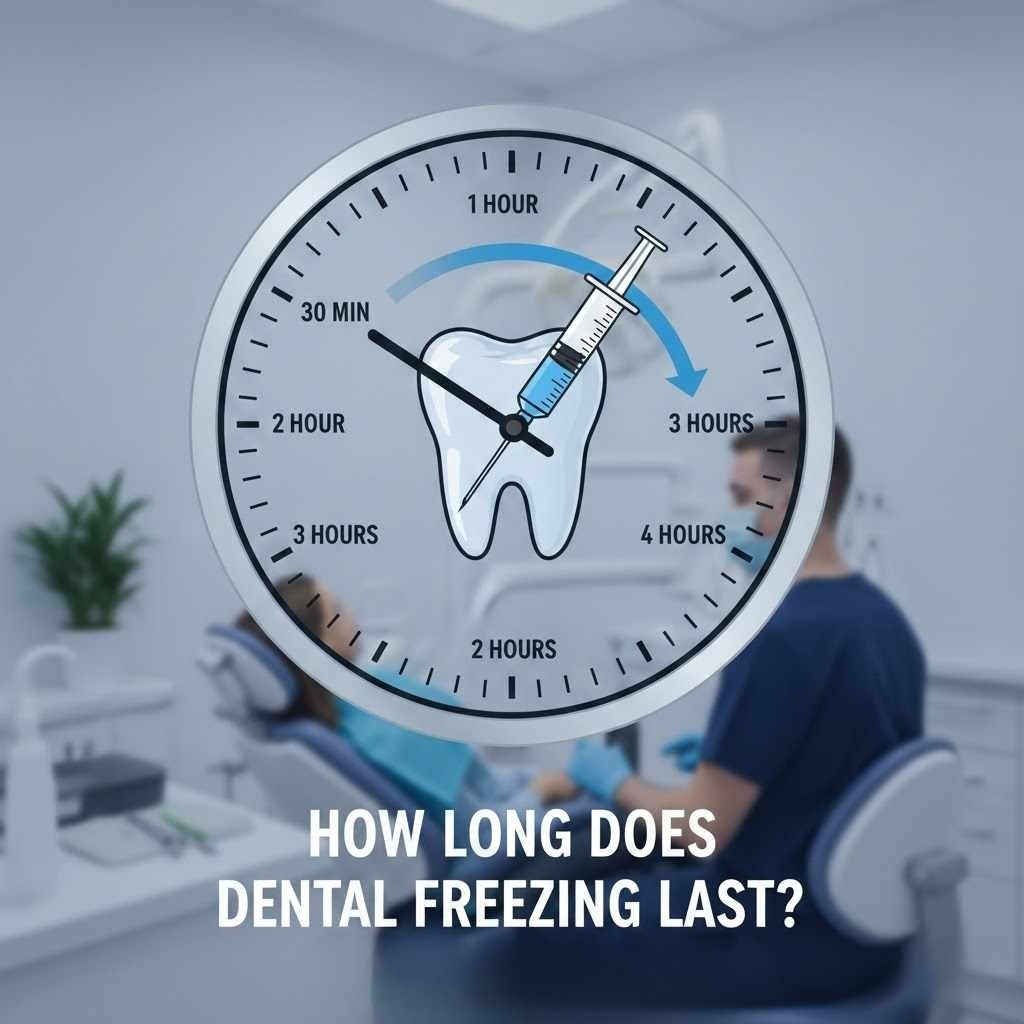
If you’ve ever left the dentist with a numb lip, tongue, or cheek and wondered, “how long does dental freezing last?”—you’re not alone. Dental freezing (local anesthesia) is essential for pain-free procedures like root canal treatment and tooth extractions, but the lingering numbness can feel strange or inconvenient.
What Is Dental Freezing?
Dental freezing refers to local anesthesia used to temporarily block pain signals from nerves during dental procedures. Dentists commonly use anesthetics like lidocaine, articaine, or bupivacaine, often combined with epinephrine to prolong effectiveness and reduce bleeding.
Key areas affected:
- Lips
- Cheeks
- Tongue
- Gums
- Teeth and jaw nerves
A Brief History of Dental Anesthesia
Modern dental freezing dates back to the late 1800s, evolving from cocaine-based anesthetics to today’s safer, targeted agents. Over the decades, improvements have focused on:
- Faster onset
- Longer duration
- Reduced side effects
- Improved patient comfort
Today’s anesthetics are highly predictable and rigorously tested.
How Long Does Dental Freezing Last?
On average, dental freezing lasts between 2 and 5 hours, depending on the procedure and anesthetic used.
Typical Duration by Procedure
| Procedure | Average Numbness Duration |
|---|---|
| Simple filling | 2–3 hours |
| Root canal | 3–5 hours |
| Tooth extractions | 3–6 hours |
| Surgical extractions | Up to 8 hours |
Expert Insight:
“Patients often think something is wrong when numbness lasts 4–5 hours, but that’s completely normal—especially after deeper nerve blocks,” says Dr. Nagham Altalib, DDS, with 18 years of clinical experience.
Why Does Local Anesthesia Last Longer for Some People?
Several factors influence how long dental freezing lasts:
1. Type of Anesthetic Used
- Lidocaine: 2–4 hours
- Articaine: 3–5 hours
- Bupivacaine: 6–8 hours (used for extractions or oral surgery)
2. Injection Location
Lower jaw nerve blocks (inferior alveolar nerve) last longer than upper jaw infiltrations.
3. Procedure Complexity
A root canal or tooth extraction often requires additional anesthetic doses.
4. Individual Metabolism
Some people naturally process anesthetics more slowly.
5. Use of Epinephrine
Epinephrine constricts blood vessels, slowing anesthetic breakdown and extending numbness.
What’s Normal vs. Not Normal After Dental Freezing?
Normal Symptoms
- Tingling as numbness fades
- Temporary difficulty speaking
- Drooling
- Uneven facial sensation
When to Call Your Dentist
Contact your dentist if:
- Numbness lasts longer than 12 hours
- You experience sharp pain, burning, or electric shock sensations
- There’s facial drooping beyond numbness
- You suspect nerve injury (rare, but possible)
Practical Safety Tips While You’re Numb
From clinical experience, most post-visit issues happen after patients leave the office.
Do this:
- Avoid eating until numbness wears off
- Stick to soft foods
- Drink carefully (no hot beverages)
- Chew on the opposite side
Avoid this:
- Biting lips or cheeks (very common!)
- Testing numbness with sharp objects
- Letting children chew numb areas
Can You Make local anesthesia Wear Off Faster?
There’s no guaranteed way, but these may help slightly:
- Gentle jaw movement
- Light facial massage
- Staying hydrated
- Warm (not hot) compresses
Some dental offices offer reversal agents, though they’re not routinely used.
Current Trends in Dental Anesthesia
- Shorter-acting anesthetics for minor procedures
- Computer-assisted injections for comfort
- Buffered anesthetics for faster onset
- Reduced reliance on epinephrine in some patients
Organizations like the American Dental Association and the National Health Service continue to publish updated anesthesia safety guidelines.
Future Outlook: What’s Next for Dental Freezing?
Looking ahead, dentistry is moving toward:
- Ultra-targeted nerve blocking
- Faster recovery anesthetics
- Personalized anesthesia dosing
- AI-guided injection precision
These advances aim to reduce numbness time without sacrificing pain control.
Frequently Asked Questions
How long does dental freezing last after a root canal?
Typically 3–5 hours, though deeper nerve blocks may last slightly longer.
How long does dental freezing last after tooth extractions?
Most patients experience numbness for 4–6 hours, sometimes up to 8 hours.
Is it normal for dental freezing to last all day?
No. Numbness beyond 12 hours should be evaluated by your dentist.
Can dental freezing cause nerve damage?
Permanent nerve damage is extremely rare. Temporary nerve irritation resolves in most cases.
Why is my tongue still numb but my lip isn’t?
Different nerves recover at different speeds—this is normal.
Disclaimer: This article is for educational purposes only and does not replace professional dental advice. Always consult your dentist for personalized care.
Conclusion: What You Should Remember
So, how long does dental freezing last?
For most people, 2–5 hours is normal, especially after root canal treatment or tooth extractions. Longer numbness isn’t usually dangerous—but knowing what’s normal helps you stay calm and safe.
Understanding dental anesthesia empowers you to recover comfortably and avoid common post-visit issues.