When Wisdom Teeth Are Removed: Symptoms, Timing & Dentist Advice

If you live in London, Ontario and are searching for expert guidance on wisdom teeth removal — or typing “wisdom teeth removal near me” — this complete guide covers everything you need to know. From why wisdom teeth are removed and what symptoms to watch for, to recovery timelines and aftercare best practices, this article is based on real clinical experience at Apple Tree Dental in London, Ontario.

Key Takeaways

  • Wisdom teeth are removed due to impaction, infection, crowding, or pain.
  • Early removal during late teens or early adulthood leads to faster healing and fewer complications.
  • Most procedures are completed within 30–60 minutes.
  • Recovery takes 7–10 days for most patients, with full tissue healing in 2–3 weeks.
  • Proper aftercare — soft foods, gentle rinsing, no smoking — is essential to avoid dry socket.
  • Apple Tree Dental provides tailored wisdom teeth extraction care plans for London, Ontario patients.

What Does It Mean When Wisdom Teeth Are Removed?

Wisdom teeth — also called third molars — are the last set of teeth to develop, typically appearing between ages 17–25. In many cases, there is not enough space in the jaw, which is why wisdom teeth are removed to prevent serious oral health complications.

Common reasons include:

  • Impacted teeth trapped beneath the gums
  • Infection or swelling in surrounding tissue
  • Tooth decay in hard-to-reach areas
  • Pressure causing crowding of nearby teeth
  • Risk of cysts or bone damage

According to the Canadian Dental Association, timely extraction prevents many of the long-term complications associated with impacted third molars. At Apple Tree Dental, patients receive detailed evaluations and personalized care plans designed for safe, efficient treatment.

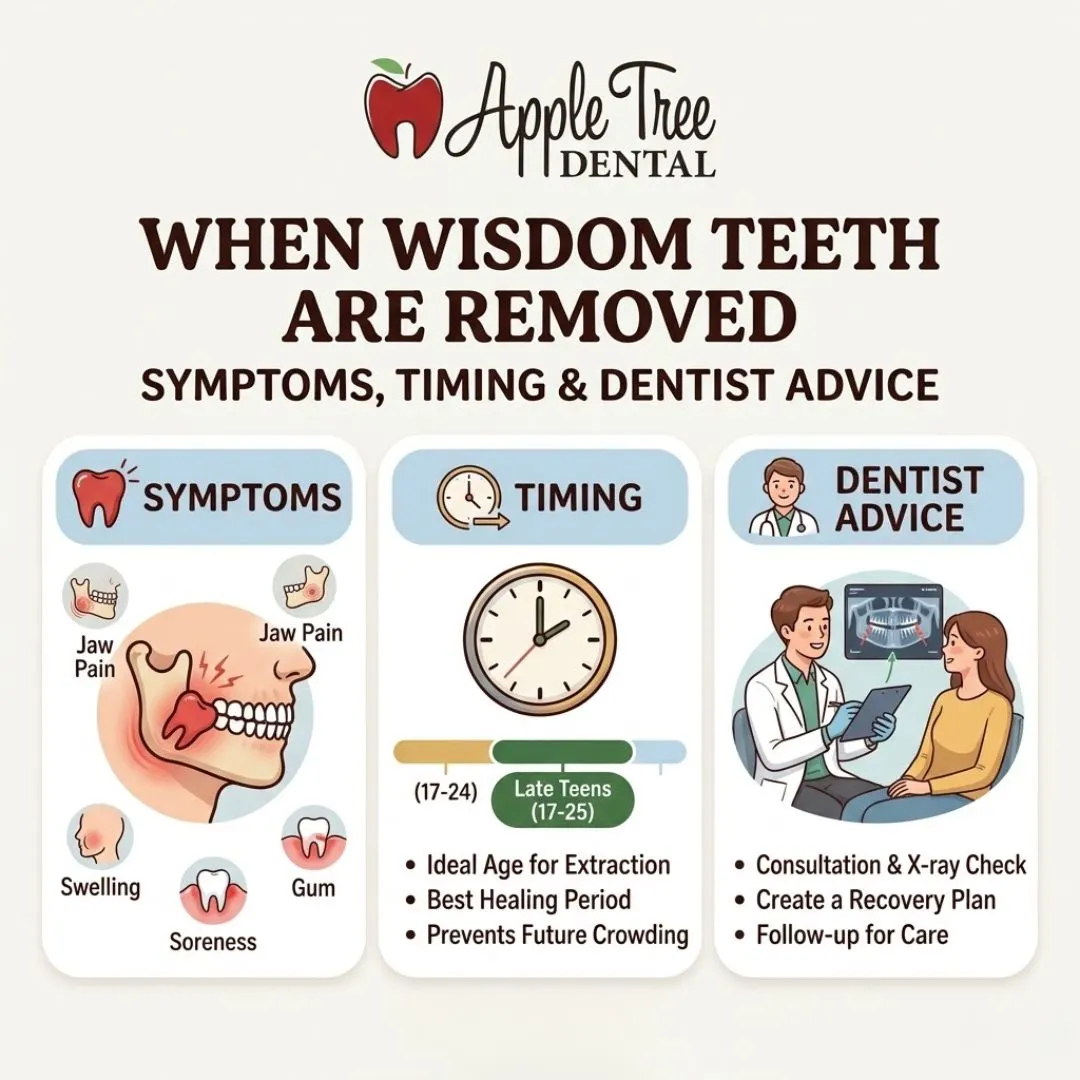
Symptoms That Indicate Wisdom Teeth Should Be Removed

Recognizing early warning signs can help you avoid more complex procedures later. Look out for:

  • Persistent pain in the back of the mouth
  • Red, swollen, or bleeding gums
  • Jaw stiffness or difficulty opening your mouth
  • Bad breath or an unpleasant taste
  • Headaches linked to jaw pressure
  • Food getting trapped around partially erupted teeth

If these symptoms appear, dentists often recommend removal before the condition worsens. Apple Tree Dental’s emergency dental care service is available for patients experiencing acute pain or swelling that cannot wait.

Best Timing: When Should Wisdom Teeth Be Removed?

Dentists generally suggest removal during late teens or early adulthood because the roots are not yet fully developed, the bone is softer (making extraction easier), and recovery is faster and smoother. That said, even older patients can have wisdom teeth safely removed when clinically necessary.

The Ontario Government’s dentist finder is a government-verified resource for locating licensed dental providers in your area if you are beginning your search.

What Happens During the Procedure

When wisdom teeth are removed, the process typically follows these steps:

  • Local anaesthesia or sedation is administered
  • A small incision is made if the tooth is impacted
  • The tooth is gently removed
  • The area is cleaned and stitched if required
  • Gauze is applied to control bleeding

Most procedures are completed within 30–60 minutes. Apple Tree Dental offers comfortable sedation dentistry options for patients who experience anxiety about dental procedures.

Wisdom Teeth Removal Recovery Timeline

Understanding the recovery timeline helps set realistic expectations:

  • Day 1–2: Swelling, mild discomfort, blood clot formation
  • Day 3–5: Pain reduces, healing begins
  • Day 7–10: Tissue starts recovering noticeably
  • 2–3 weeks: Full soft tissue healing

Following proper aftercare significantly improves recovery outcomes and reduces the risk of complications like dry socket or infection.

Care After Tooth Extraction: Step-by-Step Guide

First 24 Hours

  • Avoid rinsing, spitting, or brushing near the extraction site
  • Bite gently on gauze to control bleeding
  • Rest and avoid strenuous physical activity

After 24 Hours

  • Begin gentle saltwater rinses
  • Resume careful brushing away from the site
  • Eat soft foods only

Ongoing Care

  • Maintain daily oral hygiene around the site
  • Follow all instructions from your dental team
  • Avoid smoking and alcohol throughout recovery

The Ontario Ministry of Health also provides public oral health resources to support patients through dental recovery at any stage.

Can I Brush My Teeth After Wisdom Teeth Removal?

Yes — but with important precautions. Avoid the extraction area entirely for the first 24 hours. After that, brush gently around surrounding teeth while keeping the site undisturbed. Good oral hygiene is essential to prevent infection, so do not skip brushing altogether. Apple Tree Dental’s professional teeth cleaning team can guide you through safe post-extraction hygiene practices at your follow-up visit.

I Accidentally Rinsed My Mouth After Tooth Extraction — What Should I Do?

If you rinsed too soon after your extraction, act quickly:

  • Stop rinsing immediately
  • Avoid forceful spitting
  • Monitor the site for increased bleeding
  • Contact your dentist if symptoms worsen or if the clot appears dislodged

Rinsing too early can dislodge the protective blood clot and significantly delay healing, potentially leading to dry socket — one of the most painful post-extraction complications.

What to Eat After Wisdom Teeth Removal

Diet plays a crucial role in how smoothly you heal. During early recovery, stick to soft, lukewarm, non-spicy foods that require minimal chewing:

  • Yogurt
  • Mashed potatoes
  • Smoothies (consumed without a straw)
  • Scrambled eggs
  • Lukewarm soups

Avoid crunchy snacks, spicy foods, and very hot drinks. Never use a straw — the suction pressure can dislodge the clot and set back your recovery significantly.

Aftercare Mistakes to Avoid

For proper after-extraction care, steer clear of these common mistakes:

  • Using straws
  • Smoking or vaping
  • Touching the wound with fingers or tongue
  • Skipping oral hygiene entirely out of caution
  • Eating hard or crunchy foods too early in recovery

These mistakes slow healing and increase the risk of complications. Apple Tree Dental’s family dentistry team provides detailed aftercare instructions at every extraction appointment to help patients avoid these pitfalls.

Pro-Level Aftercare Tips

  • Keep your head elevated while resting — use an extra pillow for the first two nights
  • Apply cold compresses to the jaw to reduce swelling in the first 48 hours
  • Stay well-hydrated with water and cool liquids
  • Take all prescribed medications as directed, including any antibiotics
  • Clean surrounding teeth carefully without disturbing the extraction site

How Long Does Wisdom Teeth Recovery Take?

  • Simple extraction: 3–5 days
  • Moderate cases: 7–10 days
  • Impacted teeth: up to 2–3 weeks

Recovery depends heavily on how consistently you follow aftercare instructions and whether any complications such as infection or dry socket arise during healing.

Extracted Wisdom Tooth Healing: What to Expect

Healing happens in clear stages. A protective blood clot forms within the first 24 hours. Tissue begins repairing within a few days, swelling and discomfort gradually reduce, and full healing of the soft tissue occurs over a few weeks. Avoid disturbing the area at any stage to ensure proper recovery progress.

Local Dental Advice in London, Ontario

If you are searching for wisdom teeth removal near me in London, Ontario, an early consultation can prevent pain and the need for more complex procedures later. At Apple Tree Dental, patients benefit from advanced diagnostic tools, comfortable sedation options, personalized aftercare plans, and step-by-step recovery guidance across two convenient clinic locations. Current special offers are also available to help manage the cost of treatment for qualifying patients.

North Location: 1365 Beaverbrook Ave, Unit 102, London, ON N6H 0J1
South Location: 3429 Wonderland Rd S, Unit 6, London, ON N6L 0E3

Conclusion

When wisdom teeth are removed at the right time, it helps prevent pain, infection, and long-term dental issues. Understanding your symptoms, following proper aftercare, and working with an experienced dental team ensures a smooth and safe recovery. Patients who follow expert guidance recover faster, experience less discomfort, and avoid the complications that make recovery significantly harder and longer.

Frequently Asked Questions

Can I brush my teeth after wisdom teeth removal?

Yes, but avoid the extraction site for the first 24 hours and brush gently around it afterward to maintain hygiene without disrupting healing.

What is proper care after tooth extraction?

Rest, avoid rinsing initially, eat soft foods, stay hydrated, and follow all instructions provided by your dentist at discharge.

What are good things to eat after wisdom teeth are removed?

Soft foods like yogurt, mashed potatoes, scrambled eggs, and lukewarm soups are ideal during early recovery. Avoid anything crunchy or spicy.

I accidentally rinsed my mouth after tooth extraction — what should I do?

Stop rinsing immediately, avoid forceful spitting, monitor for increased bleeding, and contact your dentist if symptoms worsen.

How long does wisdom teeth recovery take?

Most patients recover in 7–10 days, with full soft tissue healing occurring within 2–3 weeks depending on the complexity of the extraction.

Is wisdom teeth removal always necessary?

Only when they cause — or are very likely to cause — oral health problems such as impaction, infection, decay, or crowding of adjacent teeth.

What happens if I smoke after extraction?

Smoking significantly increases the risk of dry socket and infection, and delays healing. Avoid it for at least 72 hours after the procedure, ideally longer.

About the Author

Dr. Nagham Altalib

Dr. Nagham Altalib is an experienced dentist with more than two decades of clinical practice in restorative, family, orthodontic, prosthodontic, and cosmetic dentistry. After graduating from Baghdad University in 1998, she practiced in Iraq, Dubai, and later Canada, where she completed NDEB certification and continues serving patients in London, Ontario. At Apple Tree Dental, her patient-first approach focuses on prevention, early diagnosis, and comfortable long-term oral health solutions for children and families. Her goal is to help patients solve dental concerns early and maintain healthy smiles for life.

Who Qualifies for the New Canadian Dental Plan: Complete Eligibility Guide 2025

The Canadian Dental Plan (CDCP) represents a significant shift in healthcare accessibility across Canada. Launched in December 2023, this federal initiative aims to provide affordable dental coverage to millions of Canadians who previously couldn’t access essential oral health services. Understanding who qualifies for this program is crucial for individuals and families seeking to benefit from comprehensive dental coverage.

At a Glance: CDCP Quick Facts

CriteriaRequirement / Details
Income LimitBelow $90,000 adjusted family net income
Insurance StatusNo existing dental coverage
ResidencyCanadian resident with filed tax return
Coverage StartDecember 2023 (seniors) to June 2025 (all adults)
Investment$13 billion over 5 years
Potential BeneficiariesUp to 9 million Canadians
AdministratorSun Life
Contact1-833-537-4342 or canada.ca/dental

Understanding the Canadian Dental Plan

The CDCP is a federally funded program designed to reduce financial barriers preventing Canadians from accessing necessary dental care. With an investment of $13 billion over five years and $4.4 billion annually thereafter, the government plans to help up to nine million Canadian residents receive dental coverage. This initiative addresses a critical gap in healthcare, as approximately one-third of Canadians lack dental insurance, and many avoid dental visits due to cost concerns.

Primary Eligibility Requirements

To qualify for the Canadian Dental Care Plan, applicants must meet several core requirements that determine their eligibility for coverage.

Basic Criteria

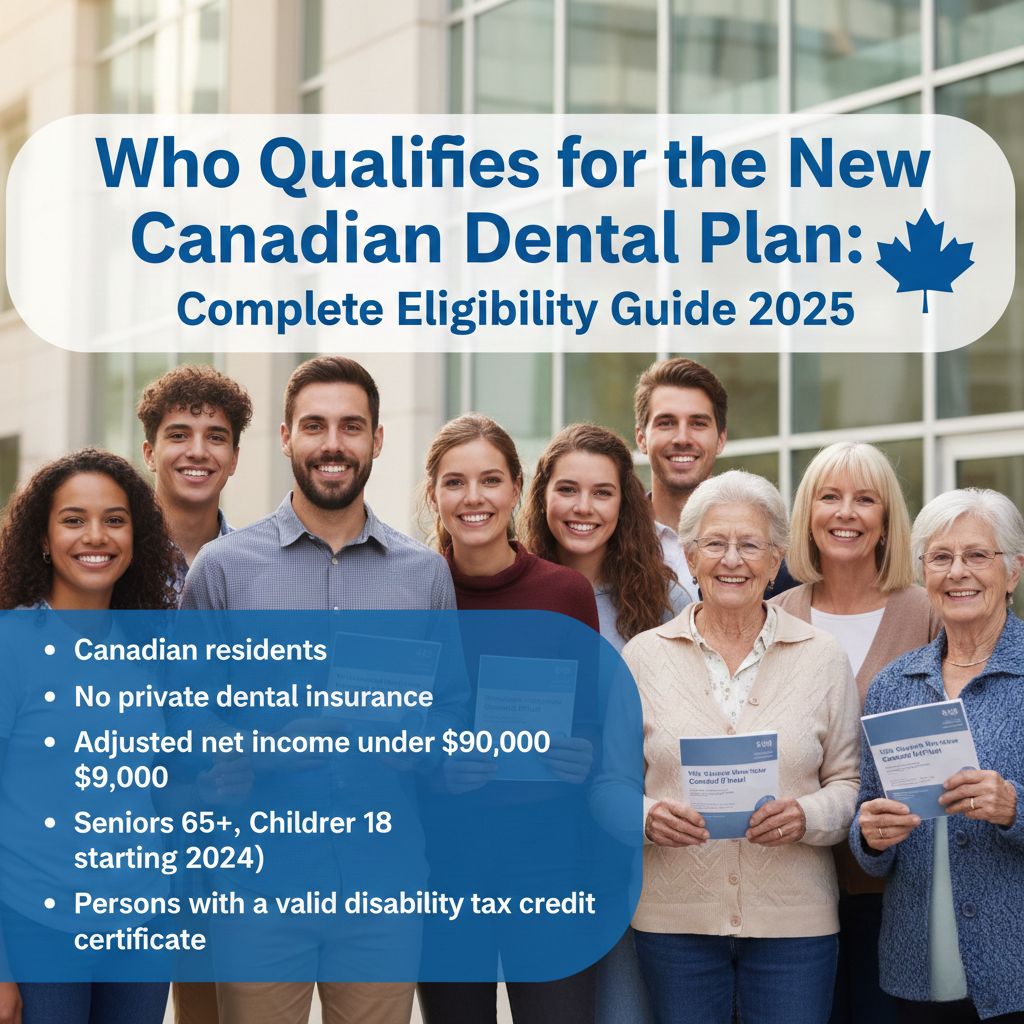
All applicants must be Canadian residents who have filed their income tax returns for the previous year. The program targets individuals and families with an adjusted family net income below $90,000 annually. Crucially, applicants cannot have access to any form of dental insurance, whether through an employer, private plan, or educational institution.

The government considers individuals who decline available dental coverage through employer or school benefits as having access to insurance, making them ineligible for the CDCP. This stipulation ensures the program serves those genuinely without alternative coverage options.

Income-Based Coverage Structure

The CDCP employs a tiered approach to coverage based on household income levels. Families earning less than $70,000 annually receive full coverage without co-payments. Those with incomes between $70,000 and $79,999 face a 40 percent co-payment, while households earning between $80,000 and $89,999 must pay 60 percent co-payments for covered services.

CDCP Co-Payment Structure


Annual Family IncomeCo-Payment RateGovernment Coverage
Under $70,0000% (No co-payment)100%
$70,000 – $79,99940%60%
$80,000 – $89,99960%40%
$90,000+Not eligibleN/A

Who Can Apply and When

The CDCP rolled out coverage in phases, prioritizing specific demographic groups before expanding to the general population.

Seniors and Children

Seniors aged 65 and older were among the first to receive coverage invitations, beginning in December 2023. Children under 18 became eligible for applications starting June 27, 2024. These groups received priority due to their heightened dental care needs and vulnerability to health complications from untreated oral conditions.

Adults with Disabilities

Adults holding a valid Disability Tax Credit certificate gained eligibility in June 2024. This group often faces additional barriers to dental care access, making early inclusion essential for addressing health disparities.

Working-Age Adults

The most recent expansion opened eligibility to all remaining Canadian residents aged 18 to 64 without dental insurance. Applications for this final cohort opened in May 2025, with coverage beginning as early as June 1, 2025. The rollout followed a staggered schedule: individuals aged 55 to 64 could apply starting May 1, those aged 18 to 34 beginning May 15, and the 35 to 54 age group from May 29 onward.

Covered Services Under the CDCP

The plan encompasses a comprehensive range of dental services designed to maintain oral health and address dental problems promptly.

Preventive Care

Preventive services form the foundation of CDCP coverage, including routine dental examinations, professional cleanings, fluoride treatments, and sealants. These services help detect oral health issues early and prevent the development of more serious conditions requiring extensive treatment.

Basic and Restorative Treatments

The plan covers essential treatments for cavities and damaged teeth, including various types of fillings. Restorative care ensures teeth can function properly for eating and speaking, preventing further deterioration that could lead to tooth loss.

Specialized Procedures

More complex treatments receive coverage under specific conditions. The program includes endodontic services like root canals for severely infected teeth, periodontal treatments for gum disease, and prosthodontic services such as dentures. Starting November 2024, certain specialized treatments including partial dentures, crowns, and higher levels of sedation became available through a preauthorization process.

Emergency dental services receive coverage without limitations on emergency examinations, ensuring immediate care for urgent dental problems. Limited orthodontic services began in 2025 for medically necessary cases meeting specific clinical criteria.

Application Process and Documentation

Applying for the CDCP requires specific documentation and can be completed through multiple channels to accommodate different preferences and needs.

Required Documents

Applicants must provide their Social Insurance Number, proof of age such as a birth certificate, verification of Canadian residency, and proof of income through their Notice of Assessment from the Canada Revenue Agency. Individuals must confirm they’ve filed their most recent tax return before applying.

Application Methods

Eligible Canadians can apply online through the official CDCP portal or their My Service Canada Account. Those preferring direct assistance can apply by phone through Service Canada at 1-833-537-4342, or visit a Service Canada Centre in person for support with the application process.

Step-by-Step Application Guide:

  1. Gather required documents (SIN, proof of age, Notice of Assessment)
  2. Confirm you’ve filed your most recent tax return
  3. Choose your application method (online, phone, or in-person)
  4. Complete the application form with accurate income information
  5. Submit and wait for your Sun Life welcome package

For more information on eligibility criteria, visit the official CDCP eligibility page.

Coverage Activation

Once approved, applicants receive a welcome package from Sun Life, the plan administrator, containing a member card, coverage details, co-payment information, and the coverage start date. The timing varies based on when applications are submitted and processed, but coverage typically begins soon after enrollment completion.

Important Considerations for Applicants

Several factors deserve attention when considering CDCP enrollment and maintaining coverage.

Annual Renewal Requirements

CDCP coverage requires annual renewal to confirm continued eligibility. Members must file their tax returns and receive their Notice of Assessment before renewing. The renewal process for the 2025-2026 benefit period concluded on June 1, 2025. Those who missed this deadline and whose coverage ended on June 30, 2025, must submit new applications, creating a coverage gap during which services won’t be covered or reimbursed.

Coordination with Existing Benefits

Canadians with dental coverage through provincial, territorial, or federal social programs may still qualify for the CDCP if they meet all eligibility criteria. In such cases, coverage is coordinated between programs to prevent duplication while ensuring comprehensive care without gaps.

Additional Costs and Balance Billing

While the CDCP covers significant portions of dental care costs, patients may face additional expenses. Balance billing occurs when dentists charge the difference between their standard fees and CDCP reimbursement rates. Patients may also pay for services exceeding CDCP coverage or treatments not included in the plan. Understanding these potential costs helps beneficiaries budget appropriately for dental care.

Impact on Canadian Healthcare

The Canadian Dental Care Plan addresses a longstanding gap in Canadian healthcare by recognizing dental health as integral to overall wellbeing. Poor oral health connects to numerous serious health conditions including respiratory disease, diabetes complications, cardiovascular problems, and pregnancy complications. By removing financial barriers to dental care, the CDCP aims to improve public health outcomes while reducing pressure on the broader healthcare system.

For millions of Canadians who have delayed or avoided dental treatment due to cost, this program offers renewed access to essential care. The initiative particularly benefits vulnerable populations including seniors on fixed incomes, families with children, individuals with disabilities, and working adults without employer-sponsored benefits.

Taking the Next Steps

Eligible Canadians should verify their qualification status and gather necessary documentation to begin the application process. Visiting the official government website at canada.ca/dental provides comprehensive information about eligibility, covered services, and application procedures. Contacting Service Canada directly at 1-833-537-4342 offers personalized guidance for those with specific questions about their circumstances.

Additional Resources:

The CDCP represents a transformative approach to healthcare accessibility in Canada, ensuring that financial constraints no longer prevent millions from receiving essential dental care. Understanding eligibility requirements and taking action to enroll allows qualified Canadians to benefit from this comprehensive program and maintain their oral health for years to come.

Frequently Asked Questions About the Canadian Dental Plan

Can I apply if I have employer dental insurance?

No, you cannot qualify for the CDCP if you have access to dental insurance through an employer, school, pension, or private plan. This includes situations where you choose not to enroll in available coverage through your workplace.

What is the income limit for the Canadian Dental Care Plan?

Your adjusted family net income must be below $90,000 annually to qualify. Families earning under $70,000 receive full coverage without co-payments, while those earning $70,000 to $79,999 pay 40% co-payments, and incomes between $80,000 and $89,999 require 60% co-payments.

Do I need to file taxes to be eligible?

Yes, filing your income tax return for the previous year is mandatory for CDCP eligibility. You’ll need your Notice of Assessment from the Canada Revenue Agency when applying.

Are dental implants covered under the CDCP?

Dental implants are not currently covered under the Canadian Dental Care Plan. The program focuses on preventive care, basic treatments, and medically necessary procedures like fillings, crowns, dentures, and root canals.

How long does it take to get approved after applying?

Processing times vary, but most applicants receive their approval and welcome package within several weeks of submitting their application. Once approved, Sun Life sends your member card and coverage details, including your official start date.

Can I use the CDCP at any dentist in Canada?

Yes, you can visit any participating dentist who accepts CDCP patients. However, not all dentists may choose to participate in the program, so it’s recommended to confirm with your dental office before booking an appointment.

What happens if my income increases above $90,000?

You must report income changes during your annual renewal. If your income exceeds $90,000, you will no longer qualify for coverage under the Canadian Dental Care Plan for the upcoming benefit year.

Do children need their own application?

Yes, each family member requires a separate application, including children. Parents or guardians can apply on behalf of minors under 18 years of age using the child’s information and documentation.

What are the types of Dental Fillings

When your dentist says you need a filling, one of the first questions that comes to mind is: Which type of filling is best? Dental fillings come in different materials, each with its own benefits, durability, aesthetics, and cost. Understanding these options helps you make an informed, confident decision about your oral health.

This guide explains the most common types of dental fillings, how long they last, when each is recommended, and what you can expect during your treatment.


What Are Dental Fillings?

Dental fillings are restorative materials used to repair teeth affected by decay, cracks, or wear by replacing the damaged tooth structure with a durable, protective material.

Why Do Dentists Recommend Fillings?

  • Stop active tooth decay
  • Restore function and structure
  • Prevent deeper infection and pain
  • Improve long-term oral health
  • Avoid the need for more complex treatments like crowns or root canals

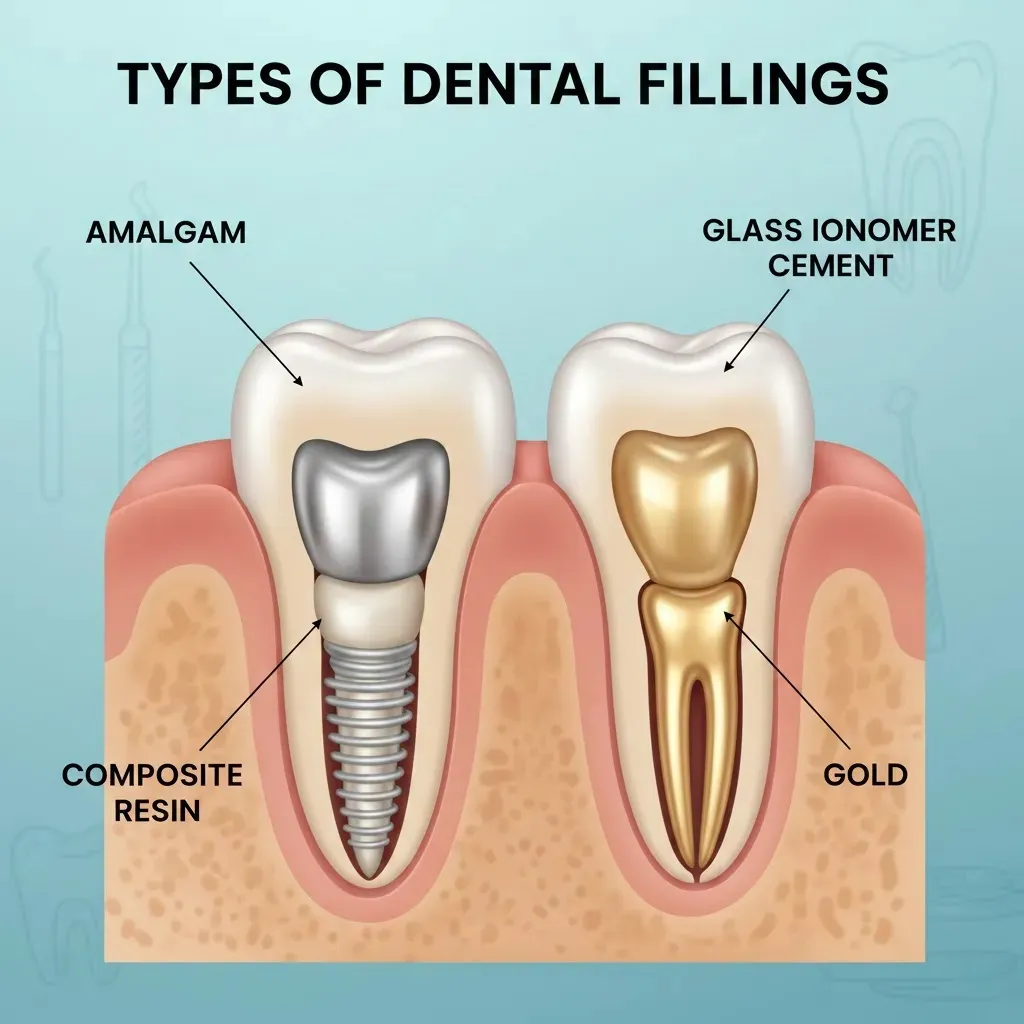
Types of Dental Fillings

1. Composite (Tooth-Colored) Fillings

Overview:
Made from a mixture of resin and fine glass particles, composite fillings blend naturally with your tooth.

Benefits

  • Matches natural tooth color
  • Bonds strongly to tooth structure
  • Ideal for front and back teeth
  • Preserves more natural tooth

Considerations

  • Slightly less durable than metal fillings
  • Can stain over time
  • Moderate cost

Best for: Small to medium cavities, patients wanting aesthetic results.

2. Amalgam (Silver) Fillings

Overview:
A highly durable filling material used for more than 150 years, made from a mix of metals including silver, tin, and copper.

Benefits

  • Extremely strong and long-lasting
  • Cost-effective
  • Withstands heavy chewing forces

Considerations

  • Noticeable silver color
  • Requires more tooth removal
  • Not used as commonly today

Best for: Molars, large cavities, patients needing a long-lasting and durable solution.

3. Gold Fillings

Overview:
Made from a gold alloy, these fillings are crafted in a dental laboratory and cemented into place.

Benefits

  • Exceptional durability (can last 20+ years)
  • Biocompatible
  • Strong and wear-resistant

Considerations

  • High cost
  • Requires multiple visits
  • Not tooth-colored

Best for: Patients seeking maximum strength and longevity.

4. Ceramic or Porcelain Fillings (Inlays/Onlays)

Overview:
Custom-made restorations often created with CAD/CAM technology and bonded to the tooth.

Benefits

  • Highly aesthetic
  • Stain-resistant
  • Long-lasting

Considerations

  • Higher cost than composite
  • May require two visits unless CEREC same-day technology is available

Best for: Medium to large cavities, cosmetic-focused patients, molar repairs.

5. Glass Ionomer Fillings

Overview:
Made from acrylic and fine glass powder, these fillings release fluoride over time.

Benefits

  • Fluoride release helps prevent further decay
  • Ideal for children and non-load bearing areas
  • Chemically bonds to tooth

Considerations

  • Less durable than composite
  • Not suitable for large cavities

Best for: Baby teeth, root cavities, patients with high cavity risk.

6. Resin Ionomer Fillings

Overview:
Similar to glass ionomer but strengthened with resin.

Benefits

  • Fluoride release
  • Better aesthetics than traditional glass ionomer
  • Good for low-stress areas

Considerations

  • Not as strong as composite
  • May wear faster

Best for: Cervical lesions, root surfaces, cavities near the gumline.

How to Choose the Right Type of Filling

A dentist selects the right material based on:

  • Size and depth of the cavity
  • Location (front vs. back teeth)
  • Bite pressure
  • Aesthetic concerns
  • Budget
  • Age (children vs. adults)
  • Decay risk

Your dentist will discuss options based on long-term oral health, not appearance alone.

How Long Do Dental Fillings Last?

  • Amalgam: 10–15+ years
  • Composite: 5–10 years
  • Gold: 20+ years
  • Ceramic: 10–15 years
  • Glass Ionomer: 3–5 years

Conclusion

Understanding the different types of dental fillings helps you make an informed choice about your oral health. Each material has unique advantages, and the right option depends on your dental needs, aesthetic preferences, and long-term goals. A conversation with your dentist will ensure you receive a restoration that is durable, functional, and suited to your smile.

FAQs

1. Which dental filling lasts the longest?

Gold fillings typically last the longest, often more than 20 years.

2. Are composite fillings better than amalgam?

Composite looks more natural, but amalgam is more durable for heavy-bite areas.

3. Do fillings hurt?

Most fillings are painless with local anesthesia.

4. How long does it take to get a filling?

Usually 20–45 minutes, depending on size and location.

5. Can I eat after getting a filling?

Yes—composite sets immediately; amalgam needs a few hours to fully harden.

6. Are there white alternatives to metal fillings?

Yes—composite and ceramic fillings match natural tooth color.

7. How do I know if I need a filling?

Common signs include sensitivity, visible holes, or pain when chewing.

8. Can fillings fall out?

Yes, fillings can loosen due to decay, grinding, or biting hard foods.

9. Are dental fillings safe?

Yes—all FDA-approved materials used today are considered safe.

10. Is fluoride-releasing filling material good for children?

Yes—glass ionomer fillings are often used for pediatric dentistry.