
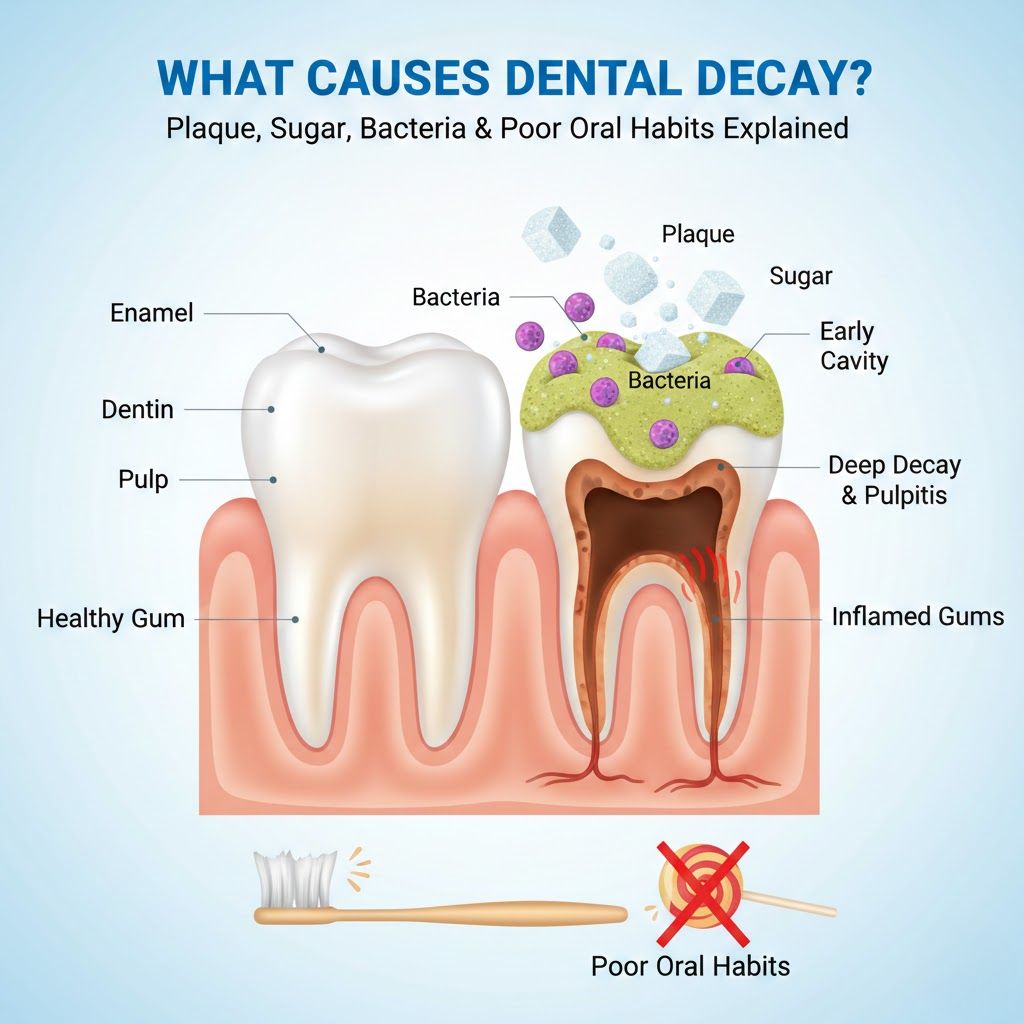
Dental decay—often called cavities or tooth decay—is one of the most common oral health problems seen by dentists today. At Apple Tree Dental, patients frequently ask why cavities form even when they brush daily. The answer lies in a combination of plaque, sugar, harmful bacteria, and everyday oral habits.
This guide explains what causes dental decay, how it develops over time, and what steps patients can take to protect their teeth—based on preventive dentistry principles followed at Apple Tree Dental.
What Causes Dental Decay?
Dental decay occurs when plaque bacteria feed on sugars and starches from food and produce acids that weaken tooth enamel. Without proper brushing, flossing, fluoride, and regular dental visits, this acid damage leads to cavities.
What Is Dental Decay?
Dental decay is the gradual destruction of the tooth’s outer enamel and inner layers caused by repeated acid attacks. Dentists at Apple Tree Dental often detect early decay during routine exams—before patients feel pain or sensitivity.
Plaque: The Starting Point of Tooth Decay
Plaque is a sticky film that forms on teeth every day.
When plaque is not removed:
- Bacteria multiply rapidly
- Acids remain in contact with enamel
- Teeth slowly lose minerals
At Apple Tree Dental, professional cleanings are recommended because brushing alone cannot remove hardened plaque (tartar).
Sugar and Refined Carbohydrates Feed Bacteria
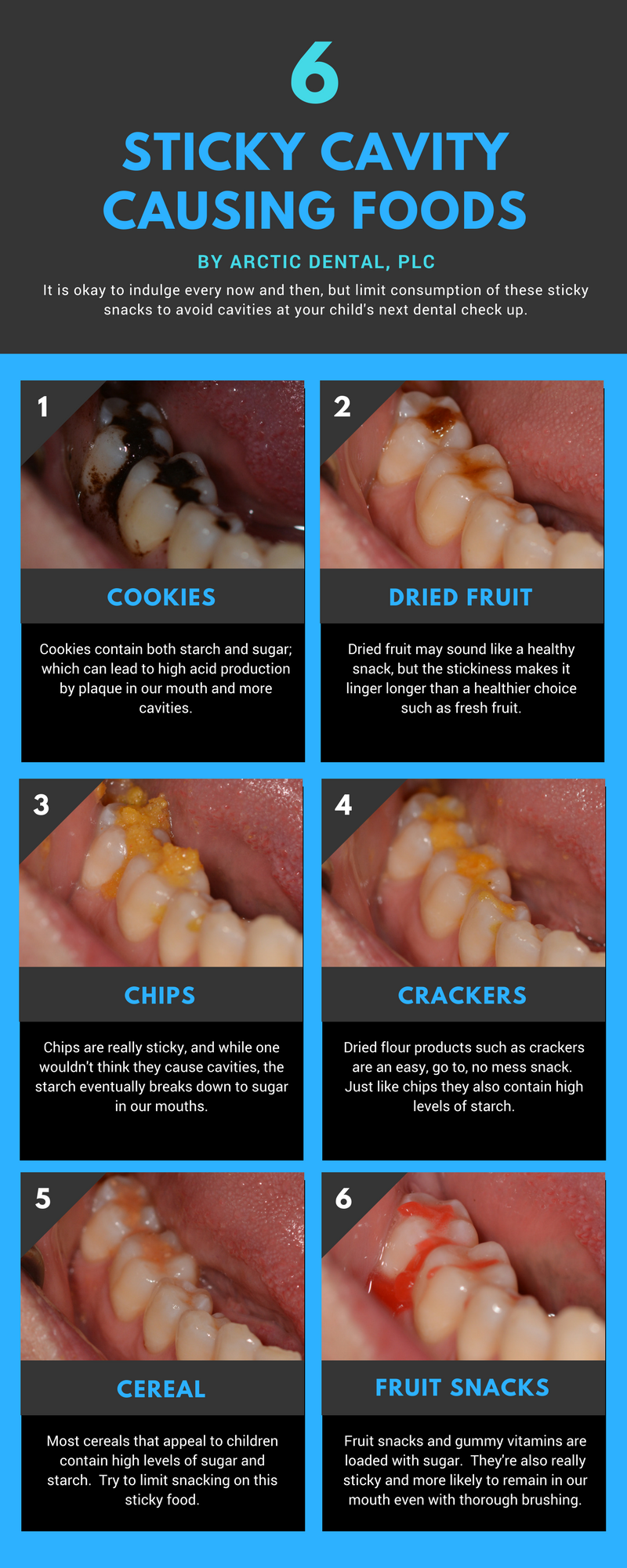
Sugar doesn’t directly damage teeth—bacteria do.
Common cavity-causing foods include:
- Sugary drinks and soda
- Candy and desserts
- White bread and processed snacks
Dentists at Apple Tree Dental often explain that frequent snacking causes more harm than occasional treats because acid attacks happen every time sugar is consumed.
Harmful Oral Bacteria and Acid Production
Your mouth naturally contains bacteria, but poor oral hygiene allows harmful bacteria to dominate.
These bacteria:
- Convert sugar into acid
- Lower the pH of your mouth
- Accelerate enamel breakdown
Maintaining a balanced oral environment is a key preventive focus at Apple Tree Dental.
Poor Oral Habits Increase Cavity Risk
Even patients who brush daily may still develop cavities due to incomplete oral care.
Common habits that lead to decay:
- Skipping flossing
- Rushing brushing
- Brushing only once a day
- Missing routine dental visits
Dentists at Apple Tree Dental emphasize brushing twice daily and flossing once daily to disrupt plaque buildup.
Lack of Fluoride Protection
Fluoride plays a critical role in strengthening enamel and slowing decay.
Without fluoride:
- Enamel weakens faster
- Early decay progresses
- Teeth become more sensitive
Apple Tree Dental recommends fluoride toothpaste and professional fluoride treatments when needed, especially for patients prone to cavities.
Dry Mouth and Reduced Saliva
Saliva naturally protects teeth by neutralizing acids and washing away food particles.
Dry mouth can result from:
- Medications
- Dehydration
- Mouth breathing
Patients with dry mouth often require additional preventive care, something dentists at Apple Tree Dental routinely monitor during exams.
Why Regular Dental Checkups Matter
Tooth decay often develops silently.
Routine visits at Apple Tree Dental help:
- Detect early cavities
- Remove hardened plaque
- Prevent costly future treatments
Early intervention is always simpler than advanced dental procedures.
How to Prevent Dental Decay
Dentists at Apple Tree Dental recommend:
- Brushing twice daily with fluoride toothpaste
- Flossing once a day
- Limiting sugary foods and drinks
- Drinking water after meals
- Scheduling regular dental checkups
Prevention works best when practiced consistently.
Frequently Asked Questions
What is the main cause of dental decay?
Plaque bacteria producing acid after consuming sugar and starches.
Can dental decay be reversed?
Early enamel damage can be reversed with fluoride, but cavities require treatment.
Does Apple Tree Dental treat cavities early?
Yes, early detection and preventive care are a key focus at Apple Tree Dental.
How often should I visit the dentist to prevent decay?
Most patients benefit from checkups every six months.
Final Thoughts
Dental decay is preventable with the right habits, early detection, and professional care. By understanding the role of plaque, sugar, bacteria, and daily routines, patients can protect their smiles long-term. Dentists at Apple Tree Dental focus on education, prevention, and early treatment to help patients maintain strong, healthy teeth.