
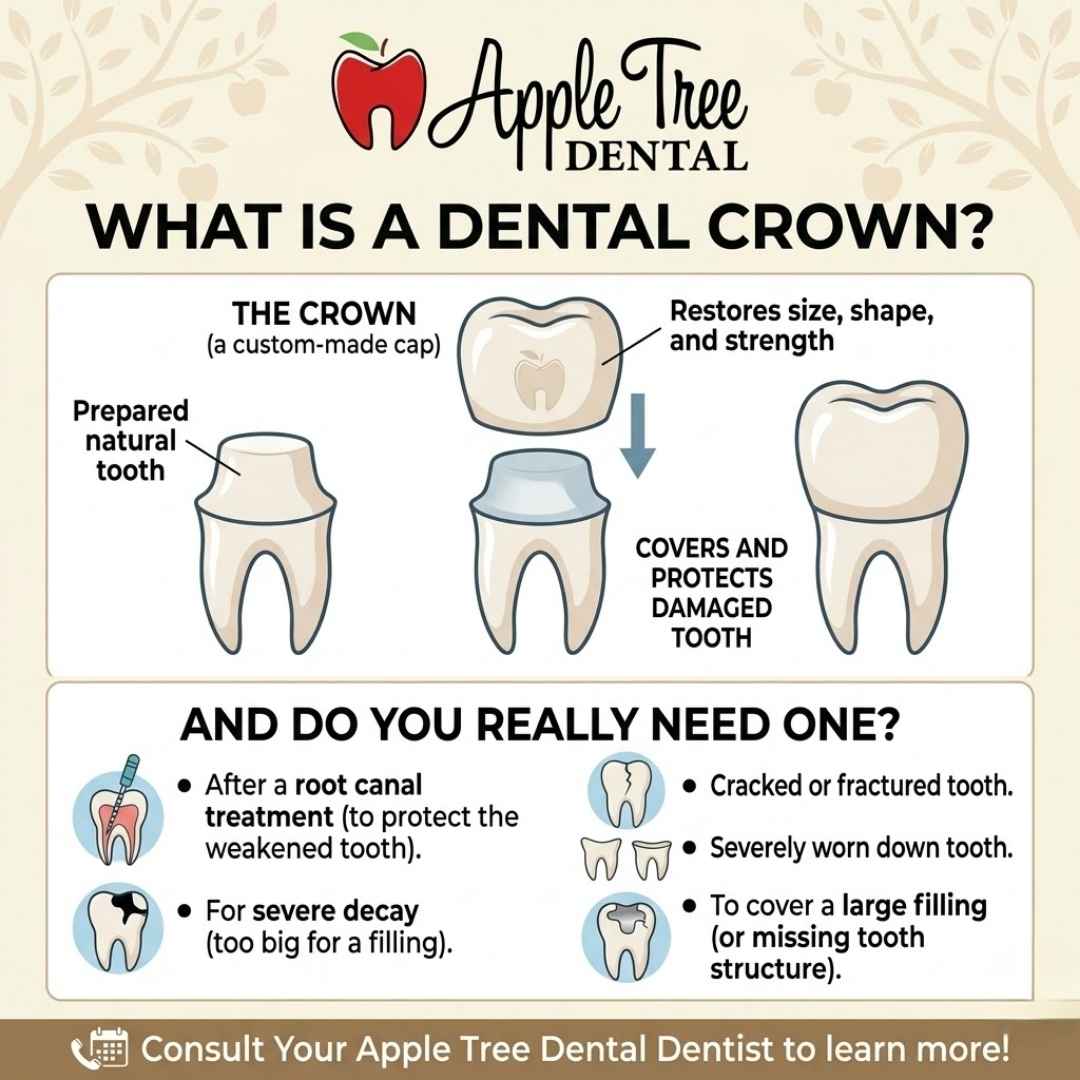
If you have been told you may need a dental crown, you are in good company — it is one of the most commonly recommended restorative procedures in dentistry. However, many patients still have questions about what a crown actually involves, how much it costs, and whether it is truly necessary. Simply put, a tooth crown — also called a dental cap for teeth — is a custom-made covering that fits permanently over a damaged, weakened, or decayed tooth to restore its shape, strength, function, and appearance. Without treatment, a tooth that needs a crown will continue to break down and, as a result, may eventually require more complex and costly procedures such as a root canal or extraction. That is why patients searching for dental crowns in London turn to Apple Tree Dental in London, Ontario — to understand their options and receive personalised, comfortable care at two convenient locations.
What Is a Crown in Dentistry?
In dentistry, a crown is a protective cap that bonds permanently over a damaged tooth to restore its shape, strength, and appearance. Specifically, dentists use a crown tooth restoration after root canal treatment, for cracked or severely decayed teeth, and to anchor dental bridges. Furthermore, common materials include porcelain, zirconia, ceramic, and metal. With proper care, dental crowns last 10 to 15 years or longer.
- Restores shape, strength, and appearance of a damaged tooth
- Dentists recommend it after root canal treatment in most cases
- Ideal for cracked, broken, or severely decayed teeth
- Available in multiple dental cap types including porcelain, zirconia, ceramic, PFM, and metal
- Your dentist typically completes the process in two dental visits
- Lasts 10–15 years on average, and often longer with proper care
What Is a Dental Crown?
So what is a dental crown, exactly? A dental crown fully encases the visible portion of a tooth above the gumline. Once your dentist cements it in place, the crown tooth restoration becomes the tooth’s new outer surface and, consequently, protects the underlying structure from further damage while restoring full chewing function. Moreover, understanding what is a crown in dentistry means recognising that crowns serve both restorative and cosmetic purposes — for example, they strengthen a damaged back tooth just as effectively as they improve the appearance of a discoloured front tooth. For this reason, dental crowns and bridges at Apple Tree Dental are custom-fabricated to match the shape and colour of your natural teeth, ensuring a result that looks and feels completely natural.
When Do You Need a Dental Crown?
Dental crowns rank among the most versatile treatments in restorative dentistry. In fact, dentists recommend a tooth crown for a wide range of situations, including:
- A tooth that is cracked, chipped, or fractured
- A cavity too large for a filling to restore adequately
- A tooth that decay or a large previous filling has weakened
- Completion of root canal treatment — because the tooth becomes brittle afterwards and needs protection
- Severe tooth wear from bruxism (teeth grinding)
- Anchoring a dental bridge to replace a missing tooth
- Covering a dental implant to complete tooth replacement
- Cosmetic improvement of a severely discoloured or misshapen tooth
Notably, a crown on molar is especially common. This is because molars endure the heaviest chewing forces in the mouth — typically up to 200 lbs of pressure per bite — and therefore crack and break down far more often than other teeth.
Signs You May Need a Dental Crown
Recognising the early warning signs gives you the opportunity to seek treatment before a tooth needs more complex care. Therefore, contact Apple Tree Dental as soon as you experience any of the following:
- Pain or sensitivity when you bite down
- Sensitivity to hot or cold that lingers after the stimulus disappears
- A visible crack, chip, or fracture in a tooth
- A tooth that feels rough, uneven, or structurally unstable
- An old large filling that is cracking or breaking down
- Swelling or tenderness around a specific tooth
Importantly, early treatment consistently leads to simpler and less costly procedures. In contrast, a tooth that qualifies for a dental cap for teeth today may end up requiring emergency dental care or extraction if you leave it unaddressed.
What Are Tooth Crowns Made Of?
Before starting treatment, many patients ask: what are tooth crowns made of? The answer depends on where the tooth sits in your mouth, how much bite force it handles, and your personal aesthetic preferences. Additionally, each material offers a different balance of strength, appearance, and longevity. The Canadian Dental Association recognises several crown materials in common clinical use today, so your dentist will recommend the most appropriate one for your specific tooth.
- Porcelain and ceramic: the most natural-looking materials, closely resembling real enamel in colour and texture
- Zirconia: a high-strength ceramic that combines excellent aesthetics with exceptional durability — as a result, it suits both front and back teeth
- Porcelain-fused-to-metal (PFM): a metal base with a porcelain coating that gives patients both strength and a reasonably natural appearance
- Gold and metal alloys: the most durable option overall — dentists primarily use these on back molars where longevity matters more than aesthetics
- Composite resin: a more affordable choice that dentists occasionally use for temporary or short-term restorations
Types of Dental Crowns
Understanding the different types of dental crowns — and the specific dental cap types your dentist may offer — helps you make a more informed decision before you commit to treatment. In short, each option suits a different clinical situation, so the choice matters.
Porcelain Crowns
Porcelain crowns deliver a highly aesthetic, natural-looking result. Because of this, dentists consider them one of the most popular dental cap types for front teeth where appearance takes priority. However, their moderate durability makes them less suitable for high-pressure molar positions.
Ceramic (All-Ceramic) Crowns
All-ceramic crowns contain no metal and, as a result, work well for patients with metal sensitivities. They deliver outstanding aesthetics comparable to natural enamel. In addition, dentists recommend them specifically for front teeth and for patients who prioritise a fully metal-free restoration.
Zirconia Crowns
Among all the types of dental crowns available today, zirconia has become the most popular modern choice. This is because zirconia combines exceptional strength with a natural tooth-like appearance, making it suitable for both front and back teeth. Furthermore, zirconia crowns typically last 15 to 25 years or longer with proper oral hygiene.
Porcelain-Fused-to-Metal (PFM) Crowns
PFM crowns use a metal base with a porcelain outer layer — consequently, patients get both durability and a reasonably natural look. They remain a widely used and reliable option. However, the metal margin can sometimes become visible near the gumline over the years.
Metal Crowns (Gold / Alloy)
Metal crowns are the longest-lasting of all dental cap types — they can survive 20 to 30 years or more. For this reason, dentists primarily recommend them for out-of-sight molars where strength matters most and aesthetics are less of a concern.
Types of Dental Crowns — At a Glance
| Crown Type | Durability | Aesthetics | Best For | Approx. Lifespan |
|---|---|---|---|---|
| Porcelain | Moderate | Excellent | Front teeth | 10–15 years |
| Ceramic (all-ceramic) | Moderate–High | Excellent | Front teeth, allergy patients | 10–15 years |
| Zirconia | Very High | Very Good | Front and back teeth | 15–25+ years |
| Porcelain-Fused-to-Metal (PFM) | High | Good | Back teeth | 10–15 years |
| Metal (Gold/Alloy) | Excellent | Poor | Molars, back teeth | 20–30+ years |
Dental Crown Cost in London, Ontario
One of the most common questions patients searching for dental crowns London ask is: how much does a dental crown cost? Crown costs vary based on the material and the complexity of each case. To help you plan ahead, here is a general cost guide.
| Crown Material | Estimated Cost (Per Tooth) |
|---|---|
| Porcelain / Ceramic | $1,200 – $1,800 |
| Zirconia | $1,400 – $2,000 |
| Porcelain-Fused-to-Metal (PFM) | $1,100 – $1,700 |
| Metal (Gold/Alloy) | $900 – $1,500 |
Most dental insurance plans cover 50 to 80 percent of crown costs when the procedure qualifies as medically necessary. In addition, Apple Tree Dental proudly accepts the Canada Dental Care Plan (CDCP) with no additional fees for eligible insured patients. Furthermore, we accept most major insurance plans and provide pre-treatment cost estimates so you know your out-of-pocket expenses before you commit to any procedure. According to Health Canada’s oral health resources, publicly funded programs such as the CDCP continue to expand access to necessary dental procedures — including restorative treatments like crowns — for eligible Canadians.
The Dental Cap Procedure: Step by Step
The dental cap procedure at Apple Tree Dental follows a comfortable, predictable process. In most cases, your dentist completes the entire treatment in just two visits, with minimal discomfort at each stage.
Visit 1 — Preparation (60 to 90 Minutes)
First, your dentist prepares the tooth to receive the crown. Specifically, the dental cap procedure at this stage includes:
- Examination and X-rays — your dentist assesses the tooth and surrounding bone to confirm a crown is the right treatment
- Local anesthesia — your dentist numbs the area so you stay comfortable throughout
- Tooth reshaping — your dentist gently files the tooth on all sides to create space for the crown
- Impressions or digital scan — your dentist takes a precise mold and sends it to the dental lab for fabrication
- Temporary crown — a temporary restoration protects your tooth while the lab crafts the permanent crown, usually over one to two weeks
Visit 2 — Permanent Placement (30 to 60 Minutes)
- Your dentist carefully removes the temporary crown
- Your dentist checks the permanent crown for fit, bite alignment, and colour match
- Your dentist permanently bonds the crown with dental cement
- Finally, your dentist makes any adjustments needed to ensure a completely natural bite and feel
Additionally, some cases qualify for same-day crown fabrication using digital scanning and in-office milling technology. As a result, you leave the clinic with your permanent crown in a single appointment. Ask our team at either Apple Tree Dental location whether you qualify for same-day treatment.
Crown on Molar: Why It Matters
A crown on molar ranks among the most important and commonly placed restorations in dentistry. This is because molars handle the overwhelming majority of your chewing force every time you eat — consequently, a damaged molar that goes unprotected poses a serious long-term risk to your oral health. Specifically, molars tend to:
- Crack under sustained heavy bite pressure
- Fracture after root canal treatment — because the tooth loses its nerve and blood supply and becomes brittle
- Develop large cavities that a filling alone cannot adequately restore
Therefore, when placing a crown on molar teeth, dentists typically recommend zirconia or metal crowns for their superior strength and longevity. Your dentist will advise you on the best material based on your specific tooth and bite.
How Long Do Dental Crowns Last?
With proper care, dental crowns deliver a long-lasting restorative result. However, expected lifespans do vary by material:
- Porcelain and ceramic crowns: 10 to 15 years on average
- Zirconia crowns: 15 to 25 years or longer
- Metal crowns: 20 to 30 years or more
Several factors shorten crown lifespan — for example, teeth grinding (bruxism), poor oral hygiene, chewing on hard objects like ice, and skipping professional dental visits all contribute to faster wear. For this reason, attending regular professional teeth cleanings every six months helps extend your crown’s life and protects the underlying tooth structure.
Dental Crown Aftercare Tips
To protect your tooth crown and get the most years out of it, follow these straightforward care recommendations:
- Brush at least twice daily with a soft-bristled toothbrush and fluoride toothpaste
- Floss once daily, paying close attention to the margin where the crown meets the gumline
- Avoid biting hard objects such as ice, hard candy, or fingernails
- Wear a custom nightguard if you grind your teeth during sleep
- Additionally, attend regular checkups at Apple Tree Dental every six months so your dentist can monitor the crown and surrounding teeth
Related Treatments at Apple Tree Dental
Dental crowns frequently form part of a broader treatment plan. Depending on your situation, your dentist may also recommend one of the following services:
- Root canal treatment — dentists often perform this before placing a crown on a severely infected tooth
- Dental implants — your dentist places a crown on top of an implant to replace a missing tooth completely
- Dental bridges — two crowns anchor a bridge to replace one or more missing teeth
- Emergency dental care — same-day appointments are available for cracked, broken, or acutely painful teeth
- Cosmetic dentistry — in addition to restoring function, crowns can address severe discolouration or misshapen teeth as part of a complete smile makeover
Frequently Asked Questions
1. What is a dental crown?
A dental crown is a custom-made cap that your dentist bonds permanently over a damaged or weakened tooth to restore its shape, strength, and appearance. Once in place, the crown functions as the tooth’s new outer surface.
2. What is a crown in dentistry used for?
In dentistry, dentists use a crown to protect cracked or broken teeth, restore teeth with large cavities, cover teeth after root canal treatment, support dental bridges, and cap dental implants. In other words, it serves both structural and cosmetic purposes depending on what the patient needs.
3. What are tooth crowns made of?
Dentists make tooth crowns from porcelain, ceramic, zirconia, porcelain-fused-to-metal (PFM), gold, or other metal alloys. Specifically, the right material depends on the tooth’s location, your bite, and your aesthetic goals. Your dentist at Apple Tree Dental will recommend the most suitable option for your situation.
4. How much does a dental crown cost in London, Ontario?
Dental crown costs in London, Ontario typically range from approximately $900 to $2,000 per tooth, depending on the material. Most insurance plans cover 50 to 80 percent of the cost when the crown qualifies as medically necessary. Furthermore, Apple Tree Dental accepts the Canada Dental Care Plan (CDCP) with no additional fees for eligible patients.
5. Does the dental cap procedure hurt?
No. Your dentist performs the dental cap procedure under local anesthetic, so you feel no pain during treatment. After placement, you may notice mild sensitivity around the crown for a few days — however, this resolves on its own.
6. How long does a dental crown last?
Most crowns last 10 to 15 years with proper care. Zirconia and metal crowns can last 20 years or more. Additionally, regular professional cleanings and checkups give your crown the best chance of reaching its full lifespan.
7. Is a crown on molar always necessary after a root canal?
In most cases, yes. Root canal treatment removes the tooth’s nerve and blood supply — as a result, the tooth becomes brittle. Placing a crown on molar teeth after this procedure protects them from fracturing under normal chewing pressure.
8. What is the difference between a dental crown and a dental cap?
They refer to exactly the same thing. In other words, “dental cap for teeth” is simply the everyday term people use for a dental crown — both describe a custom restoration that fully covers a damaged tooth above the gumline.
9. When should I contact a dentist about a possible crown?
Contact a dentist as soon as you notice tooth sensitivity, visible cracking, pain when biting, or a failing old filling. The sooner you act, the simpler the treatment tends to be. Reach out to the team at Apple Tree Dental for an evaluation — early assessment almost always leads to a more straightforward solution.
Conclusion
A tooth crown is one of the most reliable ways to protect a damaged tooth and restore full function for a decade or more. Whether you are asking what is a dental crown, comparing the different types of dental crowns available, learning about the dental cap procedure, or wondering what are tooth crowns made of, having the right information puts you in control. Furthermore, knowing when a crown on molar is essential — and understanding the different dental cap types — helps you make a confident decision with your dentist.
To get the most from your crown tooth restoration, maintain consistent oral hygiene, attend regular professional checkups, and wear a nightguard if you grind your teeth. Above all, do not wait for the problem to progress — earlier treatment consistently produces better outcomes and lower overall costs.
For patients seeking dental crowns London and surrounding communities, Apple Tree Dental provides comprehensive dental exams, digital X-rays, and personalised restorative care at two convenient locations. Check our special offers page for current promotions and explore our full range of dental services to find the right care for your needs.
About the Author
This article was written by the dental care team at Apple Tree Dental in London, Ontario. Our experienced dentists and oral health professionals dedicate themselves to providing patients with accurate, up-to-date information that supports informed dental decisions. Apple Tree Dental offers a comprehensive range of services, including family dentistry, cosmetic dentistry, and emergency dental care for patients across London, Ontario and surrounding communities, including Strathroy, St. Thomas, Aylmer, and Thorndale. Our team reviews all content for accuracy and aligns it with guidelines from the Canadian Dental Association and Health Canada’s oral health resources. To learn more or book an appointment, visit our dental health blog or book your appointment online today.