
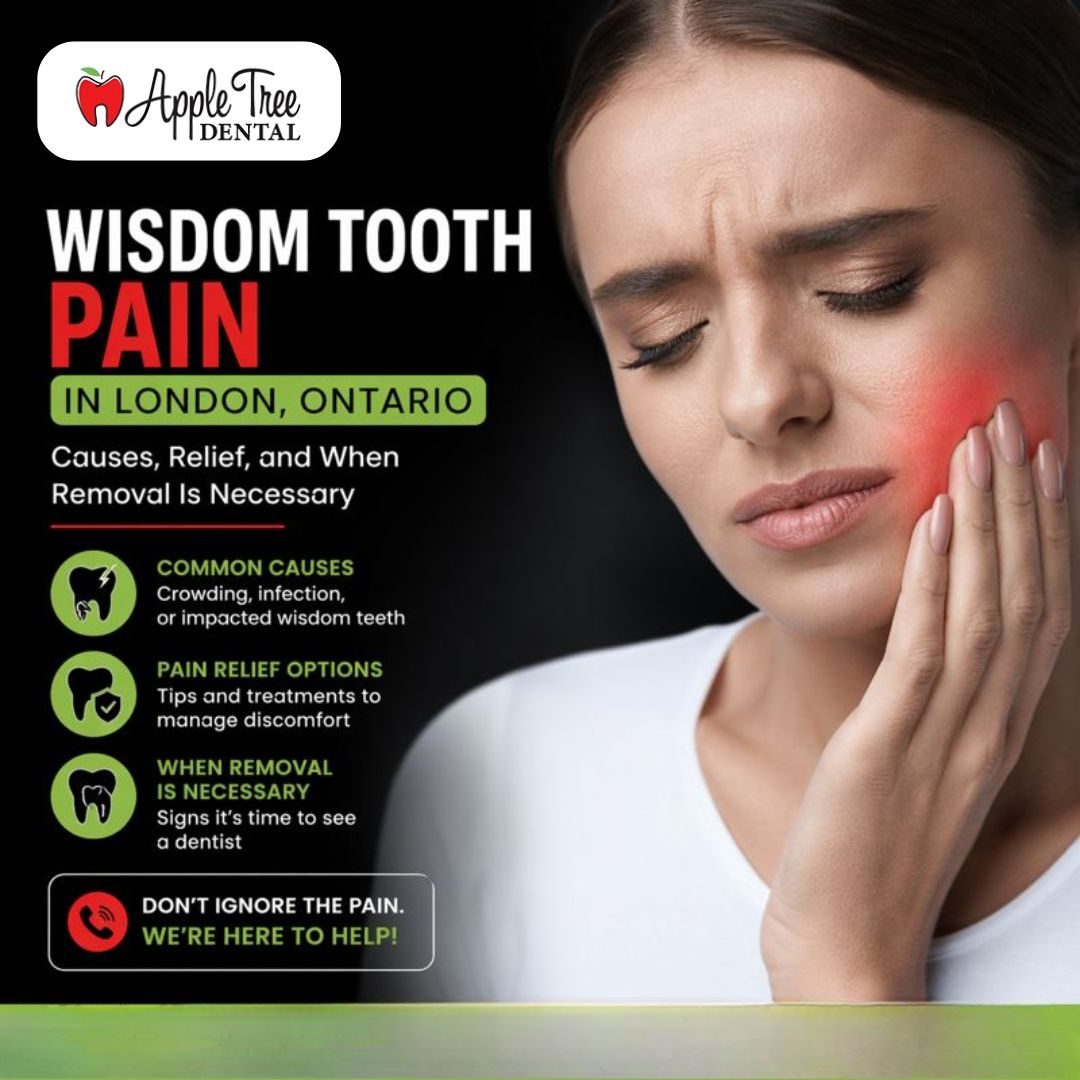
If you live in London, Ontario and have been waking up with jaw pain, pressure at the back of your mouth, or swollen gums, your wisdom teeth may already be causing problems. The question most patients ask at their first visit is simple: why does this hurt, and what do I actually need to do about it? This guide covers everything you need to know about wisdom tooth pain — causes, relief, infection signs, extraction, and exactly when removal is necessary — based on real clinical experience at Apple Tree Dental in London, Ontario.
Key Takeaways
- Wisdom tooth pain is commonly caused by impaction, infection, swelling, or crowding.
- Not everyone needs wisdom teeth removal, but untreated problems can become serious quickly.
- Dry socket after wisdom tooth extraction can cause severe pain if healing is disrupted.
- Early dental evaluation helps prevent wisdom tooth infection and damage to nearby teeth.
- Apple Tree Dental helps patients in London, Ontario with diagnosis, pain relief, and safe treatment planning.
Understanding Wisdom Tooth Pain
A wisdom tooth is the final set of molars that usually appears between ages 17 and 25. Some people never develop them, while others experience significant pain as the teeth try to erupt without enough room.
At Apple Tree Dental, many patients visit after weeks of discomfort, hoping the pain will settle on its own. In reality, wisdom tooth pain often means there is already pressure under the gums, bacterial infection, or damage affecting nearby teeth.
Dr. Nagham Altalib has seen this pattern repeatedly through years of family and restorative dentistry. Patients often wait until chewing becomes difficult or swelling reaches the jawline. Earlier diagnosis almost always means simpler treatment, faster healing, and fewer complications.
From our local experience in London, Ontario, many patients delay treatment during colder months and holiday periods. This often turns a manageable issue into an emergency wisdom tooth infection requiring urgent extraction later. That is why wisdom tooth pain should never be treated as “normal” for too long.
What Causes Wisdom Tooth Pain?
Wisdom tooth pain usually starts when the tooth cannot erupt normally.
Impacted Wisdom Tooth
An impacted wisdom tooth is trapped under the gums or grows sideways against another tooth. This creates pressure, swelling, and pain.
Common symptoms include:
- Pain at the back of the mouth
- Jaw soreness
- Swollen gums
- Difficulty opening the mouth
- Headaches near the jaw joint
- Pressure on surrounding teeth
- Pain while chewing
Impaction is one of the most common reasons for wisdom teeth removal. Some impacted wisdom teeth remain hidden for years and only become noticeable when infection or neighboring tooth damage begins.
Wisdom Tooth Infection and Gum Swelling
When a wisdom tooth only partially erupts, bacteria can enter the opening around the gums. This often causes a painful infection called pericoronitis.
Common symptoms include:
- Red, swollen gums
- Bad breath
- Bad taste in the mouth
- Pain while chewing
- Tender lymph nodes
- Pus near the gum
- Facial swelling
A wisdom tooth infection should never be ignored. Infection can spread quickly into surrounding tissues and may require urgent treatment. According to the Canadian Dental Association, untreated oral infections can create serious complications beyond the tooth itself and affect long-term oral health.
Why Are Wisdom Teeth Taken Out?
Wisdom teeth are taken out when they cause pain, infection, crowding, gum disease, cyst formation, or damage to nearby teeth. Removal is recommended when keeping the tooth creates more risk than benefit.
Many patients ask: do you have to remove wisdom teeth?
The answer is no — not always. If wisdom teeth are healthy, fully erupted, easy to clean, and not affecting surrounding teeth, they may not require removal.
However, wisdom tooth extraction is commonly recommended when:
- Teeth are impacted
- Repeated infections occur
- Orthodontic crowding develops
- Cavities form in hard-to-clean areas
- Gum disease affects nearby molars
- Bone loss or cysts appear on X-rays
At Apple Tree Dental, preventive removal is often easier, faster, and more comfortable than emergency extraction after severe pain begins. Patients considering extraction as part of a broader treatment plan can also explore dental implants at Apple Tree Dental for replacing missing teeth that affect bite function after removal.
Do You Have to Remove Wisdom Teeth?
You do not always have to remove wisdom teeth. Removal depends on symptoms, tooth position, oral health risks, and whether the tooth can remain safely without causing future complications.
Some people ask: will everyone have wisdom tooth problems?
No. Some people never develop wisdom teeth at all. Others have enough jaw space for normal eruption without pain or crowding. However, even painless wisdom teeth can create hidden problems such as:
- Bone loss
- Hidden decay
- Root damage to neighboring teeth
- Deep gum pockets
- Silent low-grade infection
This is why routine dental exams and digital X-rays are important, even when there is no obvious pain. At Apple Tree Dental, we often discover impacted wisdom teeth during regular exams before patients feel symptoms. Early discovery prevents larger procedures later.
Signs You May Need Wisdom Teeth Removal
You should schedule an evaluation if you notice:
- Repeated pain at the back of your mouth
- Swollen or bleeding gums
- Jaw stiffness
- Difficulty chewing
- Persistent bad breath
- Facial swelling
- Pressure on nearby teeth
- Ear pain connected to jaw pressure
A common example we see at Apple Tree Dental is patients who believe they have sinus pressure, only to discover impacted upper wisdom teeth creating that discomfort. Professional diagnosis prevents guesswork and helps avoid serious infection.
Wisdom Tooth Extraction: What to Expect
Wisdom tooth extraction is a procedure where the tooth is removed because of pain, infection, impaction, or long-term oral health risk. Recovery depends on complexity, healing response, and proper aftercare.
The process usually includes:
1. Dental Examination and X-rays
Your dentist checks tooth position, root shape, surrounding bone, and how close the roots are to nearby nerves.
2. Local Anesthesia or Sedation
Comfort options depend on the complexity of the case and patient preference. Patients who experience significant dental anxiety before any procedure can learn more about sedation dentistry at Apple Tree Dental.
3. Wisdom Extraction Procedure
The tooth may be removed whole or in sections if it is impacted below the gums.
4. Healing Instructions
You receive clear aftercare guidance for swelling control, bleeding management, and extracted wisdom tooth healing. Most routine extractions heal smoothly with the right aftercare.
Dry Socket Wisdom Tooth: A Common Recovery Concern
Dry socket happens when the protective blood clot at the extraction site becomes dislodged too early. This exposes bone and nerves, causing severe pain.
Signs of dry socket include:
- Strong throbbing pain after initial improvement
- Pain spreading to the ear or jaw
- Bad odor from the area
- Empty-looking extraction site
- Delayed healing
Dry socket is more common after smoking, using straws, forceful rinsing, or poor post-operative care. Research published in the Journal of Oral and Maxillofacial Surgery shows dry socket affects around 2–5% of routine extractions and can be higher in surgical wisdom tooth extraction cases.
At Apple Tree Dental, careful aftercare guidance helps reduce the risk of dry socket and supports smoother healing.
Extracted Wisdom Tooth Healing Timeline
Healing depends on the patient, but the general recovery process includes:
| Healing Stage | What to Expect |
|---|---|
| First 24 Hours | Blood clot forms. Mild bleeding and swelling are normal. |
| Days 2–3 | Swelling usually peaks. Jaw tenderness may increase slightly. |
| Days 4–7 | Pain should improve. Gum tissue begins closing. |
| Week 2+ | Significant healing continues. Eating becomes easier. Daily activities feel more normal. |
Bone healing continues beyond visible gum healing. Patients who follow post-treatment instructions closely usually recover faster and experience fewer complications.
Expert Insight From Dr. Nagham Altalib — Apple Tree Dental, London Ontario
“In family dentistry, wisdom tooth pain is one of the most delayed complaints we see. Patients often tolerate symptoms for months because they hope it will improve naturally. In reality, earlier treatment usually means a simpler procedure, lower risk, and faster recovery. I have treated many cases where mild gum tenderness became a serious wisdom tooth infection requiring urgent extraction. Prevention is always easier than emergency treatment.”
This is why early diagnosis matters. At Apple Tree Dental, we always encourage patients to treat warning signs early rather than waiting for severe pain.
Home Relief for Wisdom Tooth Pain Before Your Appointment
Temporary relief may include:
- Warm saltwater rinses
- Cold compress for swelling
- Soft foods
- Gentle brushing around the area
- Over-the-counter pain relief when appropriate
However, home care is not treatment. If swelling, infection, or severe pain exists, professional dental care is necessary. Avoid placing aspirin directly on the gums, as it can damage soft tissue and worsen irritation.
When Wisdom Tooth Pain Becomes an Emergency
Seek urgent dental care if you experience:
- Facial swelling
- Fever
- Difficulty swallowing
- Trouble opening your mouth
- Severe throbbing pain
- Pus discharge
- Swelling extending into the neck
These signs may indicate a serious wisdom tooth infection requiring immediate treatment. Ignoring these symptoms increases the risk of complications beyond the mouth and can affect overall health. For patients in London, Ontario facing acute pain or swelling, emergency dental care at Apple Tree Dental offers same-day appointments for urgent situations. Emergency dental care should never be delayed.
Why You Can Trust This Information
This content is based on real clinical experience, official Canadian dental guidelines, and current patient care standards at Apple Tree Dental in London, Ontario. For professional oversight and licensing of dental providers in Ontario, the Ontario Government’s dentist finder offers a government-verified resource to support patient decisions. For dental standards and member guidelines, the Canadian Dental Association (CDA) provides regularly updated professional guidance. For clinical research on oral surgery outcomes, the Journal of Oral and Maxillofacial Surgery serves as a peer-reviewed reference.
Conclusion
Wisdom tooth pain should never be ignored for too long. While mild discomfort during eruption can happen, ongoing pain usually signals impaction, infection, gum disease, or pressure affecting nearby teeth. Not everyone needs wisdom teeth removal, but when symptoms appear, early diagnosis protects long-term oral health and prevents more serious problems.
At Apple Tree Dental in London, Ontario, we help patients understand the real cause of wisdom tooth pain and create the safest treatment plan for lasting relief. Whether the concern is impaction, infection, crowding, or dry socket after wisdom tooth extraction, the right treatment begins with a professional exam and digital imaging. Many patients who come in early avoid more complex procedures and recover much faster.
If you are experiencing wisdom tooth pain, swelling, or jaw pressure, book an early consultation to protect your smile and prevent avoidable complications. The goal is not only pain relief — it is protecting your future oral health. To book an appointment, visit the Apple Tree Dental appointment page or check our current special offers to reduce your out-of-pocket costs.
North Location: 1365 Beaverbrook Ave, Unit 102, London, ON N6H 0J1
South Location: 3429 Wonderland Rd S, Unit 6, London, ON N6L 0E3
Frequently Asked Questions
How long does wisdom tooth pain last?
Mild discomfort may last a few days, but pain caused by impaction or infection usually continues or worsens until professional treatment is provided.
Do you have to remove wisdom teeth if they do not hurt?
Not always. If they are healthy, fully erupted, and not causing hidden damage, removal may not be necessary. Dental X-rays help confirm this.
Why are wisdom teeth taken out so often?
They are commonly removed because modern jaws often do not have enough space, leading to impaction, crowding, infection, and gum disease.
What does dry socket wisdom tooth pain feel like?
It feels like strong throbbing pain after extraction that often spreads to the jaw, ear, or temple and becomes worse instead of better.
Will everyone have wisdom tooth problems?
No. Some people never develop wisdom teeth, while others have enough space for normal eruption without complications.
Can wisdom tooth infection go away on its own?
Usually no. Symptoms may temporarily improve, but the infection often returns and becomes worse without professional treatment.
How long does extracted wisdom tooth healing take?
Soft tissue healing often improves within 1–2 weeks, while deeper bone healing takes several more weeks depending on the case.
Is wisdom tooth extraction painful?
The procedure itself is managed with anesthesia or sedation. Most discomfort happens during recovery and improves with proper aftercare.
About the Author
Dr. Nagham Altalib is an experienced dentist with more than two decades of clinical practice in restorative, family, orthodontic, prosthodontic, and cosmetic dentistry. After graduating from Baghdad University in 1998, she practiced in Iraq, Dubai, and later Canada, where she completed NDEB certification and continued serving patients in London, Ontario. At Apple Tree Dental, her patient-first approach focuses on prevention, early diagnosis, and comfortable long-term oral health solutions for adults and families. Her goal is to help patients solve dental concerns early and maintain healthy smiles for life. Learn more at appletreedental.ca.