
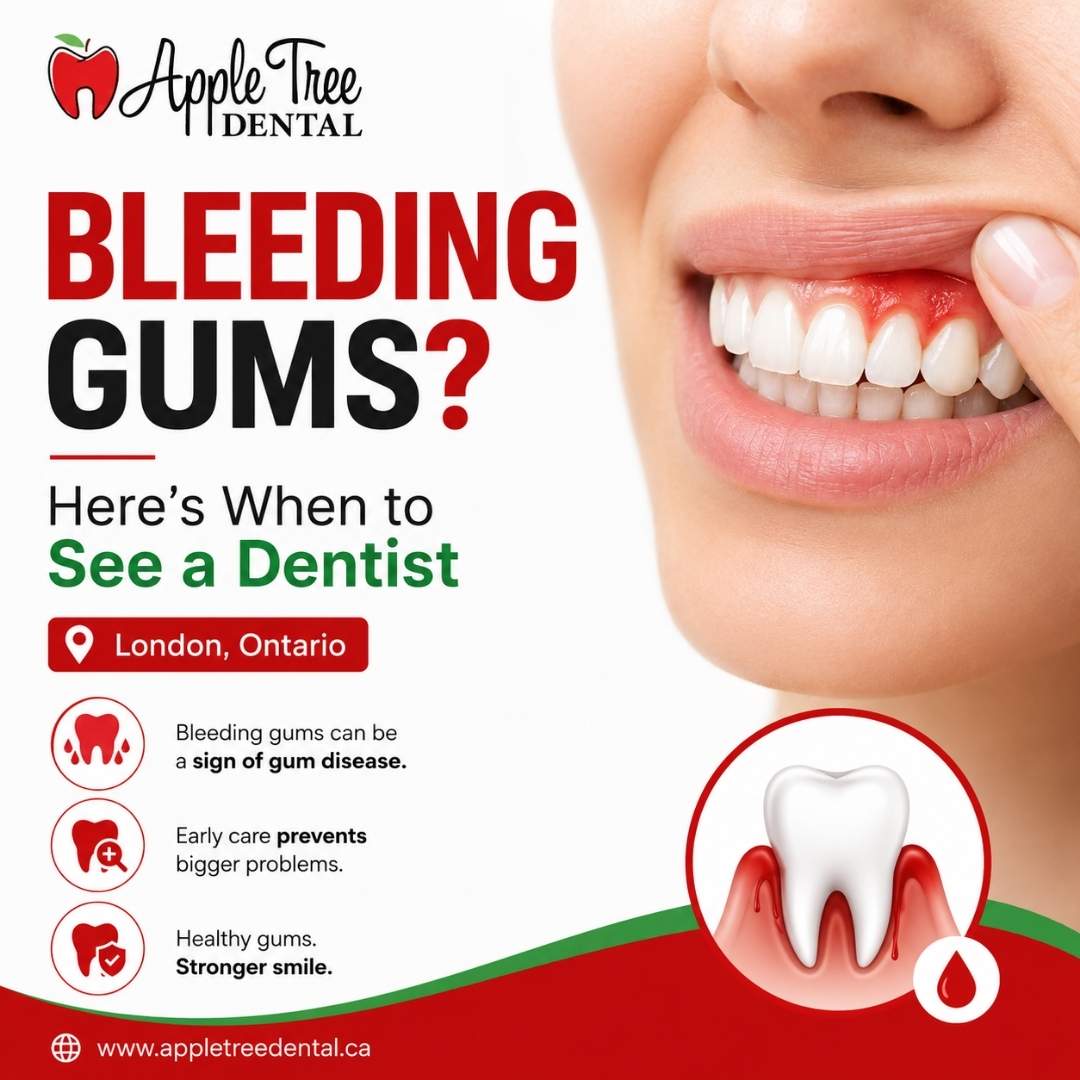
When to See a Dentist for Bleeding Gums
- Gums that bleed for more than a week usually point to gum disease, not just rough brushing.
- Swelling, redness, and bad breath alongside bleeding are signs it’s time to book an exam.
- Early gum disease, called gingivitis, is fully reversible with a professional cleaning.
- Left untreated, bleeding gums can progress to periodontitis, which can loosen teeth over time.
- Apple Tree Dental sees bleeding gum patients at both our Beaverbrook (North) and Wonderland (South) London locations.
A little blood on your toothbrush once in a while is not usually an emergency. Blood every time you brush is your gums asking for help.
Why Your Gums Might Be Bleeding
Bleeding gums almost always come down to inflammation. Plaque builds up along the gumline, your body reacts to it, and the gum tissue becomes irritated and fragile. That’s why it bleeds so easily.
- Plaque and tartar buildup: The most common cause, especially near the gumline where brushing often misses.
- A new flossing routine: Gums that aren’t used to floss can bleed for a few days, then settle down.
- Brushing too hard: A stiff brush or heavy hand can irritate healthy gum tissue.
- Hormonal changes: Pregnancy, puberty, and menstrual cycles can make gums more sensitive to plaque.
- Certain medications: Blood thinners can make gums bleed more easily, even with normal brushing.
- Vitamin deficiencies: Low vitamin C or K can affect gum health and blood clotting.
- Smoking or vaping: Tobacco use masks symptoms early on, then often makes gum disease worse.
When Bleeding Gums Are Normal
If you just started flossing, or switched to a firmer toothbrush, some bleeding is expected. Your gums need time to adjust. This type of bleeding is usually mild, shows up in one or two spots, and fades within a week as your gums toughen up.
Keep brushing and flossing gently through it. Stopping because of a little blood usually makes the problem worse, not better.
When It’s Time to See a Dentist
Book an appointment if you notice any of these signs:
- Bleeding that continues for more than seven to ten days
- Gums that look red, puffy, or swollen
- Gums that have pulled away from your teeth, making them look longer
- Bad breath that doesn’t go away with brushing
- Loose or shifting teeth
- Pain when you chew
- Bleeding that happens even when you’re not brushing or flossing
Any one of these on its own is worth a check-up. Several together usually mean the gum disease has moved past the early stage.
Gingivitis vs. Periodontitis: Why the Difference Matters
Bleeding gums fall into one of two categories, and the difference changes how they’re treated.
| Stage | What’s Happening | Can It Be Reversed? |
|---|---|---|
| Gingivitis | Gum inflammation only, no bone loss yet | Yes, with a professional cleaning and better home care |
| Periodontitis | Infection has reached the bone supporting your teeth | No, but it can be managed and slowed with treatment |
This is the part that matters most: gingivitis is easy to fix. Periodontitis is not something you fix once and forget. Catching bleeding early is what keeps you in the “easy to fix” category.
What Happens at the Appointment
A bleeding gums exam is quick and not something to dread. Your dentist will check your gum tissue, measure the pockets around each tooth, and look for any bone loss on X-rays if needed.
Most cases end with a professional cleaning to remove the plaque and tartar causing the irritation. If the gum disease has progressed, a deeper cleaning called scaling and root planing may be recommended. Your dentist will also walk through your brushing and flossing routine and flag anything worth adjusting.
None of this is invasive. It’s usually far less involved than patients expect.
What You Can Do at Home Right Now
- Switch to a soft-bristled toothbrush if you haven’t already
- Brush twice a day, using gentle circular motions rather than scrubbing
- Floss once daily, even if it causes light bleeding at first
- Rinse with warm salt water to calm irritated gum tissue
- Cut back on sugary snacks and drinks, which feed the bacteria causing plaque
These steps help, but they don’t replace a professional cleaning if plaque has already hardened into tartar. Tartar can’t be brushed away at home.
Why Ignoring It Doesn’t Make It Go Away
Gum disease is quiet. It rarely hurts until it’s advanced, which is exactly why so many people put off booking an appointment. By the time there’s pain, some bone loss has often already happened.
The Canadian Dental Association points to gum disease as one of the leading causes of tooth loss in adults, and it’s almost always preventable with early care.
Bleeding gums are your body’s early warning system. It’s worth listening to it while treatment is still simple.
Bleeding Gums Care in London, Ontario
If your gums have been bleeding for more than a week, or you’ve noticed swelling, bad breath, or shifting teeth, it’s time to get checked. Apple Tree Dental sees bleeding gum patients at both our London locations, Beaverbrook Avenue North and Wonderland Road South, with same-week appointments often available.
Frequently Asked Questions
A: See a dentist if bleeding lasts more than a week, happens without flossing, or comes with swelling, redness, or bad breath.
A: Yes. Mild bleeding for a few days is common when you start a new flossing routine. It should settle within a week.
A: Mild, short-term bleeding often resolves with better brushing and flossing. Bleeding that continues usually needs a professional cleaning.
A: Gingivitis is early gum inflammation and is fully reversible. Periodontitis involves bone loss and can only be managed, not reversed.
A: A standard cleaning is not painful. A deeper cleaning may cause mild sensitivity for a day or two afterward.
A: Apple Tree Dental treats bleeding gums at both our Beaverbrook North and Wonderland South locations in London.
Noticed Blood When You Brush or Floss?
Don’t wait for it to hurt. Book a gum health check at either of our London locations today.