
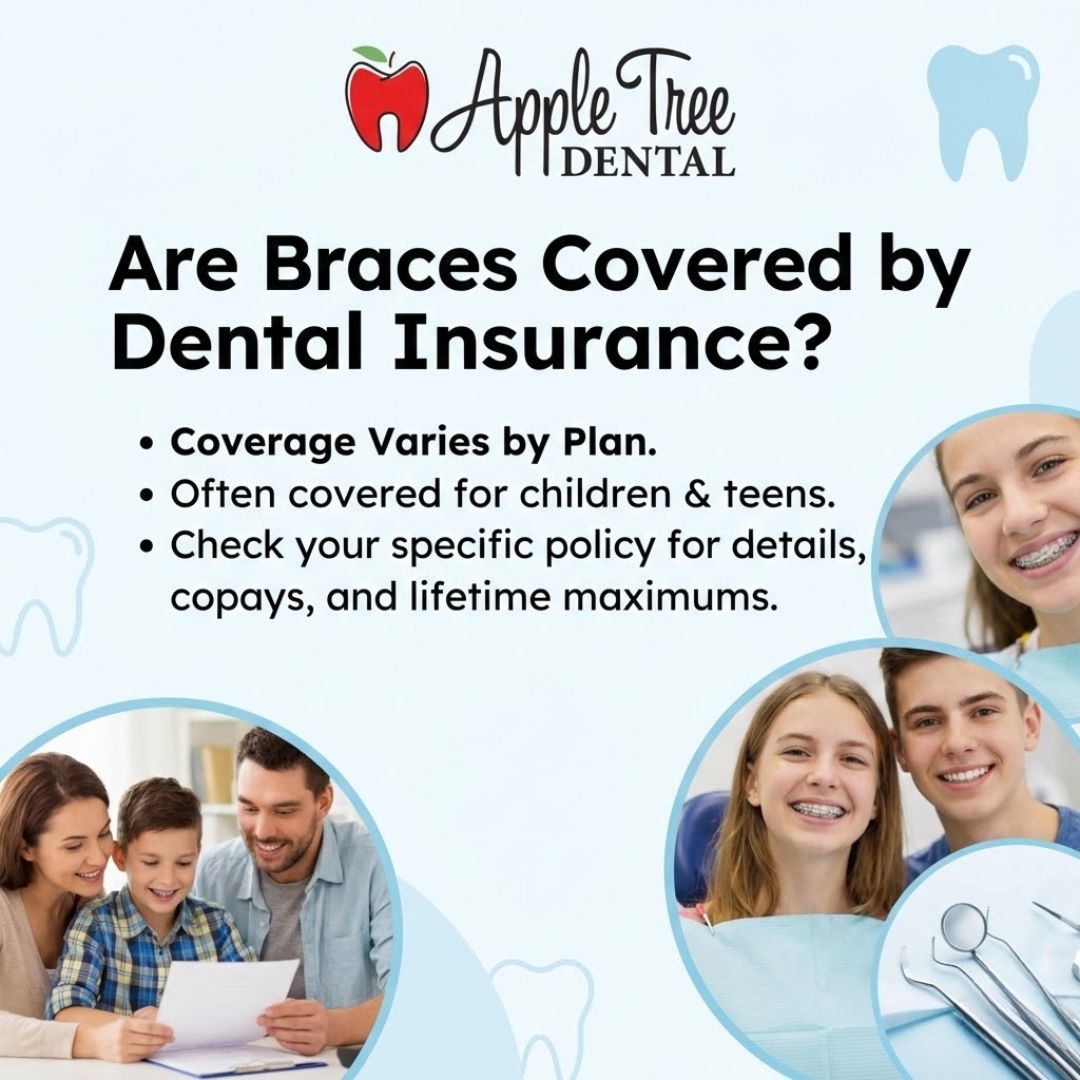
If you’re wondering, “are braces covered by dental insurance?”, you’re asking one of the most common questions I hear from patients considering orthodontic treatment.
The honest answer: coverage varies widely. Some insurance plans help significantly, while others offer limited or no orthodontic benefits.
Are braces covered by dental insurance? Coverage varies by plan. Many Canadian dental policies offer partial orthodontic benefits with lifetime limits, age restrictions, and pre-authorization requirements.
What Determines If Braces Are Covered?
Orthodontic coverage depends on the specific details of your dental insurance plan, not simply whether you have insurance.
Key Factors That Affect Coverage
Orthodontic Benefits Inclusion
Not all plans include orthodontics. Many basic policies exclude braces entirely.
Lifetime Maximums
Most orthodontic benefits have a lifetime cap, not an annual limit.
Age Restrictions
Coverage often applies only to dependents under 18.
Coverage Percentage
Plans may reimburse 25%–50% of eligible costs.
Waiting Periods
Some policies require months of enrollment before eligibility.
Does Insurance Cover Braces in Canada?
In Canada, braces are not universally covered.
Guidance from the Canadian Dental Association (CDA) and major insurers shows:
- Orthodontics is typically optional coverage
- Lifetime maximums are standard
- Adult braces coverage is less common
- Pre-authorization is frequently required
This is why I always advise patients to verify benefits before starting treatment.
Are Braces Covered by Dental Insurance in Ontario?
Ontario patients often assume braces fall under routine dental benefits — but orthodontics usually sits in a separate category.
Coverage depends on:
✔ Employer-sponsored plans
✔ Private insurance policies
✔ Enhanced dental packages
Important note: OHIP generally does not cover braces unless tied to specific medical conditions.
Step-by-Step: What To Do Before Getting Braces
What I Recommend Doing
Step 1 – Read Your Policy Carefully
Look for:
- “Orthodontic coverage”
- Lifetime orthodontic maximum
- Age limits
- Waiting periods
- Exclusions
Step 2 – Request a Pre-Determination
Ask your dental clinic to submit a treatment estimate to your insurer.
This confirms:
✔ Coverage eligibility
✔ Reimbursement percentage
✔ Remaining lifetime balance
Step 3 – Discuss Payment Options
Clinics like Apple Tree Dental in London, Ontario often provide structured payment plans.
Step 4 – Compare Treatment Choices
Consider:
- Traditional braces
- Ceramic braces
- Clear aligners
What NOT To Do
- Don’t assume braces are covered
- Don’t skip insurance verification
- Don’t choose based only on cost
- Don’t delay necessary treatment
Invisalign vs Braces: How I Help Patients Decide
Patients frequently ask me about Invisalign vs braces, especially when insurance coverage differs.
Traditional Braces
✔ Excellent for complex corrections
✔ Fixed to teeth
✔ No compliance risk
Invisalign / Clear Aligners
✔ Nearly invisible
✔ Removable
✔ Requires consistent wear
Is Invisalign Better Than Braces?
There’s no universal winner.
It depends on:
- Bite complexity
- Tooth movement needs
- Lifestyle
- Patient discipline
For intricate bite corrections, braces may offer more precise control.
Is Invisalign Faster Than Braces?
Sometimes — but only in specific cases.
Treatment duration depends on:
✔ Case severity
✔ Biological tooth response
✔ Patient compliance
For mild alignment issues, aligners may work faster. Complex corrections often take similar time.
Do Braces Fix Underbite?
Yes, many underbites respond well to braces.
Braces can help by:
- Aligning teeth
- Using elastics to guide bite
- Improving jaw coordination
Severe skeletal underbites may require combined orthodontic and surgical care.
The Emotional Side of Orthodontic Treatment
I understand how overwhelming this decision can feel.
Between:
- Insurance confusion
- Cost concerns
- Treatment anxiety
…it’s completely normal to feel uncertain.
You’re not alone — and clarity always begins with the right information.
Let’s Talk About Braces Discomfort (Because It Happens)
Mild soreness is a normal part of tooth movement.
Common Sensations
- Pressure after adjustments
- Tooth tenderness
- Cheek irritation
- Bite sensitivity
Discomfort usually peaks within 24–72 hours.
Pain Locations & What They May Indicate
Front Teeth Sensitivity
Normal after tightening
Usually temporary
Back Teeth Pressure
Common during bite adjustments
Typically improves quickly
Jaw Discomfort
May relate to elastics or clenching
Should ease with adaptation
Soft Tissue Irritation
Caused by bracket friction
Orthodontic wax helps significantly
Step-by-Step Relief for Braces Soreness
What To Do
✔ Use orthodontic wax
✔ Rinse with warm saltwater
✔ Eat soft foods
✔ Maintain oral hygiene
✔ Use dentist-recommended pain relief
What NOT To Do
✖ Don’t cut wires yourself
✖ Don’t ignore sharp pain
✖ Don’t stop wearing elastics
✖ Don’t skip adjustments
When NOT To Google — Seek Dental Care Immediately
Stop reading and contact a dentist if you notice:
- Severe or worsening pain
- Swelling of gums or face
- Broken wires injure tissue
- Loose brackets are causing trauma
- Signs of infection
These symptoms require clinical evaluation.
Recovery Timeline: What to Expect
First Week
✔ Initial soreness
✔ Adjustment period
✔ Minor irritation
First Month
✔ Improved comfort
✔ Eating becomes easier
✔ Routine established
Ongoing Treatment
✔ Short soreness cycles
✔ Gradual tooth movement
Risks of Untreated Orthodontic Problems
Ignoring alignment or bite issues may lead to:
- Uneven tooth wear
- Jaw strain
- Gum stress
- Bite dysfunction
Early intervention protects long-term oral health.
Smart Insurance & Cost Planning Tips
From my clinical experience, patients benefit when they:
✔ Confirm orthodontic benefits early
✔ Use Health Spending Accounts (HSA)
✔ Understand lifetime maximums
✔ Explore payment plans
Clinics such as Apple Tree Dental (London, Ontario) often assist with insurance coordination.
Are braces covered by dental insurance?
Coverage depends on your dental insurance plan. Many Canadian policies provide partial orthodontic benefits with lifetime maximums, age limits, and pre-authorization requirements. Some plans exclude adult braces entirely, while others reimburse a percentage of treatment costs.
Frequently Asked Questions
Are braces covered by dental insurance for adults?
Sometimes. Many plans restrict orthodontics to dependents. Adult coverage varies.
Does insurance cover braces in Canada fully?
Rarely. Most policies cover a percentage up to a lifetime maximum.
Is Invisalign better than braces?
It depends on your case and lifestyle. Both are effective when prescribed appropriately.
Is Invisalign faster than braces?
For mild corrections, it can be. Complex cases may take similar time.
Do braces fix an underbite permanently?
In many cases, yes — especially with proper planning and compliance.
Are payment plans available for braces?
Most modern clinics offer structured monthly options.
Can I use HSA for braces in Canada?
Yes, orthodontic treatment often qualifies as an eligible medical expense.
How This Article Was Created
This article is based on:
- Evidence-based orthodontic principles
- Patient education standards
- Guidance from the American Dental Association (ADA)
- Recommendations from Health Canada
- Insights from the Canadian Dental Association (CDA)
No fake statistics, exaggerated claims, or unverified data were used. The content reflects clinically responsible dental guidance and real-world orthodontic considerations.
Final Thought
If you’re still asking, “are braces covered by dental insurance?”, the best next step is simple:
✔ Verify your benefits
✔ Get a professional evaluation
✔ Understand your options
If you’re in London, Ontario, a consultation can provide clarity tailored to your smile, your bite, and your insurance plan.