
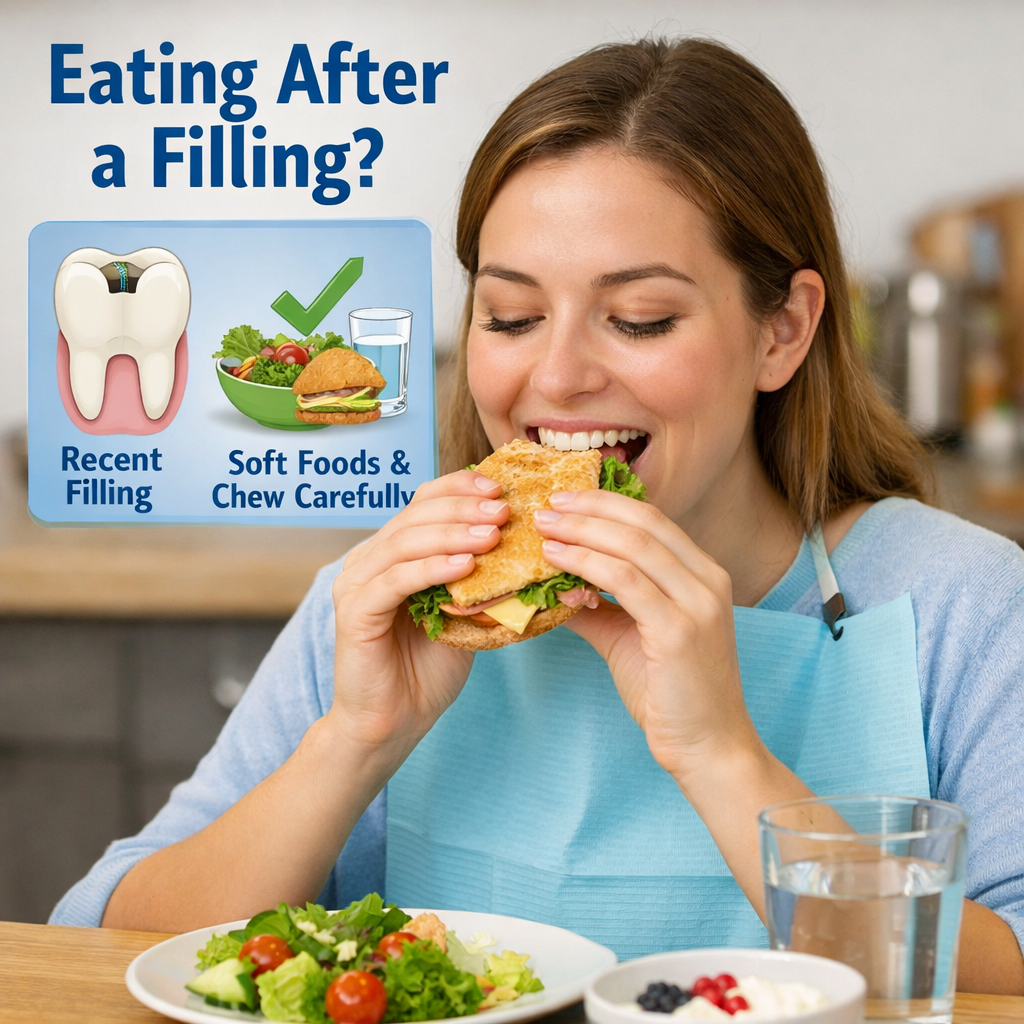
If you’ve recently had a dental filling, it’s natural to wonder can you eat after a dental filling, or how long after can you eat after a filling without causing problems. At Apple Tree Dental in London, Ontario, this is one of the most common questions patients ask before leaving the clinic.
The answer is yes—you can eat after a filling—but the timing and food choices are important for comfort, healing, and long-term success of the treatment.
Can You Eat After a Dental Filling?
Yes, you can eat after a dental filling, but the timing depends on the type of filling used. Composite fillings allow eating once numbness wears off, while amalgam fillings may require waiting up to 24 hours before chewing on the treated tooth. Dentists recommend soft foods and avoiding sticky or hard foods initially.
Why Eating After a Filling Requires Care
Dental fillings repair teeth damaged by cavities or decay and restore normal chewing function. After the procedure, your mouth may still be numb from local anesthesia, and the tooth may be adjusting to the new filling material.
Eating too soon or choosing the wrong foods can:
- Increase tooth sensitivity
- Cause discomfort while chewing
- Damage or loosen the filling
- Interfere with proper bonding
Following dentist-recommended aftercare helps protect your oral health and ensures your filling lasts as long as possible.
How Long After Can You Eat After a Filling?
The answer depends on the type of filling material used. Your dentist at Apple Tree Dental will explain this clearly after your treatment.
Eating After Composite (White) Fillings
Composite fillings harden immediately using a curing light. Patients can eat once numbness has worn off, usually within one to two hours, but should start with soft foods and avoid excessive pressure on the treated tooth.
Composite fillings are commonly used because they blend naturally with your teeth. Eating before sensation returns can increase the risk of biting your cheek or tongue.
Eating After Amalgam (Silver) Fillings
Amalgam fillings take longer to fully harden. Dentists recommend waiting up to 24 hours before chewing on the filled tooth and eating soft foods on the opposite side during that time.
Amalgam fillings are strong and durable, especially for back teeth, but allowing enough time for the material to set is essential.
Eating After Temporary Fillings
Temporary fillings allow eating after one to two hours, but patients should avoid sticky, hard, or crunchy foods because temporary materials can dislodge easily.
Temporary fillings are not designed for long-term chewing and require extra care until permanent treatment is completed.
What to Eat After a Dental Filling
Many patients ask if after a filling you can eat normally. While you can eat, choosing soft foods during the first 24 hours helps minimize discomfort.
- Yogurt
- Scrambled eggs
- Mashed potatoes
- Oatmeal
- Soft pasta
- Warm (not hot) soups
- Bananas and other soft fruits
Foods to Avoid After a Filling
Avoid for at least 24 hours:
- Sticky foods such as gum, caramel, or toffee
- Hard foods like nuts, ice, or hard candy
- Crunchy foods such as chips or popcorn kernels
- Extremely hot or cold foods
- Sugary snacks and drinks
Tooth Sensitivity After a Filling
Mild sensitivity after a filling is normal and usually temporary.
Tooth sensitivity after a filling is common and typically lasts a few days to two weeks. Sensitivity may occur with hot, cold, or sweet foods and usually improves as the tooth adjusts.
- Use toothpaste for sensitive teeth
- Avoid extreme temperatures
- Chew on the opposite side
- Brush and floss gently
If sensitivity persists beyond two weeks, a follow-up visit is recommended.
Drinking After a Dental Filling
Patients often ask if drinking is allowed after treatment. In most cases, yes.
- Avoid hot beverages until numbness wears off
- Avoid alcohol for at least 24 hours
- Drink water regularly to keep your mouth clean
When to Contact a Dentist Near You in London, ON
Contact Apple Tree Dental if you experience:
- Pain when biting or chewing
- A filling that feels uneven or too high
- Sharp edges irritating your tongue
- Sensitivity that worsens or does not improve
Trusted Dental Fillings in London, Ontario
At Apple Tree Dental, our experienced dentists provide high-quality dental fillings using modern materials and evidence-based care. We focus on patient comfort, clear communication, and long-term oral health.
Frequently Asked Questions About Eating After a Dental Filling
Can I eat immediately after a dental filling?
You can eat once the numbness has worn off. For composite fillings, this is usually within one to two hours.
How long after can you eat after a filling?
Composite fillings allow eating once numbness fades, while amalgam fillings typically require waiting up to 24 hours.
Can you eat after tooth filling if it feels sensitive?
Yes, but choose soft foods and avoid extreme temperatures.
After a filling, can you eat normally the next day?
In most cases, yes, unless advised otherwise by your dentist.