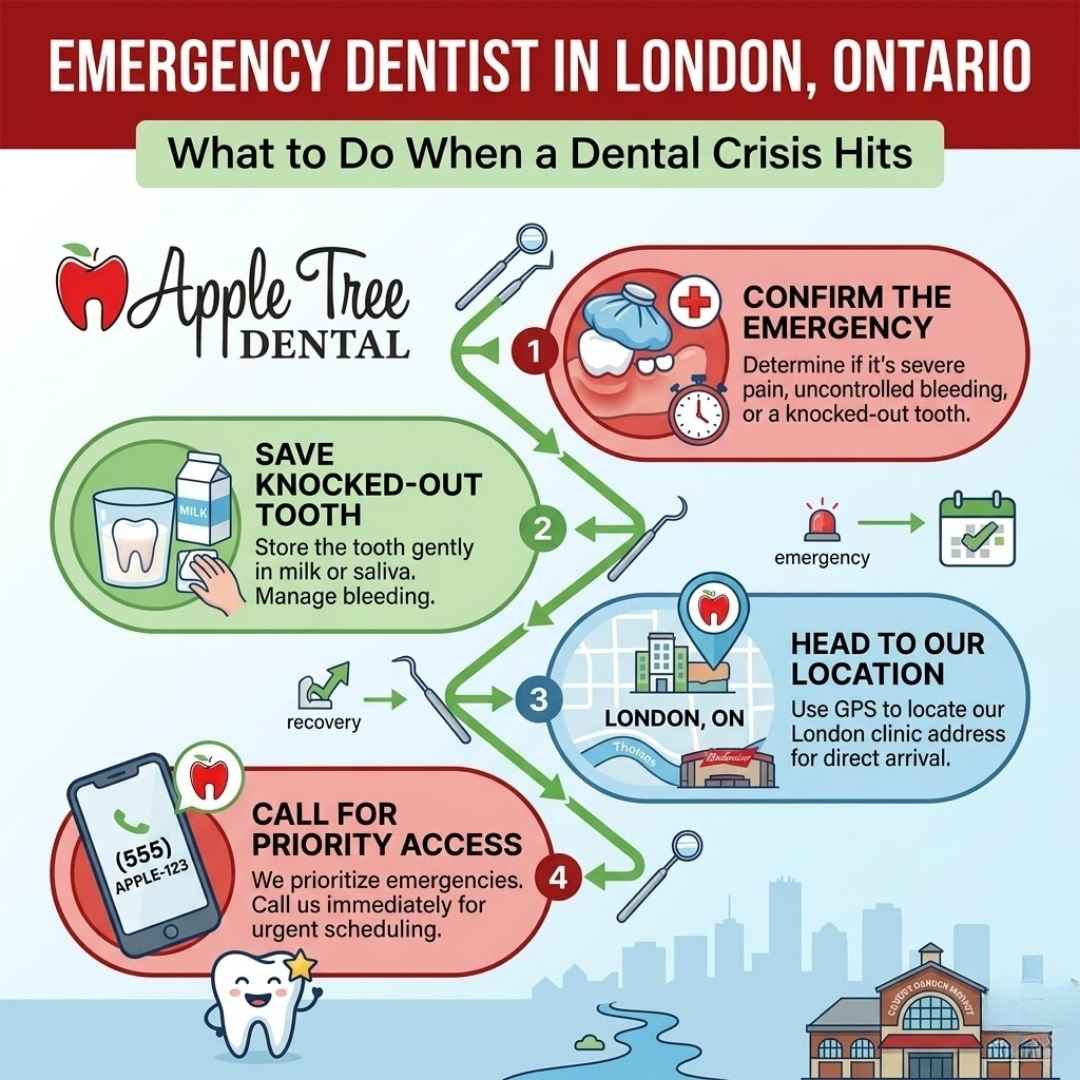
Emergency Dentist in London, Ontario: What to Do When a Dental Crisis Hits

A cracked tooth on a Sunday evening. A lost filling the night before a big meeting. Unbearable jaw pain that keeps you awake at 2 a.m. If you have been there, you already know — a dental emergency does not ask for permission, and it certainly does not wait for regular office hours. Knowing exactly where to turn, and what to do in those first critical minutes, can be the difference between saving a tooth and losing it for good.


What Counts as a Dental Emergency? (And What Can Wait)

Not every dental issue demands you drop everything and rush to a clinic — but some absolutely do. Understanding the difference protects both your health and your wallet.

According to the Canadian Dental Association, a dental emergency is any condition that causes severe pain, risk of infection, significant bleeding, or permanent damage if not treated promptly.

Situations That Require an Emergency Dentist Immediately

    • Severe, persistent toothache that worsens with pressure or temperature

    • A knocked-out (avulsed) tooth — time is critical; ideally treated within 30 minutes

    • A cracked or fractured tooth with sharp pain or visible nerve exposure

    • Dental abscess with swelling, fever, or difficulty swallowing — can become life-threatening

    • Broken dental appliance cutting into your gums or cheek tissue

    • Uncontrolled bleeding in the mouth following trauma or extraction

    • Lost crown or filling exposing a sensitive or decayed tooth

    • Facial swelling extending below the jaw or toward the neck (seek ER care immediately)

What is a dental emergency?


A dental emergency is any situation involving severe tooth pain, a knocked-out tooth, a dental abscess, uncontrolled bleeding, or a mouth injury that requires same-day treatment to prevent permanent damage or serious infection.

Issues That Are Urgent But Not Immediately Critical

    • Minor chips or cracks with no pain

    • A lost filling or crown with mild sensitivity

    • Dull, intermittent toothaches that come and go

If you are unsure whether your situation qualifies, call Apple Tree Dental at (519) 641-1411 or visit our Contact page. Phone lines are open 8 AM to 9 PM for exactly this purpose.


First Aid Steps to Take Before You Reach the Emergency Dental Clinic

These first-aid steps are aligned with guidelines from the Canadian Dental Association and Health Canada. They can limit damage and manage pain while you arrange your emergency appointment.

For a Knocked-Out Adult Tooth

    1. Pick the tooth up by the crown (white part) — never by the root.

    1. Rinse it gently with clean water if dirty — do not scrub or use soap.

    1. Try to reinsert it into the socket, or keep it moist in milk or inside your cheek.

    1. Get to an emergency dentist within 30 minutes for the best chance of saving the tooth.

See our detailed guide: What to Do If a Tooth Gets Knocked Out

For Severe Toothache

    • Rinse with warm salt water to reduce inflammation and clear debris

    • Take an over-the-counter pain reliever such as ibuprofen (if not contraindicated)

    • Avoid applying aspirin directly onto the gum tissue — it can cause chemical burns

    • Place a cold compress on your cheek to reduce swelling (20 minutes on, 20 minutes off)

For a Dental Abscess

Do not delay this one. A dental abscess is a bacterial infection that can spread to your jaw, neck, and — in severe cases — your bloodstream (sepsis). According to Health Canada, untreated oral infections can become systemic within 24–48 hours. Call Apple Tree Dental immediately. If swelling is moving toward your throat or you have difficulty breathing, go directly to the nearest hospital emergency room.

Learn more: Dental Abscess Treatment at Apple Tree Dental

For a Cracked or Fractured Tooth

    • Rinse your mouth with warm water

    • Apply a cold compress to minimize swelling

    • Avoid chewing on the affected side

Call Apple Tree Dental for a same-day assessment — cracks can worsen quickly and reach the nerve. Our team offers root canal therapy to save teeth that have been compromised by fractures.


How to Find an Emergency Dentist Near You in London, Ontario

Searching for a “walk-in dentist near me” or “dental emergency dentist near me” at 9 PM can feel overwhelming. Here is what most London residents do not realize: many dental clinics in the city offer after-hours and same-day appointments — you just need to know where to look.

When it comes to finding a trusted emergency dental clinic in London, ON, the key is identifying a practice that combines fast access with qualified, experienced care. Apple Tree Dental is one of the few emergency dental clinics in London, ON with two full-service locations, extended phone hours, and same-day appointment availability — all under one practice.

What to Look for in an Emergency Dental Clinic

    • Same-day or after-hours appointment availability

    • Accepts walk-in patients for urgent cases

    • Has on-site digital X-rays for fast, accurate diagnosis

    • Accepts major Canadian dental insurance plans, including CDCP

    • Extended phone hours — ideally past 5 PM

    • Bilingual team (an asset for non-English-speaking patients in London’s diverse community)

    • Two or more locations to reduce travel time during an emergency

Where can I find an after-hours emergency dentist in London Ontario?


Apple Tree Dental operates two locations in London, Ontario — one in North London (Beaverbrook Ave) and one in South London (Wonderland Rd) — and accepts phone calls from 8 AM to 9 PM to handle urgent and after-hours dental concerns.


Emergency Dental Care at Apple Tree Dental — London, Ontario

Apple Tree Dental has two conveniently located clinics across London, Ontario. Whether you are dealing with a cracked molar, a dental abscess, or a lost crown, our team is equipped to provide same-day emergency care at both locations. View all of our dental services or book an appointment online.

Two Convenient Locations Across London

North London: 1365 Beaverbrook Ave, Unit 102, London, ON N6H 0J1 | (519) 641-1411 | Calls: 9 AM – 8 PM | Book Online →


South London: 3429 Wonderland Rd S, Unit 6, London, ON N6L 0E3 | (226) 667-4600 | Calls: 9 AM – 6 PM | Book Online →

Emergency Dental Services Available at Apple Tree Dental

    • Same-day emergency appointments for urgent pain and trauma

    • Dental abscess diagnosis, drainage, and antibiotic management

    • Crown and bridge repairs — same-day assessments available

    • Laser dentistry for soft tissue and gum-related emergencies

    • Emergency denture and appliance repairs

CDCP Accepted — No Extra Fees for Eligible Patients


Apple Tree Dental accepts the Canada Dental Care Plan (CDCP) at both London locations with no additional fees for qualifying patients. Canadians with an adjusted family net income under $90,000 may be eligible. Check your eligibility at Canada.ca. Call ahead to confirm your coverage before your visit.


Why Londoners Choose Apple Tree Dental for Dental Emergencies

When you are searching for a “dental office near me” during a crisis, you need more than just a clinic that answers the phone. You need a team that is experienced, fast, and genuinely compassionate.

Bilingual Care — English and Arabic

London’s population is diverse, and language barriers during a dental emergency add unnecessary stress. Apple Tree Dental’s team communicates fluently in both English and Arabic, making emergency care more accessible for the large Arabic-speaking community in London and surrounding areas.

Extended Phone Hours — 8 AM to 9 PM

Most dental clinics in London wrap up calls by 5 PM. Apple Tree Dental accepts phone calls from 8 AM to 9 PM, giving patients a reliable line when after-hours dental concerns arise. Call our North London clinic at (519) 641-1411 or our South London clinic at (226) 667-4600.

Two Strategic Locations Across London

With a North London clinic near Beaverbrook Ave and a South London clinic on Wonderland Road, Apple Tree Dental covers a broad geographic area — reducing travel time when every minute counts. Patients in Strathroy, St. Thomas, Byron, and surrounding communities benefit from easy access to both locations.

Advanced Diagnostic Technology for Faster Treatment

Digital X-rays, laser dentistry, and in-house sedation mean your emergency can be assessed and treated more efficiently. Less waiting. Less guesswork. Faster relief. Accurate imaging helps the dentist diagnose the root cause — not just the symptom.

CDCP Provider — Reducing Financial Barriers to Emergency Care

As a CDCP-accepting clinic, Apple Tree Dental ensures that eligible patients receive the care they need without unexpected fees. The Canada Dental Care Plan covers a wide range of dental procedures for qualifying Canadians. Learn more about CDCP coverage at Apple Tree Dental.

Experienced, Compassionate Emergency Dental Team

Apple Tree Dental’s dentists are fully licensed with the Royal College of Dental Surgeons of Ontario (RCDSO). Our team, led by Dr. Nagham Altalib, is trained to handle urgent cases with speed and empathy — whether you are a long-term patient or visiting for the first time. Read what our patients say on our Reviews page — we are proud of our 4.9/5 Google rating from over 200 verified patients.


Dental Emergencies and the Canadian Healthcare System: What You Need to Know

Many Canadians are surprised to learn that dental care is largely separate from the provincial health system. Unlike a visit to a walk-in medical clinic, dental emergencies are almost never covered by OHIP in Ontario — unless the procedure takes place in a hospital setting. You can confirm what OHIP covers at the Ontario Ministry of Health website.

This is precisely why having access to a walk-in dental clinic in London that accepts insurance plans — including the CDCP — is so important for Ontario residents. The gap in public dental coverage means that having a reliable private dental clinic relationship is one of the most practical steps you can take for your long-term health and financial wellbeing.

Ontario Residents — Know Your Coverage


OHIP does not cover routine or emergency dental procedures performed in a private dental office. The Canada Dental Care Plan (CDCP) — launched by the federal government — covers eligible Canadians with an adjusted family net income under $90,000. Check eligibility at Canada.ca. Apple Tree Dental accepts CDCP at both London locations with no extra fees for qualifying patients. For more on what is and is not covered under provincial dental benefits in Ontario, the Ontario Dental Association (ODA) offers a helpful overview at oda.ca.


How to Prevent Dental Emergencies Before They Happen

Prevention is always the best strategy. According to the Canadian Dental Association, most dental emergencies result from untreated decay, missed cleanings, or minor damage left unaddressed. Regular visits to your dentist are the single most effective way to avoid a painful and costly emergency.

Practical Prevention Tips for Canadian Patients

    • Wear a custom-fitted mouthguard if you play contact sports — generic guards offer far less protection

    • Avoid using your teeth as tools to open packaging, bottles, or blister packs

    • Address tooth sensitivity early — it is often a sign of underlying decay or a cracked filling

    • Replace old, weakened fillings before they crack under normal chewing pressure

    • Stay hydrated — chronic dry mouth dramatically increases the risk of decay and gum disease

    • If you grind your teeth at night (bruxism), ask your dentist about a custom nightguard

    • Limit acidic foods and beverages that erode enamel over time

Patients who visit Apple Tree Dental regularly for check-ups and cleanings are far less likely to experience sudden, painful emergencies. Book your next preventive appointment today.


Frequently Asked Questions: Emergency Dentist in London, Ontario

What should I do if I have a dental emergency after hours in London, Ontario?

Call Apple Tree Dental as soon as possible. Phone lines are open 8 AM to 9 PM. North location: (519) 641-1411 | South location: (226) 667-4600. If you are experiencing a medical emergency such as difficulty breathing due to a swollen abscess, go directly to the nearest hospital emergency department.

Is there a walk-in dentist near me in London, Ontario for emergencies?

Apple Tree Dental accommodates urgent and walk-in patients at both its North and South London locations. It is always recommended to call ahead so the team can prepare for your arrival and minimize wait time.

Does Apple Tree Dental accept the Canada Dental Care Plan (CDCP)?

Yes. Apple Tree Dental is a CDCP-accepting clinic at both locations, with no extra fees for insured patients. Patients with an adjusted family net income under $90,000 may be eligible. Check your CDCP eligibility at Canada.ca.

How much does emergency dental care cost in London, Ontario?

The cost of emergency dental care in London, Ontario varies depending on the treatment required. A same-day examination and X-rays typically range from $100–$250. Additional procedures such as a root canal, extraction, or crown repair are priced separately. Patients covered under the Canada Dental Care Plan (CDCP) may have little to no out-of-pocket cost for eligible procedures. Apple Tree Dental will always discuss your treatment options and estimated costs transparently before proceeding. Learn more about payment options.

How do I know if my toothache is a dental emergency?

If your toothache is severe, throbbing, or accompanied by swelling, fever, or has lasted more than 24–48 hours, treat it as a dental emergency. The Ontario Dental Association notes that persistent dental pain can indicate an infection requiring urgent care. Call a dental clinic right away — do not wait to see if it resolves on its own.

Can a knocked-out tooth be saved?

Yes, in many cases — but time is critical. If you can get to an emergency dentist within 30 minutes of the tooth being knocked out, and the tooth has been stored properly (in milk, saline, or inside the cheek), there is a good chance it can be successfully re-implanted. Do not delay — call Apple Tree Dental immediately.

What if I do not have dental insurance for my emergency?

Apple Tree Dental works with a range of payment options and insurance plans. The team will discuss your treatment options and costs transparently before proceeding. Do not let cost concerns prevent you from seeking care — untreated dental problems almost always become more expensive over time. Learn more about payment options.

Are emergency dental services available on weekends in London, Ontario?

Apple Tree Dental is open on select Saturdays (twice monthly at the North location). Call ahead at (519) 641-1411 to confirm weekend availability or visit appletreedental.ca for the latest schedule.

How quickly can I be seen for a dental emergency at Apple Tree Dental?

Apple Tree Dental prioritizes same-day appointments for dental emergencies. When you call, let the team know you are experiencing an urgent issue. Book online or call your nearest location for the fastest response.


 Dental Emergency in London, Ontario? Don’t Wait.


Call Apple Tree Dental now — same-day emergency appointments available at both locations.


North London: (519) 641-1411 | South London: (226) 667-4600


The Bottom Line: Your Emergency Dentist in London, Ontario

Dental emergencies are stressful, painful, and rarely convenient. But knowing what to do, where to go, and who to call can dramatically improve your outcome — and reduce the anxiety that comes with an unexpected dental crisis.

If you are in London, Ontario and need an emergency dentist right now, Apple Tree Dental is ready to help. With two locations across the city, extended phone hours until 9 PM, bilingual English and Arabic staff, CDCP acceptance, and a team of RCDSO-registered dentists led by Dr. Nagham Altalib experienced in urgent dental care, Apple Tree Dental remains one of London’s most trusted emergency dental clinics for residents across North London, South London, Strathroy, St. Thomas, and surrounding communities.

Do not let a dental emergency go unaddressed. The sooner you call, the better your outcome.

North London: (519) 641-1411 | South London: (226) 667-4600 | appletreedental.ca


About the Author

Written by Dr. Nagham Altalib, DDS, NDEB Certified — Founder & Principal Dentist, Apple Tree Dental


Dr. Nagham Altalib is the founder and principal dentist at Apple Tree Dental, registered with the Royal College of Dental Surgeons of Ontario (RCDSO). She graduated from the dental program at Baghdad University in 1998 and has over 25 years of clinical experience across Iraq, the UAE, and Canada.


After completing her internship, Dr. Altalib practiced at a prosthodontics-specialized academic centre in Baghdad before relocating to Dubai in 2007, where she joined the DHCC European University team for Implants and Orthodontics and contributed to a research project on diagnosing orthodontic needs in children across Dubai. In 2010, she moved to Canada, earned her NDEB certification, and chose London, Ontario as her home — founding Apple Tree Dental after several years as an associate dentist.


Her areas of clinical expertise include Orthodontics, Prosthodontics, Cosmetic Dentistry, Dental Implants, and Sedation Dentistry. Known for her patience and warmth — particularly with children and anxious patients — Dr. Altalib is also fluent in both English and Arabic, helping serve London’s diverse communities with greater accessibility and care.


All clinical content authored or reviewed by Dr. Altalib aligns with protocols from the Canadian Dental Association (CDA) and Health Canada.


Last reviewed: March 2026 | Next review due: September 2026


Learn more about Dr. Altalib and the Apple Tree Dental team →


Related Articles & Resources

Family Dental in London, Ontario: Why One Clinic Simplifies Your Care

Managing oral health shouldn’t feel complicated. Yet many families still juggle separate providers for children, adults, and seniors — leading to fragmented records, repeated paperwork, and scheduling stress. Choosing a family dental clinic offers a smarter, more streamlined approach. For households in London, Ontario, this model delivers convenience, continuity, and preventive-focused care under one roof.

Whether you’re looking for a dental family dentist, comparing options for family dental care, or exploring eligibility under Canada dental care, understanding how a family clinic simplifies treatment can help you make confident long-term decisions.


What Does “Family Dental” Really Mean?

A family dental care clinic treats patients at every life stage:

  • Young children
  • Teens
  • Adults
  • Seniors

Instead of referring you elsewhere for age-specific needs, a family dentist provides comprehensive preventive, restorative, and diagnostic services for the entire household.

Typical services include:

✔ Dental exams & professional cleanings
✔ Pediatric dentistry
✔ Fillings & crowns
✔ Gum care
✔ Teeth whitening
✔ Emergency dental care


1. Centralized Records = Smarter Preventive Care

When your whole family visits the same clinic, your dental history stays connected. This continuity allows a Canadian dentist to detect patterns that influence long-term oral health.

Examples:

  • Genetic cavity susceptibility
  • Shared bite or alignment concerns
  • Family-linked gum conditions

With centralized records, treatment planning becomes more precise — and prevention becomes proactive instead of reactive.


2. Easier Scheduling for Busy London Families

Life moves quickly in London, Ontario. Between work, school, and activities, coordinating multiple clinics can become exhausting.

A family dental clinic allows:

✔ Back-to-back appointments
✔ Multiple family members in one visit
✔ Fewer trips across the city

This efficiency often means fewer missed checkups and better consistency in family dental care routines.


3. Reduced Anxiety — Especially for Children

Children feel more comfortable in familiar environments. Seeing the same dentist as parents or siblings can normalize visits and reduce fear.

Benefits include:

  • Recognizable staff
  • Predictable setting
  • Gradual trust building

Over time, dental care becomes part of regular wellness — not a stressful event.


4. Prevention That Protects Your Budget

Preventive dentistry is significantly more affordable than restorative treatment. Family clinics emphasize:

✔ Routine exams
✔ Professional cleanings
✔ Fluoride & sealants
✔ Early cavity detection
✔ Oral hygiene coaching

This approach aligns closely with the objectives of Canada dental care programs, which aim to improve access to preventive services.

If you’ve searched CDCP dentist near me, many family clinics in London support eligible patients. Confirming coverage directly with your provider ensures clarity.


5. Care That Evolves With Every Life Stage

Dental needs change over time:

Age GroupCommon Needs
ChildrenGrowth monitoring, cavity prevention
TeensOrthodontic evaluation
AdultsRestorative & cosmetic care
SeniorsGum care, tooth replacement

A dental family dentist adapts treatment as your family grows — removing the need to switch providers repeatedly.


Why This Matters in London, Ontario

London’s expanding population includes young families, working professionals, and retirees — all with evolving dental priorities:

  • Convenience
  • Insurance compatibility
  • Preventive care
  • Emergency readiness

Choosing a local clinic ensures your dentist understands regional healthcare frameworks and patient expectations.


How to Choose the Right Family Dentist in London, Ontario

When evaluating a family dental clinic, consider:

✔ Comprehensive Services

Ensure care for toddlers through seniors.

✔ Preventive Philosophy

Prioritize clinics focused on education & early detection.

✔ Insurance & Program Support

Ask about employer plans and Canada dental care participation.

✔ Communication Style

A good family dentist explains options clearly and supports informed decisions.


Quick Voice Search Answer

Question: Why choose a family dental clinic in London, Ontario?
Answer: A family dental clinic simplifies care by offering centralized dental records, easier scheduling, preventive treatments, and age-inclusive services for children, adults, and seniors.


The Long-Term Advantage of Family Dental Care

Consistency matters in oral health. A connected care model improves:

✔ Early detection
✔ Preventive outcomes
✔ Patient comfort
✔ Treatment efficiency

For families in London, Ontario, choosing a clinic designed for everyone can significantly reduce complexity while improving overall dental wellness.


Internal Care Pathways You May Explore

  • Preventive Dentistry
  • Children’s Dentistry
  • Teeth Whitening
  • Emergency Dental Care

Example contextual anchor:

Preventive visits help avoid major treatments. Learn how our family dental care services support long-term oral health before small issues become larger concerns.


External Health Context

For broader medical insights related to oral-systemic health, patients sometimes consult resources like Canada Doctor for general educational reading.


Conclusion

A family dental clinic is more than a convenience — it’s a continuity-driven healthcare decision. By centralizing care, simplifying scheduling, and emphasizing prevention, families benefit from a smoother, more predictable dental experience.

For residents of London, Ontario, selecting a clinic equipped to treat every generation means:

✔ Less stress
✔ Better prevention
✔ Stronger relationships with your dentist
✔ Smarter long-term outcomes


People Also Ask

Is a family dentist suitable for young children?

Yes. Family dentists are trained to treat children and monitor early oral development.

Can parents and children book appointments together?

Most family dental care clinics offer coordinated scheduling for convenience.

Does Canada dental care apply at family clinics?

Many clinics accept eligible coverage. Always verify participation before booking.

How often should families see a dentist?

Generally every six months, though frequency may vary based on oral health needs.

What’s the difference between a family dentist and a specialist?

Family dentists provide broad care across ages, while specialists focus on specific treatments.


Medically Reviewed by Dr. Nagham Altalib
Apple Tree Dental – Family Dentist in London, Ontario


Frequently Asked Questions

What services are included in family dental care?

Family dental care typically covers exams, cleanings, pediatric dentistry, fillings, crowns, gum treatments, whitening, and emergency care.

At what age should my child first visit a dentist?

Ideally by age one or within six months of the first tooth eruption.

Is visiting a family dentist cost-effective?

Yes. Preventive-focused family dentistry can reduce expensive restorative procedures.

How do I find a CDCP dentist near me in London, Ontario?

Contact local clinics directly to confirm eligibility and participation.

Can adults receive cosmetic treatments at a family dental clinic?

Most clinics provide cosmetic options such as teeth whitening and smile enhancements.

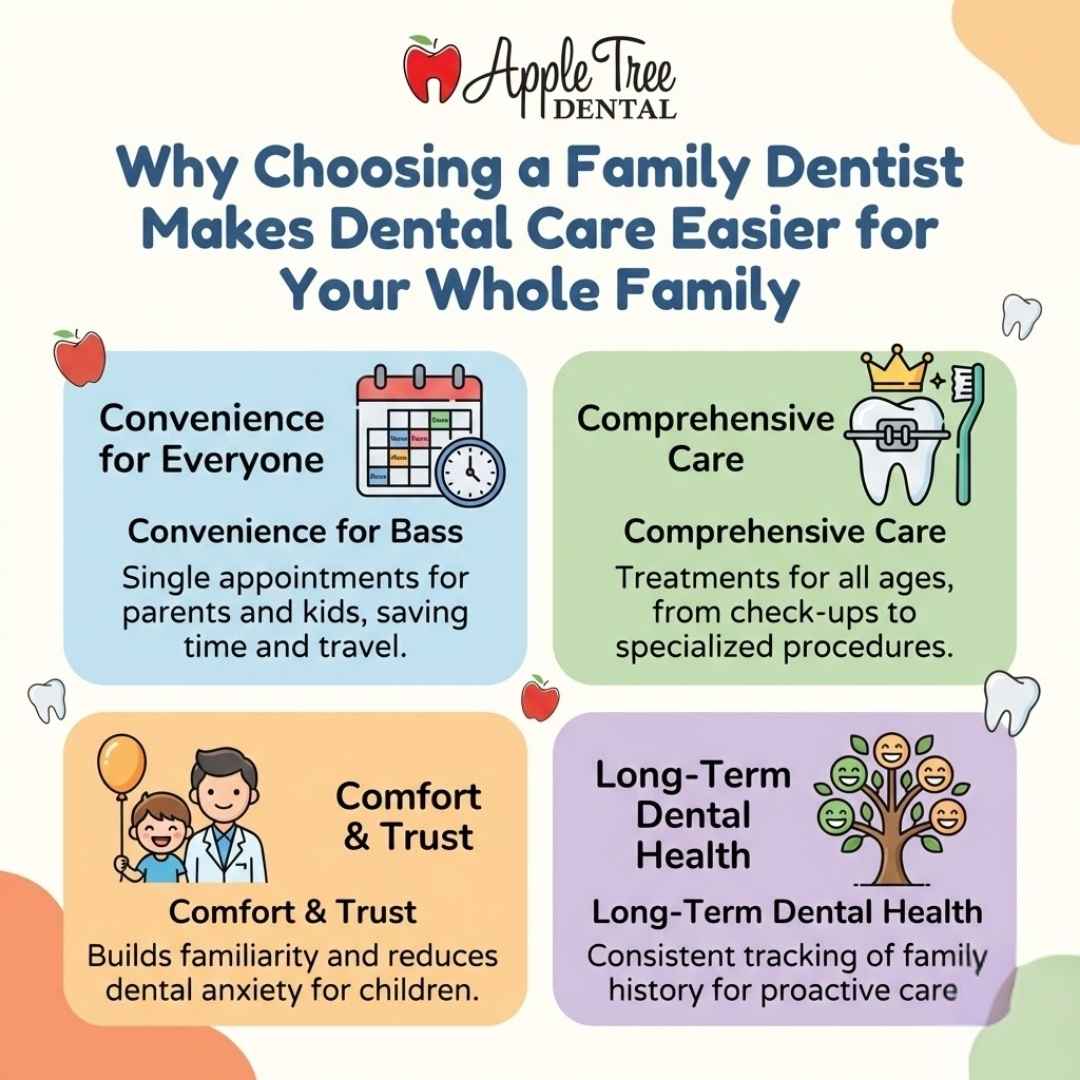
Why Choosing a Family Dentist Makes Dental Care Easier for Your Whole Family

Maintaining good oral health is essential at every stage of life. From a child’s first tooth to adult preventive care and senior dental support, oral needs continue to change. This is why choosing a family dentist plays a major role in making dental care simpler, more organized, and more effective for the entire household.

A family dentist provides complete dental services for children, adults, and seniors under one trusted dental home. Instead of visiting different clinics for each family member, families can rely on one dental team that understands their history, habits, and long-term oral health goals.


What Is a Family Dentist?

A family dentist is trained to treat patients of all age groups. They focus on preventive care, early diagnosis, and long-term dental health planning.

Unlike clinics that specialize in only pediatric or adult dentistry, a family dentist supports oral health throughout every life stage — creating continuity of care and long-term trust.

This approach improves both comfort and treatment accuracy.


One Dental Clinic for the Entire Family

One of the biggest advantages of choosing a family dentist is convenience.

With one clinic managing all dental needs, families can easily coordinate:

This reduces appointment stress and keeps all dental records in one secure system.


Long-Term Dental History Improves Care

A family dentist develops familiarity with your oral health over time. Because they track your dental history consistently, they can identify changes early — such as:

  • Developing cavities
  • Early gum inflammation
  • Bite alignment issues
  • Enamel wear

This long-term monitoring often helps prevent the need for advanced treatments like root canal therapy or tooth extractions later.


Comfortable Dental Visits for Children

Many children experience dental anxiety during early visits. A family dentist focuses on creating a calm and friendly environment that helps kids feel safe.

Early exposure helps children:

  • Build confidence during appointments
  • Learn proper brushing and flossing habits
  • Avoid fear associated with dental care

As a result, children are more likely to maintain healthy habits into adulthood.


Preventive Dental Care for Lifelong Oral Health

Preventive dentistry is the foundation of family dental care. Regular visits help protect teeth before problems begin.

Common preventive services include:

  • Dental examinations
  • Professional teeth cleanings
  • Fluoride treatments
  • Dental sealants for children

Preventive care significantly lowers the risk of cavities and gum disease while supporting overall health.


Comprehensive Dental Services Under One Roof

A trusted family dentist typically offers a wide range of services, including:

  • Tooth-colored fillings
  • Dental crowns and bridges
  • Gum disease treatment
  • Smile restoration solutions

When care is provided in one clinic, treatment planning becomes faster and more efficient.

Patients don’t need referrals for routine dental procedures, which saves time and reduces confusion.


Family Dentistry Supports Overall Health

Oral health is directly connected to overall wellness. Research from trusted organizations such as the American Dental Association and the World Health Organization shows that poor oral hygiene can contribute to serious health issues.

These may include:

  • Heart disease
  • Diabetes complications
  • Chronic inflammation
  • Oral infections

Routine dental visits help detect early warning signs before they affect general health.


Education That Benefits the Whole Family

A family dentist plays a key educational role by guiding patients on:

  • Correct brushing techniques
  • Daily flossing routines
  • Healthy diet choices
  • Preventing tooth decay

This education empowers families to maintain strong oral hygiene at home between appointments.


Saves Time for Busy Families

Modern families juggle work, school, and daily responsibilities. Having one family dentist simplifies scheduling and reduces unnecessary travel between clinics.

Many practices allow:

  • Back-to-back family appointments
  • Flexible scheduling
  • Consistent follow-ups

This makes it easier to stay consistent with dental care.


Builds Trust Through Familiar Relationships

When families see the same dentist regularly, trust naturally develops. Patients feel more comfortable asking questions and understanding treatment options.

Children especially benefit from seeing familiar faces, which lowers anxiety and increases cooperation during visits.

This long-term relationship strengthens patient confidence and satisfaction.


How to Choose the Right Family Dentist

When selecting a family dentist, consider:

  • Experience treating all age groups
  • Availability of preventive and restorative services
  • Clear communication and transparency
  • Comfortable clinic environment
  • Strong online reviews and reputation

Choosing the right provider ensures long-term oral health stability.


Importance of Regular Dental Visits

Most family dentists recommend visits every six months. These routine appointments help:

  • Remove plaque and tartar
  • Detect dental problems early
  • Maintain healthy gums
  • Reduce emergency dental visits

Consistency is the key to preventing costly treatments later.


Final Thoughts

Choosing a family dentist simplifies dental care while improving long-term oral health for every family member.

With preventive care, education, and continuous monitoring under one dental home, families benefit from convenience, comfort, and peace of mind.

From early childhood through adulthood and beyond, family dentistry provides the structure needed to maintain healthy, confident smiles for life.


Frequently Asked Questions

What services does a family dentist provide?

A family dentist offers preventive, restorative, and routine dental care for patients of all ages.

Is a family dentist suitable for children?

Yes, family dentists are trained to provide gentle, age-appropriate dental care for kids.

How often should families visit a family dentist?

Most families should visit every six months unless advised otherwise.

Can adults and seniors visit the same family dentist?

Yes, family dentists treat children, adults, and seniors in one clinic.

Why is family dentistry important?

It ensures consistent care, early detection, and long-term oral health management.

Emergency Dental Clinic Delivering Rapid Relief From Tooth Pain & Oral Trauma

Dental emergencies can happen suddenly—severe tooth pain, swelling, broken teeth, or oral injuries often require immediate professional care. Visiting an emergency dental clinic helps relieve pain quickly, stop infections from spreading, and protect your long-term oral health.

For patients in London, Ontario, timely emergency dental care can prevent minor issues from becoming serious complications.


What Is an Emergency Dental Clinic?

An emergency dental clinic is designed to treat urgent dental problems that cannot wait for a routine appointment. These clinics focus on:

  • Immediate pain relief
  • Controlling dental infections
  • Stabilizing damaged teeth and gums
  • Preventing long-term oral and overall health risks

Emergency dental care typically prioritizes same-day treatment, especially when pain, swelling, or trauma is involved.


Common Dental Emergencies That Need Immediate Care

You should contact an emergency dental clinic if you experience any of the following:

Severe Tooth Pain

Persistent or sharp pain may indicate deep decay or infection. In many cases, this pain is treated through procedures such as root canal therapy to remove infection and save the natural tooth.

Broken, Chipped, or Cracked Teeth

Dental trauma or biting accidents can weaken a tooth. Depending on the damage, treatment may involve dental crowns to restore strength or emergency tooth extraction if the tooth cannot be saved.

Swelling, Abscess, or Infection

Facial swelling or gum abscesses are signs of serious infection. Left untreated, these infections can spread beyond the mouth and should be addressed immediately by an emergency dentist.

Dental Trauma or Injury

Falls, sports injuries, or accidents can damage teeth, gums, or jaws. Children are especially prone to dental injuries and often require emergency pediatric dental care to protect developing teeth.

Knocked-Out Tooth

A knocked-out tooth is one of the most urgent dental emergencies. Acting quickly and visiting an emergency dental clinic immediately can sometimes allow the tooth to be successfully reimplanted.


Why Immediate Emergency Dental Treatment Matters

Delaying treatment at an emergency dental clinic can result in:

  • Increased pain and swelling
  • Spread of infection to surrounding tissues
  • Tooth loss
  • More complex and costly dental procedures

Early intervention focuses on stabilizing the problem first, followed by long-term restorative care if needed.


What to Expect During an Emergency Dental Visit

At an emergency dental clinic, you can expect:

  1. A rapid evaluation of pain, swelling, or trauma
  2. Diagnostic imaging such as X-rays when required
  3. Immediate treatment to relieve pain or control infection
  4. A clear treatment plan for follow-up care

The primary goal is fast relief, followed by protecting your oral health.


Emergency Dental Care in London, Ontario

Patients looking for urgent dental treatment in London can rely on Apple Tree Dental, which provides professional emergency dental services for tooth pain, infections, and dental injuries. Their team focuses on prompt diagnosis, effective pain relief, and patient comfort during stressful dental situations.


What to Do Before You Reach an Emergency Dental Clinic

If you’re waiting for emergency dental care:

  • Rinse your mouth gently with warm water
  • Apply a cold compress to reduce swelling
  • Avoid chewing on the affected side
  • If a tooth is knocked out, keep it moist and handle it by the crown only

These steps can help minimize damage until you receive professional treatment.


When Should You Visit an Emergency Dental Clinic?

Visit an emergency dental clinic right away if:

  • Pain is severe or worsening
  • There is swelling, bleeding, or pus
  • A tooth is broken, loose, or missing
  • You suspect a dental infection

If you’re unsure, it’s always safer to seek urgent dental evaluation.


Frequently Asked Questions (FAQs)

What is considered a dental emergency?

Severe pain, infection, swelling, trauma, or knocked-out teeth are all considered dental emergencies.

Can a toothache wait for a regular appointment?

Mild discomfort may wait, but intense or persistent pain should be treated at an emergency dental clinic.

Are emergency dental appointments available the same day?

Most emergency dental clinics aim to provide same-day or urgent appointments, especially for severe cases.

Is emergency dental treatment more expensive?

Prompt emergency treatment often prevents more complex and costly procedures later.

Conclusion

Dental emergencies should never be ignored, as delays can lead to increased pain, infection, and long-term oral health complications. Choosing a trusted emergency dental clinic ensures you receive immediate, professional care when tooth pain, trauma, or sudden dental problems occur.

For patients in London, Ontario, Apple Tree Dental provides timely emergency dental care focused on relieving discomfort, treating the underlying issue, and protecting your long-term oral health. If you are experiencing severe pain, swelling, or a dental injury, seeking prompt emergency dental treatment can make a significant difference in both comfort and outcomes.

How Long Does a Cleaning at the Dentist Take? Timeline, Process & FAQs

A dental cleaning at the dentist usually takes 30 to 60 minutes.
If it’s your first visit, the appointment may last 60–90 minutes. At Apple Tree Dental, most routine cleanings are completed within an hour, depending on your oral health and cleaning needs.

One of the most common questions patients ask before booking an appointment is: how long does a cleaning at the dentist take? Whether you’re visiting during a lunch break or scheduling your child’s checkup, knowing the timeline helps you plan your day with confidence.

At Apple Tree Dental in London, Ontario, professional dental cleanings are designed to be efficient, comfortable, and thorough—helping patients maintain healthy teeth and gums without unnecessary time in the chair.

This guide explains the complete dental cleaning timeline, what affects appointment length, and answers the most frequently asked questions.


Average Dental Cleaning Time (What Most Patients Experience)

Most patients can expect the following time ranges:

  • Routine dental cleaning: 30–60 minutes
  • First-time dental cleaning: 60–90 minutes
  • Children’s dental cleaning: 20–30 minutes
  • Deep cleaning (scaling & root planing): 1–2 hours (may require multiple visits)

Patients who visit Apple Tree Dental regularly often experience shorter, smoother appointments due to consistent preventive care.


Step-by-Step Dental Cleaning Timeline

Here’s how time is typically spent during a dental cleaning appointment:

1. Check-In & Oral Examination (5–10 minutes)

  • Review of dental and medical history
  • Examination of teeth and gums
  • X-rays if required (usually once a year)

2. Plaque & Tartar Removal (15–25 minutes)

  • Dental hygienist removes plaque and hardened tartar
  • More buildup means slightly more time
  • Mild scraping sensations are normal

3. Professional Teeth Polishing (5–10 minutes)

  • High-powered polishing tool
  • Removes surface stains from coffee, tea, or smoking
  • Leaves teeth smooth and clean

4. Flossing & Rinsing (3–5 minutes)

  • Professional flossing between teeth
  • Rinse to remove remaining debris

5. Fluoride Treatment (Optional – 3–5 minutes)

  • Strengthens tooth enamel
  • Often recommended for children and cavity-prone patients

6. Dentist’s Final Check (5 minutes)

  • Dentist reviews oral health
  • Discusses any concerns or follow-up care

⏱️ Total Time: 30–60 minutes


What Affects How Long a Dental Cleaning Takes?

Several factors influence appointment length:

Oral Health Condition

  • Heavy plaque or tartar buildup increases cleaning time
  • Gum disease may require deeper cleaning

Time Since Last Visit

  • Regular 6-month cleanings are quicker
  • Skipping visits can add extra time

Age of the Patient

  • Children’s cleanings are shorter
  • Adult cleanings are more detailed

Type of Dental Cleaning

  • Routine cleaning: 30–60 minutes
  • Deep cleaning: Longer, sometimes multiple visits
  • Periodontal maintenance: 45–60 minutes

How Long Does a First Dental Cleaning Take?

A first dental cleaning usually takes 60–90 minutes because it often includes:

  • Full-mouth X-rays
  • Gum health measurements
  • Comprehensive dental examination
  • Extra time for plaque and tartar removal

At Apple Tree Dental in London, Ontario, first visits are designed to be unhurried and informative, ensuring patients fully understand their oral health.


Dental Cleaning vs Deep Cleaning: Time Comparison

Type of CleaningAverage Duration
Routine dental cleaning30–60 minutes
First dental visit60–90 minutes
Deep cleaning (per quadrant)60–90 minutes
Child dental cleaning20–30 minutes
Dentist polishing teeth after cleaning

FAQs: How Long Does a Cleaning at the Dentist Take?

How long does a dental cleaning take without X-rays?

Usually 30–45 minutes, since imaging is skipped.

Is a dental cleaning 30 minutes or one hour?

Both are common. Most adults need 45–60 minutes.

Does dental cleaning take longer if you have sensitive teeth?

Sensitivity alone doesn’t increase time, but plaque buildup or gum inflammation can.

How much time should I plan for a dental cleaning appointment?

Plan about one hour, especially if it’s your first visit.

Can I go back to work after a dental cleaning?

Yes. Routine dental cleanings require no downtime.


Key Takeaway

So, how long does a cleaning at the dentist take?

For most patients, 30 to 60 minutes is all it takes to maintain a healthy smile.

Regular dental cleanings at Apple Tree Dental in London, Ontario help prevent cavities, gum disease, and more time-consuming treatments in the future.

Dental Implants vs Dentures: What’s Right for You?

Losing one or more teeth affects far more than your smile. It can change how you eat, speak, and feel about yourself. If you’re exploring dental implants vs dentures, you’re not alone—this is one of the most common questions dentists hear today.

At Apple Tree Dental, patients often ask: “Which option will feel more natural?” “Which lasts longer?”, and “What’s actually worth the investment?”
This guide is written to answer those questions clearly, honestly, and in depth—so you can make a confident, informed decision.


What Are Dental Implants?

Dental implants are permanent tooth replacements that consist of three parts:

  1. An implant post – a titanium screw placed into the jawbone
  2. Abutment – connects the implant to the crown
  3. Crown – the visible, natural-looking tooth

Once healed, implants function almost exactly like natural teeth.

A Brief History of Dental Implants

Modern dental implants date back to the 1950s, when researchers discovered that titanium bonds naturally with bone (a process called osseointegration). Since then, implant technology has advanced dramatically, with success rates now exceeding 95% for healthy patients.

“Dental implants are considered one of the most predictable procedures in modern dentistry when patients are properly assessed,” says Dr. Nagham Altalib.


What Are Dentures?

Dentures are removable prosthetic teeth designed to replace multiple missing teeth or full arches.

Types of Dentures

  • Full dentures – replace all teeth in the upper or lower jaw
  • Partial dentures – replace several missing teeth
  • Implant-supported dentures – dentures stabilized by implants

Dentures have been used for centuries and remain a common, accessible solution.

Background: How Dentures Have Evolved

Traditional dentures were often bulky and uncomfortable. Today’s dentures use lighter materials, improved aesthetics, and better customization—though they still rely on the gums for support.

Dental Implants vs Dentures

Dental Implants vs Dentures: Side-by-Side Comparison

1. Comfort & Feel

Dental Implants

  • Feel like natural teeth
  • No slipping or clicking
  • No pressure on gums

Dentures

  • May feel bulky
  • Can move while eating or speaking
  • Often require adhesives

Real-world scenario:
A patient in their 50s switched from lower dentures to implants because the denture kept lifting while talking. After implants, they reported feeling comfortable speaking in meetings again.


2. Chewing & Eating Ability

Implants

  • Restore nearly full biting force
  • Eat steak, apples, and nuts confidently

Dentures

  • Reduced chewing efficiency
  • Hard or sticky foods can be difficult

3. Bone Health & Facial Structure

Implants

  • Stimulate jawbone
  • Prevent bone loss
  • Help maintain facial shape

Dentures

  • Do not prevent bone loss
  • Over time, can lead to sunken facial appearance

This is one of the most critical long-term differences between dental implants vs dentures.


4. Longevity & Durability

Implants

  • Can last 20+ years, often a lifetime
  • Crowns may need replacement after 10–15 years

Dentures

  • Typically last 5–8 years
  • Require relining or replacement as bone changes

5. Maintenance & Daily Care

Implants

  • Brush and floss like natural teeth
  • No special cleaning products

Dentures

  • Must be removed daily
  • Require soaking and careful handling

6. Cost Considerations (Important Disclaimer)

Upfront costs for implants are higher, but long-term value is often better due to longevity and reduced maintenance.

Disclaimer: Costs vary depending on bone health, number of teeth replaced, and individual treatment needs. A dental exam is required for accurate pricing.


Who Is a Good Candidate for Dental Implants?

You may be suitable if you:

  • Have healthy gums
  • Have adequate jawbone (or are open to bone grafting)
  • Don’t smoke heavily
  • Can commit to oral hygiene

Age alone is not a limiting factor.


Who Might Be Better Suited for Dentures?

Dentures may be appropriate if you:

  • Want a lower upfront cost
  • Prefer a non-surgical option
  • Have medical conditions limiting surgery

Many patients start with dentures and later upgrade to implant-supported solutions.


Current Trends in Tooth Replacement

  • Implant-supported dentures are growing in popularity
  • Digital implant planning for precision placement
  • All-on-4® style treatments reduce treatment time
  • Greater focus on bone preservation and long-term oral health

The Future of Dental Implants vs Dentures

Looking ahead, expect:

  • Faster healing implant surfaces
  • Less invasive surgical techniques
  • More affordable implant solutions
  • Increased use of AI-guided treatment planning

Research continues to improve comfort, predictability, and accessibility.


Frequently Asked Questions

Are dental implants painful?

Most patients report mild discomfort, similar to a tooth extraction. Pain is typically manageable with over-the-counter medication.

How long does the implant process take?

From placement to final crown, the process can take 3–6 months, depending on healing and whether bone grafting is needed.

Can dentures be worn at night?

Dentists usually recommend removing dentures at night to allow gums to rest and reduce infection risk.

Do implants ever fail?

Failures are rare but can occur due to smoking, poor oral hygiene, or uncontrolled medical conditions.

Are dental implants safe?

Yes. Dental implants are supported by decades of clinical research and are widely used worldwide.


How to Decide: A Simple Framework

Ask yourself:

  1. Do I want a fixed or removable solution?
  2. Am I thinking short-term affordability or long-term value?
  3. How important are comfort, confidence, and bone health to me?

A personalized consultation is always the best next step.


Conclusion: Dental Implants vs Dentures—Which Is Right for You?

There’s no universal answer. Dental implants offer unmatched stability, comfort, and long-term oral health benefits. Dentures remain a practical, accessible solution for many patients.

At Apple Tree Dental, the goal isn’t to push one option—it’s to help you choose what truly fits your health, lifestyle, and goals.

How Long Does a Dental Cleaning Take?

If you’re wondering about dental cleaning duration or how much time to set aside for your teeth cleaning appointment, the answer depends on several factors including your oral health condition, the type of cleaning you need, and whether you require any additional procedures during your visit.

Understanding what happens during a dental cleaning and how long each step takes can help you plan your appointment and know what to expect when you visit your dentist.

What Affects the Length of Your Dental Cleaning?

Your Oral Health Condition

If you maintain good oral hygiene and have healthy gums, your cleaning will likely be on the shorter end of the spectrum. However, if you have significant plaque buildup, tartar deposits, or gum disease, your hygienist will need more time to thoroughly clean your teeth.

Type of Cleaning Needed

Regular prophylaxis cleanings are faster than deep cleanings. A standard cleaning for someone with healthy gums usually takes 30-45 minutes, while a deep cleaning for periodontal disease can take 1-2 hours or may even require multiple appointments.

Time Since Your Last Visit

If you’ve skipped dental cleanings for several years, expect your appointment to take longer. More buildup means more work for your dental hygienist to remove hardened tartar and plaque.

Additional Procedures

X-rays, fluoride treatments, or dental examinations add time to your visit. A comprehensive appointment including cleaning and exam typically takes 60-90 minutes total.

Breaking Down the Dental Cleaning Process

Initial Examination (5 Minutes)

Your dental hygienist begins by examining your mouth, checking for signs of gingivitis, cavities, or other oral health concerns. This quick visual inspection helps them plan the cleaning approach.

Plaque and Tartar Removal (15-30 Minutes)

This is the most time-intensive part. Using a scaler, your hygienist carefully removes plaque and tartar from around your gum line and between teeth. The more buildup present, the longer this step takes.

Deep Cleaning with Gritty Toothpaste (5-10 Minutes)

After scaling, your hygienist uses a high-powered electric brush with professional-grade toothpaste to deep clean and polish your teeth. This removes any remaining plaque and surface stains.

Professional Flossing (5 Minutes)

Even if you floss daily at home, professional flossing reaches deep between teeth and identifies any trouble spots that might bleed, indicating potential gum issues.

Rinsing (2-3 Minutes)

You’ll rinse your mouth to wash away any debris loosened during cleaning. This usually involves a rinse containing liquid fluoride.

Fluoride Treatment (3-5 Minutes, Optional)

Many dental offices offer fluoride treatment as the final step. A flavored gel or foam is applied to strengthen tooth enamel and protect against cavities.

How Long Do Different Types of Cleanings Take?

Regular Cleaning (Prophylaxis)

Duration: 30-45 minutes

This standard cleaning is for patients with generally healthy teeth and gums. It involves routine plaque and tartar removal above the gum line.

Deep Cleaning (Scaling and Root Planing)

Duration: 1-2 hours per session (often requires 2-4 appointments)

Deep cleaning treats gum disease by removing plaque and tartar below the gum line. Because it’s more intensive and may require local anesthesia, it takes significantly longer and is often split across multiple visits.

Periodontal Maintenance Cleaning

Duration: 45-60 minutes

For patients with a history of gum disease, these cleanings happen every 3-4 months and take slightly longer than regular cleanings because they involve more thorough work below the gum line.

Gross Debridement

Duration: 60-90 minutes

When someone hasn’t had a cleaning in many years, excessive buildup may require gross debridement before a regular cleaning can even be performed. This preliminary procedure removes large deposits of hardened tartar.

What Happens During a Full Dental Appointment?

While the cleaning itself takes 30-60 minutes, a complete dental appointment includes additional components:

Dental Examination: Your dentist examines your teeth, gums, and mouth for cavities, oral cancer, and other issues (10-15 minutes)

X-rays: Taken annually or as needed to detect problems not visible to the eye (10-15 minutes)

Treatment Discussion: Time to discuss findings and any recommended treatments (5-10 minutes)

Total Appointment Time: Expect to spend 60-90 minutes for a comprehensive visit including cleaning, exam, and x-rays.

Tips to Make Your Cleaning Faster

Maintain good oral hygiene between visits by brushing twice daily and flossing once a day. The less buildup your hygienist needs to remove, the faster your appointment will be.

Keep regular appointments every six months. Consistent care prevents heavy buildup that requires extended cleaning time.

Arrive on time and have your paperwork completed. Administrative delays can extend your total time at the office.

Communicate openly with your hygienist. Let them know if you experience discomfort so they can adjust their approach without prolonging the procedure unnecessarily.

When Should You Schedule Extra Time?

Plan for a longer appointment if you haven’t had a cleaning in over a year, have been diagnosed with gum disease, need extensive x-rays or other diagnostic procedures, or are a first-time patient at a new dental office (initial exams are more comprehensive).

How Often Should You Get Your Teeth Cleaned?

Most dental professionals recommend professional cleanings every six months for patients with healthy teeth and gums. However, those with gum disease, heavy plaque buildup, or other oral health issues may need cleanings every 3-4 months.

Regular cleanings not only keep your teeth looking their best but also prevent serious dental problems that could require costly and time-consuming treatments later.

What to Expect After Your Cleaning

Your teeth will feel noticeably smoother and cleaner immediately after your appointment. Some people experience mild sensitivity to hot or cold temperatures for a day or two, especially after deep cleanings.

Your gums might feel slightly tender or bleed a little when you brush for the first day after cleaning, particularly if you had significant tartar buildup. This should resolve quickly with proper home care.

Making the Most of Your Dental Cleaning Appointment

A dental cleaning is a quick, relatively comfortable procedure that plays a vital role in maintaining your oral health. Most people find that 30-60 minutes twice a year is a small investment for preventing cavities, gum disease, and more serious dental problems.

Schedule your next cleaning today to keep your smile healthy and bright. Remember that consistent preventive care is always easier, faster, and less expensive than treating dental problems after they develop.

Frequently Asked Questions About Dental Cleanings

How long does a deep cleaning take at the dentist?

A deep cleaning (scaling and root planing) typically takes 1-2 hours per session. Since it involves cleaning below the gum line and may require numbing, most dentists split the procedure into 2-4 appointments, treating one section of your mouth at a time.

Is dental cleaning painful?

Most people experience little to no pain during a routine cleaning. You may feel some scraping sensations and minor discomfort, especially if you have sensitive teeth or gum inflammation. Deep cleanings can cause more discomfort, which is why dentists often use local anesthesia for these procedures.

How long does a routine teeth cleaning take?

A standard routine cleaning for someone with healthy teeth and gums takes approximately 30-45 minutes. This includes scaling, polishing, flossing, and rinsing. When combined with a dental exam and x-rays, the total appointment usually lasts 60-90 minutes.

Can I eat immediately after a dental cleaning?

Yes, you can typically eat right after a routine cleaning. However, if you received a fluoride treatment, your dentist may recommend waiting 30 minutes before eating or drinking. After a deep cleaning with anesthesia, wait until the numbness wears off to avoid accidentally biting your cheek or tongue.

Why does my dental cleaning take so long?

Your cleaning may take longer if you have excessive plaque and tartar buildup, haven’t had a cleaning in over a year, have gum disease requiring more thorough work, need a deep cleaning instead of routine cleaning, or require additional procedures like x-rays or periodontal measurements.

How often should I get my teeth professionally cleaned?

Most dentists recommend professional cleanings every six months for optimal oral health. However, if you have gum disease, diabetes, smoke, or have a history of heavy plaque buildup, your dentist may suggest more frequent cleanings every 3-4 months.

What’s the difference between a regular cleaning and a deep cleaning?

A regular cleaning (prophylaxis) removes plaque and tartar from above the gum line and is preventive maintenance for healthy mouths. A deep cleaning treats gum disease by cleaning below the gum line, smoothing root surfaces, and typically requires local anesthesia. Deep cleanings take much longer and cost more than routine cleanings.

Will my insurance cover dental cleanings?

Most dental insurance plans cover two routine cleanings per year at 100% with no out-of-pocket cost. Deep cleanings for gum disease treatment are usually covered at 50-80% after your deductible. Check with your specific insurance provider to understand your coverage.

How long should I wait between dental cleanings?

The standard recommendation is six months between cleanings for most people. This interval helps prevent plaque from hardening into tartar and catches dental problems early. Your dentist may adjust this timeline based on your individual oral health needs.

Do dental cleanings damage tooth enamel?

No, professional dental cleanings do not damage tooth enamel when performed correctly by a trained hygienist. The tools and techniques used are designed to remove plaque and tartar without harming your teeth. Regular cleanings actually protect your enamel by preventing decay and gum disease.


Schedule Your Dental Cleaning Today

Now that you know how long a dental cleaning takes and what to expect during your appointment, you’re ready to prioritize your oral health. Whether you need a routine 30-minute cleaning or a more comprehensive deep cleaning, professional dental care is essential for maintaining a healthy smile.

If you’re looking for quick, comfortable, and professional dental cleaning in London, Ontario, our experienced hygienists at Apple Tree Dental ensure a smooth, efficient experience from start to finish. We offer flexible scheduling, gentle care, and comprehensive cleanings tailored to your individual needs.

Contact us today to book your next dental cleaning appointment. We offer convenient online booking, extended hours, and same-day appointments to fit your busy schedule. Your healthier, brighter smile is just one appointment away!

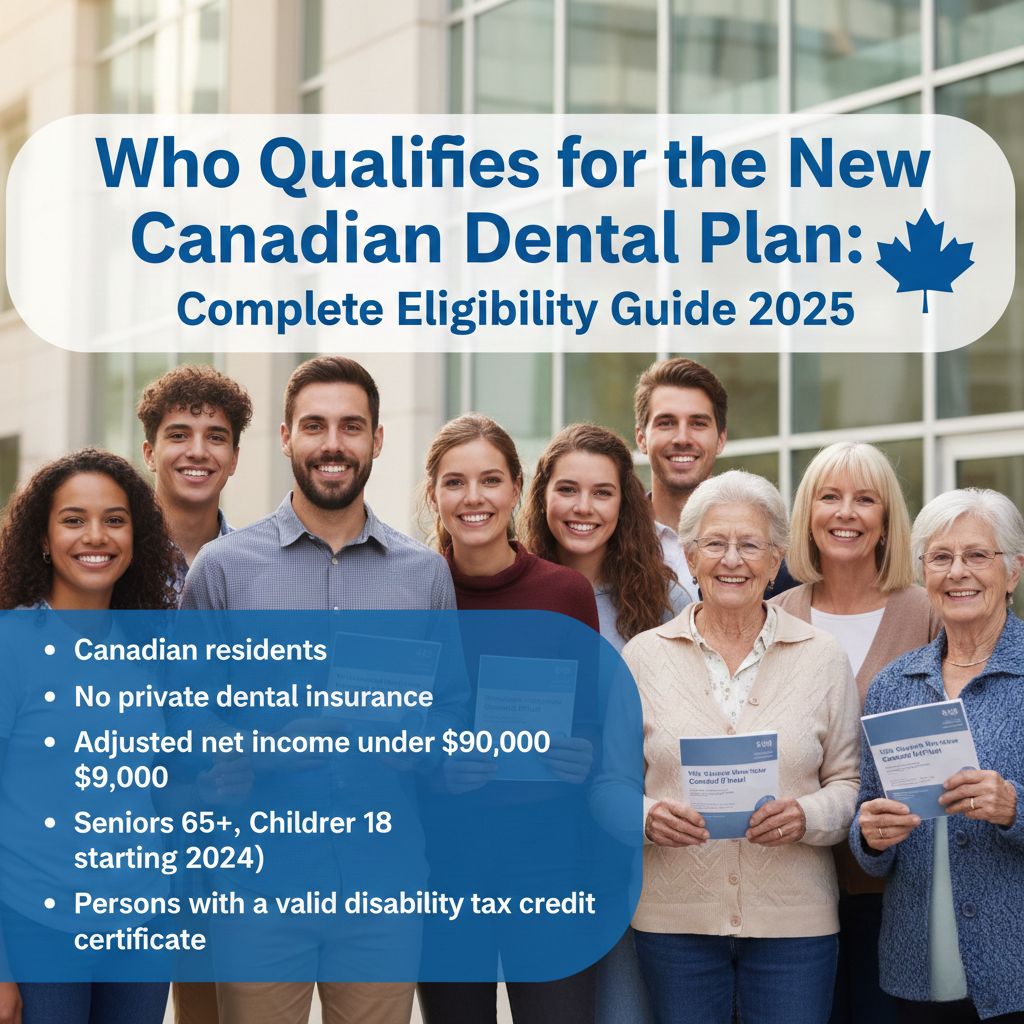
Who Qualifies for the New Canadian Dental Plan: Complete Eligibility Guide 2025

The Canadian Dental Plan (CDCP) represents a significant shift in healthcare accessibility across Canada. Launched in December 2023, this federal initiative aims to provide affordable dental coverage to millions of Canadians who previously couldn’t access essential oral health services. Understanding who qualifies for this program is crucial for individuals and families seeking to benefit from comprehensive dental coverage.

At a Glance: CDCP Quick Facts

CriteriaRequirement / Details
Income LimitBelow $90,000 adjusted family net income
Insurance StatusNo existing dental coverage
ResidencyCanadian resident with filed tax return
Coverage StartDecember 2023 (seniors) to June 2025 (all adults)
Investment$13 billion over 5 years
Potential BeneficiariesUp to 9 million Canadians
AdministratorSun Life
Contact1-833-537-4342 or canada.ca/dental

Understanding the Canadian Dental Plan

The CDCP is a federally funded program designed to reduce financial barriers preventing Canadians from accessing necessary dental care. With an investment of $13 billion over five years and $4.4 billion annually thereafter, the government plans to help up to nine million Canadian residents receive dental coverage. This initiative addresses a critical gap in healthcare, as approximately one-third of Canadians lack dental insurance, and many avoid dental visits due to cost concerns.

Primary Eligibility Requirements

To qualify for the Canadian Dental Care Plan, applicants must meet several core requirements that determine their eligibility for coverage.

Basic Criteria

All applicants must be Canadian residents who have filed their income tax returns for the previous year. The program targets individuals and families with an adjusted family net income below $90,000 annually. Crucially, applicants cannot have access to any form of dental insurance, whether through an employer, private plan, or educational institution.

The government considers individuals who decline available dental coverage through employer or school benefits as having access to insurance, making them ineligible for the CDCP. This stipulation ensures the program serves those genuinely without alternative coverage options.

Income-Based Coverage Structure

The CDCP employs a tiered approach to coverage based on household income levels. Families earning less than $70,000 annually receive full coverage without co-payments. Those with incomes between $70,000 and $79,999 face a 40 percent co-payment, while households earning between $80,000 and $89,999 must pay 60 percent co-payments for covered services.

CDCP Co-Payment Structure


Annual Family IncomeCo-Payment RateGovernment Coverage
Under $70,0000% (No co-payment)100%
$70,000 – $79,99940%60%
$80,000 – $89,99960%40%
$90,000+Not eligibleN/A

Who Can Apply and When

The CDCP rolled out coverage in phases, prioritizing specific demographic groups before expanding to the general population.

Seniors and Children

Seniors aged 65 and older were among the first to receive coverage invitations, beginning in December 2023. Children under 18 became eligible for applications starting June 27, 2024. These groups received priority due to their heightened dental care needs and vulnerability to health complications from untreated oral conditions.

Adults with Disabilities

Adults holding a valid Disability Tax Credit certificate gained eligibility in June 2024. This group often faces additional barriers to dental care access, making early inclusion essential for addressing health disparities.

Working-Age Adults

The most recent expansion opened eligibility to all remaining Canadian residents aged 18 to 64 without dental insurance. Applications for this final cohort opened in May 2025, with coverage beginning as early as June 1, 2025. The rollout followed a staggered schedule: individuals aged 55 to 64 could apply starting May 1, those aged 18 to 34 beginning May 15, and the 35 to 54 age group from May 29 onward.

Covered Services Under the CDCP

The plan encompasses a comprehensive range of dental services designed to maintain oral health and address dental problems promptly.

Preventive Care

Preventive services form the foundation of CDCP coverage, including routine dental examinations, professional cleanings, fluoride treatments, and sealants. These services help detect oral health issues early and prevent the development of more serious conditions requiring extensive treatment.

Basic and Restorative Treatments

The plan covers essential treatments for cavities and damaged teeth, including various types of fillings. Restorative care ensures teeth can function properly for eating and speaking, preventing further deterioration that could lead to tooth loss.

Specialized Procedures

More complex treatments receive coverage under specific conditions. The program includes endodontic services like root canals for severely infected teeth, periodontal treatments for gum disease, and prosthodontic services such as dentures. Starting November 2024, certain specialized treatments including partial dentures, crowns, and higher levels of sedation became available through a preauthorization process.

Emergency dental services receive coverage without limitations on emergency examinations, ensuring immediate care for urgent dental problems. Limited orthodontic services began in 2025 for medically necessary cases meeting specific clinical criteria.

Application Process and Documentation

Applying for the CDCP requires specific documentation and can be completed through multiple channels to accommodate different preferences and needs.

Required Documents

Applicants must provide their Social Insurance Number, proof of age such as a birth certificate, verification of Canadian residency, and proof of income through their Notice of Assessment from the Canada Revenue Agency. Individuals must confirm they’ve filed their most recent tax return before applying.

Application Methods

Eligible Canadians can apply online through the official CDCP portal or their My Service Canada Account. Those preferring direct assistance can apply by phone through Service Canada at 1-833-537-4342, or visit a Service Canada Centre in person for support with the application process.

Step-by-Step Application Guide:

  1. Gather required documents (SIN, proof of age, Notice of Assessment)
  2. Confirm you’ve filed your most recent tax return
  3. Choose your application method (online, phone, or in-person)
  4. Complete the application form with accurate income information
  5. Submit and wait for your Sun Life welcome package

For more information on eligibility criteria, visit the official CDCP eligibility page.

Coverage Activation

Once approved, applicants receive a welcome package from Sun Life, the plan administrator, containing a member card, coverage details, co-payment information, and the coverage start date. The timing varies based on when applications are submitted and processed, but coverage typically begins soon after enrollment completion.

Important Considerations for Applicants

Several factors deserve attention when considering CDCP enrollment and maintaining coverage.

Annual Renewal Requirements

CDCP coverage requires annual renewal to confirm continued eligibility. Members must file their tax returns and receive their Notice of Assessment before renewing. The renewal process for the 2025-2026 benefit period concluded on June 1, 2025. Those who missed this deadline and whose coverage ended on June 30, 2025, must submit new applications, creating a coverage gap during which services won’t be covered or reimbursed.

Coordination with Existing Benefits

Canadians with dental coverage through provincial, territorial, or federal social programs may still qualify for the CDCP if they meet all eligibility criteria. In such cases, coverage is coordinated between programs to prevent duplication while ensuring comprehensive care without gaps.

Additional Costs and Balance Billing

While the CDCP covers significant portions of dental care costs, patients may face additional expenses. Balance billing occurs when dentists charge the difference between their standard fees and CDCP reimbursement rates. Patients may also pay for services exceeding CDCP coverage or treatments not included in the plan. Understanding these potential costs helps beneficiaries budget appropriately for dental care.

Impact on Canadian Healthcare

The Canadian Dental Care Plan addresses a longstanding gap in Canadian healthcare by recognizing dental health as integral to overall wellbeing. Poor oral health connects to numerous serious health conditions including respiratory disease, diabetes complications, cardiovascular problems, and pregnancy complications. By removing financial barriers to dental care, the CDCP aims to improve public health outcomes while reducing pressure on the broader healthcare system.

For millions of Canadians who have delayed or avoided dental treatment due to cost, this program offers renewed access to essential care. The initiative particularly benefits vulnerable populations including seniors on fixed incomes, families with children, individuals with disabilities, and working adults without employer-sponsored benefits.

Taking the Next Steps

Eligible Canadians should verify their qualification status and gather necessary documentation to begin the application process. Visiting the official government website at canada.ca/dental provides comprehensive information about eligibility, covered services, and application procedures. Contacting Service Canada directly at 1-833-537-4342 offers personalized guidance for those with specific questions about their circumstances.

Additional Resources:

The CDCP represents a transformative approach to healthcare accessibility in Canada, ensuring that financial constraints no longer prevent millions from receiving essential dental care. Understanding eligibility requirements and taking action to enroll allows qualified Canadians to benefit from this comprehensive program and maintain their oral health for years to come.

Frequently Asked Questions About the Canadian Dental Plan

Can I apply if I have employer dental insurance?

No, you cannot qualify for the CDCP if you have access to dental insurance through an employer, school, pension, or private plan. This includes situations where you choose not to enroll in available coverage through your workplace.

What is the income limit for the Canadian Dental Care Plan?

Your adjusted family net income must be below $90,000 annually to qualify. Families earning under $70,000 receive full coverage without co-payments, while those earning $70,000 to $79,999 pay 40% co-payments, and incomes between $80,000 and $89,999 require 60% co-payments.

Do I need to file taxes to be eligible?

Yes, filing your income tax return for the previous year is mandatory for CDCP eligibility. You’ll need your Notice of Assessment from the Canada Revenue Agency when applying.

Are dental implants covered under the CDCP?

Dental implants are not currently covered under the Canadian Dental Care Plan. The program focuses on preventive care, basic treatments, and medically necessary procedures like fillings, crowns, dentures, and root canals.

How long does it take to get approved after applying?

Processing times vary, but most applicants receive their approval and welcome package within several weeks of submitting their application. Once approved, Sun Life sends your member card and coverage details, including your official start date.

Can I use the CDCP at any dentist in Canada?

Yes, you can visit any participating dentist who accepts CDCP patients. However, not all dentists may choose to participate in the program, so it’s recommended to confirm with your dental office before booking an appointment.

What happens if my income increases above $90,000?

You must report income changes during your annual renewal. If your income exceeds $90,000, you will no longer qualify for coverage under the Canadian Dental Care Plan for the upcoming benefit year.

Do children need their own application?

Yes, each family member requires a separate application, including children. Parents or guardians can apply on behalf of minors under 18 years of age using the child’s information and documentation.

Types of Dental Bridges and Which One Is Right for You

Dental bridges are prosthetic devices designed to replace missing teeth by bridging the gap between existing natural teeth or dental implants. They restore chewing function, improve speech, maintain facial structure, and enhance your smile’s appearance. Whether you’re seeking a dental bridge in London or elsewhere, understanding the different types of dental bridges and their specific applications helps you make an informed decision about the best tooth replacement option for your unique dental needs.


The Four Main Types of Dental Bridges

Traditional Fixed Bridge

Traditional dental bridges london are the most common type, consisting of one or more artificial teeth (pontics) held in place by dental crowns cemented onto the abutment teeth on either side of the gap. This design requires the natural teeth adjacent to the missing tooth to be reshaped to accommodate the crowns. Traditional bridges offer excellent durability and reliability, making them ideal for patients with strong adjacent teeth and multiple missing teeth. They typically last 10–15 years with proper care and are suitable for both front and back teeth replacements. Many dental clinics offering dental bridge treatments in London recommend traditional fixed bridges due to their proven effectiveness and longevity.

  • Best for: One or more missing teeth with strong adjacent teeth
  • Pros: Reliable, widely available, good longevity
  • Consider: Requires reshaping adjacent teeth

Cantilever Bridge

Cantilever bridges are similar to traditional bridges but are supported by a crown on only one abutment tooth rather than on both sides of the gap. This type is used when there’s only one natural tooth available adjacent to the gap. While cantilever bridges can be effective, they tend to be less strong than traditional bridges due to support from only one side. They work best for replacing teeth in areas with lower bite pressure and should be used with caution to avoid undue stress on the supporting tooth. Dental bridge specialists in London often use cantilever bridges for specific mouth areas where the false tooth needs support on only one side.

  • Best for: Gaps with only one adjacent natural tooth
  • Pros: Conservative when only one side available
  • Consider: Lower strength; limit to low-bite-pressure zones

Maryland (Resin-Bonded) Bridge

Maryland bridges consist of a pontic anchored to adjacent natural teeth using a metal or porcelain framework. The framework is bonded to the back of the adjacent teeth with minimal tooth preparation, preserving most natural structure. This conservative approach makes Maryland bridges an excellent choice for front teeth where aesthetics are paramount. They are cost-effective but may not be suitable for back teeth that experience heavy chewing forces.

  • Best for: Missing front teeth with good enamel
  • Pros: Minimal prep, highly aesthetic, budget-friendly
  • Consider: Not ideal for heavy bite forces

Implant-Supported Bridge

Implant-supported bridges use dental implants placed into the jawbone rather than relying on natural teeth for support. This option offers the most stable and long-lasting solution, with a typical lifespan of 15–30+ years. Ideal for multiple consecutive missing teeth, implant bridges help prevent bone loss by stimulating the jawbone and do not require altering adjacent healthy teeth. Leading providers in London recommend implant-supported solutions when there aren’t teeth on either side of the gap to support a traditional bridge.

  • Best for: Multiple adjacent missing teeth; long-term results
  • Pros: Preserves bone, spares adjacent teeth, superior longevity
  • Consider: Requires surgery and adequate bone; higher upfront cost

Materials Used in Dental Bridges

MaterialDurabilityAestheticsBest For
Zirconia10–15+ yearsNatural appearanceAll teeth positions; bruxism
Porcelain10–15 yearsExcellent aestheticsFront teeth; color matching
Porcelain-Fused-to-Metal (PFM)10–15 yearsGood appearanceBack teeth; cost-effective
Porcelain-Fused-to-Zirconia (PFZ)15+ yearsSuperior aestheticsBoth front and back teeth

Zirconia has emerged as the strongest and most durable bridge material in modern dentistry, offering exceptional fracture resistance and biocompatibility. Multi-layered zirconia bridges now mimic natural teeth with gradual color transitions and improved translucency. Porcelain remains popular for its natural tooth-like appearance and ability to match existing tooth color, though it’s slightly less durable than zirconia. Many clinics use ceramic materials matched to natural tooth shades for bridges that are visually indistinguishable from real teeth.


Choosing the Right Dental Bridge

  • Location: Front vs. back teeth and bite pressure
  • Condition of adjacent teeth: Strength and restorability
  • Jawbone health: Adequate density for implants; bone grafting if needed
  • Aesthetics & budget: Material and design selection
  • Bite alignment: Even force distribution to prevent damage

For patients with strong adjacent teeth, traditional bridges offer a straightforward, reliable solution. If you have missing front teeth and want to preserve natural structure, Maryland bridges provide excellent cosmetic results. When only one adjacent tooth is available, a cantilever bridge may be considered, though its limitations should be discussed with your dentist. Where long-term stability and bone preservation are priorities, implant-supported bridges are the gold standard.


Cost Considerations & Treatment Timeline

Typical Costs

  • India
    • Traditional bridges: ₹15,000–₹30,000 per unit
    • Cantilever bridges: ₹20,000–₹35,000
    • Maryland bridges: ₹12,000–₹25,000
    • Implant-supported bridges: ₹30,000–₹50,000 per unit (higher upfront, superior longevity)
  • London (UK)
    • Fixed (traditional) bridges: £250–£800 per unit
    • Bonded (Maryland) bridges: £250–£1,000
    • Implant-supported bridges: starting from £2,900+

Timeline (What to Expect)

  • Visits: 2–4 appointments over ~3 weeks
  • Steps: Diagnosis & planning → tooth preparation (if needed) → impressions/scan → try-in (if applicable) → final bridge cementation
  • Material impact: Zirconia typically costs more than PFM due to superior durability and aesthetics

Tip: Balance upfront cost with expected lifespan and maintenance to determine true long-term value.


Frequently Asked Questions

How long do dental bridges last?

Traditional and Maryland bridges typically last 10–15 years, while implant-supported bridges can last 15–30+ years with proper care and maintenance.

Are dental bridges painful to get?

Treatment is performed under local anesthesia, so you shouldn’t feel pain during the procedure. Mild sensitivity afterward is common and usually subsides within a few days.

Can I eat normally with a dental bridge?

Yes. Bridges restore chewing function. Avoid extremely hard or sticky foods that could damage the bridge.

Which is better: zirconia or porcelain bridges?

Zirconia offers superior strength and durability (10–15+ years), making it ideal for long-term use. Porcelain provides excellent aesthetics for front teeth.

Do I need to reshape adjacent healthy teeth?

Traditional and cantilever bridges require reshaping adjacent teeth. Maryland bridges need minimal preparation. Implant-supported bridges don’t affect adjacent teeth.

How much does a dental bridge cost in London?

Fixed bridges range from £250–£800 per unit, bonded bridges £250–£1,000, and implant-supported bridges start from £2,900 or more.


Aftercare & Maintenance

  • Brush twice daily and clean under the pontic with floss threaders or interdental brushes
  • Attend regular dental check-ups and professional cleanings
  • Wear a night guard if you grind your teeth (bruxism)
  • Avoid biting very hard objects (ice, hard candy)

Disclaimer: Costs are indicative, vary by clinic, material, and case complexity. Consult your dentist for a personalized treatment plan.

Need an Endodontist London? 7 Signs It’s Time to See a Specialist

You should see an endodontist in London if you have severe tooth pain, prolonged hot/cold sensitivity, swollen gums or an abscess, tooth discoloration, a cracked tooth, pain when chewing, or issues with a previous root canal. Endodontists are specialists in diagnosing and treating internal tooth problems and can often save teeth that might otherwise need extraction.

What Is an Endodontist?

An endodontist is a dental specialist trained to treat problems inside your tooth, especially the root canal system. After dental school, they complete 2–3 years of advanced specialist training focused on diagnosing tooth pain, performing root canal therapy, and saving natural teeth.

While a general dentist may perform 1–2 root canals per week, a London endodontist typically performs 25+, resulting in:

  • Higher success rates (90–95%)
  • Reduced treatment time
  • Greater comfort through advanced techniques and technology

According to the British Endodontic Society, specialist-performed root canal treatment significantly improves outcomes and patient comfort.

7 Critical Signs You Need an Endodontist in London

1) Severe, Persistent Tooth Pain

Constant, throbbing pain—especially pain that keeps you awake or worsens when lying down—is one of the clearest signs that the infection has reached the pulp (nerve). This requires immediate specialist care.

2) Prolonged Sensitivity to Hot or Cold

If sensitivity lasts longer than 30 seconds after exposure, you may have irreversible pulpitis, meaning the nerve is inflamed or dying. The British Endodontic Society identifies prolonged thermal sensitivity as one of the strongest signs that root canal treatment is needed.

3) Swollen, Tender Gums or a Dental Abscess

A gum boil, swelling, bad taste, or facial swelling often indicates a dental abscess. Abscesses do not heal on their own and can spread, requiring same-day emergency treatment by an endodontist london.

4) Tooth Discoloration

A tooth turning grey, brown, or dark yellow is often a sign of nerve damage. An endodontist can treat the underlying cause and often improve the tooth’s internal color through specialized therapy.

5) Cracked or Chipped Tooth

Even small cracks allow bacteria to enter the pulp. Many patients report ignoring a tiny chip only for pain to develop weeks later when infection sets in. Endodontists are trained to diagnose and treat cracked tooth syndrome accurately.

6) Pain When Chewing or Biting

Sharp pain upon biting may indicate nerve inflammation, a cracked root, or hidden infection. These conditions require specialist assessment.

7) A Previous Root Canal Is Failing

Root canals can fail due to new decay, missed anatomy, or fractures. London endodontists can perform retreatment using advanced equipment such as microscopes and 3D CBCT imaging.

Why Choose an Endodontist in London Over a General Dentist?

FactorGeneral DentistEndodontist London
Training4–5 years7–8 years including specialty training
Root Canals Per Week~225+
TechnologyStandardMicroscope, CBCT, ultrasonic instruments
Success Rate70–80%90–95%
Treatment TimeOften 2–3 visitsUsually 1 visit

Bottom line: Endodontists have the expertise and technology to save teeth that general dentists may consider for extraction.

What to Expect at Your First Visit

Consultation & Diagnosis (30–45 minutes)

  • Medical and dental history review
  • Digital X-rays or 3D CBCT scans
  • Vitality testing
  • Full assessment by the specialist

Treatment Planning

  • Diagnosis
  • Treatment options
  • Success rates
  • Costs
  • Risks of delaying treatment

Root Canal Treatment (60–90 minutes)

Modern treatment is comfortable and nearly painless due to local anesthesia, advanced rotary instruments, rubber dam isolation, and microscopic precision (25x magnification).

  1. Isolation with rubber dam
  2. Small opening to access pulp
  3. Removal of infected tissue
  4. Cleaning & disinfecting canals
  5. Sealing and restoring the tooth

Endodontic Care Across London

  • Harley Street & Marylebone – specialist clinics with premium services
  • Kensington, Chelsea, and Fulham – rapid access and modern facilities
  • Wimbledon, Richmond, Hampstead – family-friendly suburban practices
  • Canary Wharf & London Bridge – ideal for weekday emergency access

Many offer same-day appointments for emergencies and early-morning/late-evening availability.

How to Choose the Right Endodontist London

1) Verify Credentials

  • GDC specialist registration
  • Membership in the British Endodontic Society (BES)
  • Postgraduate training and case experience

2) Check Technology

  • CBCT 3D imaging
  • Surgical microscope
  • Digital radiography
  • Rotary and ultrasonic systems

3) Read Patient Reviews

  • Pain management
  • Emergency availability
  • Clear communication
  • Transparent pricing

4) Consider Location & Access

Central clinics may cost more but offer fast access. Suburban clinics often provide more affordable fees and easier parking.

5) Understand Costs in London

Typical fees for specialist treatment:

  • Consultation: £100–£200
  • Root canal (front tooth): £400–£800
  • Molar root canal: £800–£1,500
  • Retreatment: £1,000–£2,000

NHS (Band 2 = £73.50) offers low-cost care but often with long waiting lists and limited specialist options.

Cost Comparison: Save vs Extract

TreatmentCost
Extraction£100–£300
Dental implant£2,000–£3,000
Dental bridge£1,500–£2,500
Root canal (molar)£800–£1,500

What to Do Next

If It’s an Emergency

  • Contact an endodontist for a same-day appointment
  • Take ibuprofen + paracetamol (if medically suitable)
  • Avoid hot/cold foods
  • Do not wait—symptoms worsen quickly

For Non-Urgent Cases

  • Book a consultation within 1–2 weeks
  • Seek a second opinion before extraction
  • Check your insurance coverage
  • Prepare questions for your specialist

Frequently Asked Questions

1. Is a root canal painful?

No. With modern anesthesia, it feels similar to a filling.

2. How long does treatment take?

Most cases take 60–90 minutes in a single visit.

3. What is the success rate?

Specialist treatment has a 90–95% success rate.

4. Will I need a crown afterward?

Molars usually require a crown; your dentist will advise.

5. Can an infected tooth heal on its own?

No. Infection must be treated professionally.

6. Can endodontists treat cracked teeth?

Yes, they are trained to diagnose and manage cracks effectively.

7. What if my last root canal failed?

Retreatment or microsurgery can often save the tooth.

8. How soon can I see a London endodontist?

Many offer same-day emergency availability.

9. Are endodontists more expensive?

Upfront costs may be higher, but saving the tooth avoids costly implants or bridges.

10. Is CBCT imaging necessary?

For complex cases, CBCT offers essential 3D detail.

Conclusion: Your Natural Tooth Is Worth Saving

Early diagnosis and specialist treatment give you the best chance of saving your tooth. If you’re experiencing persistent pain, swelling, sensitivity, or any warning signs, contact a qualified endodontist in London today. Delaying treatment can lead to more complex issues, higher costs, and potential tooth loss.

Your natural teeth are irreplaceable—act now to protect them.