
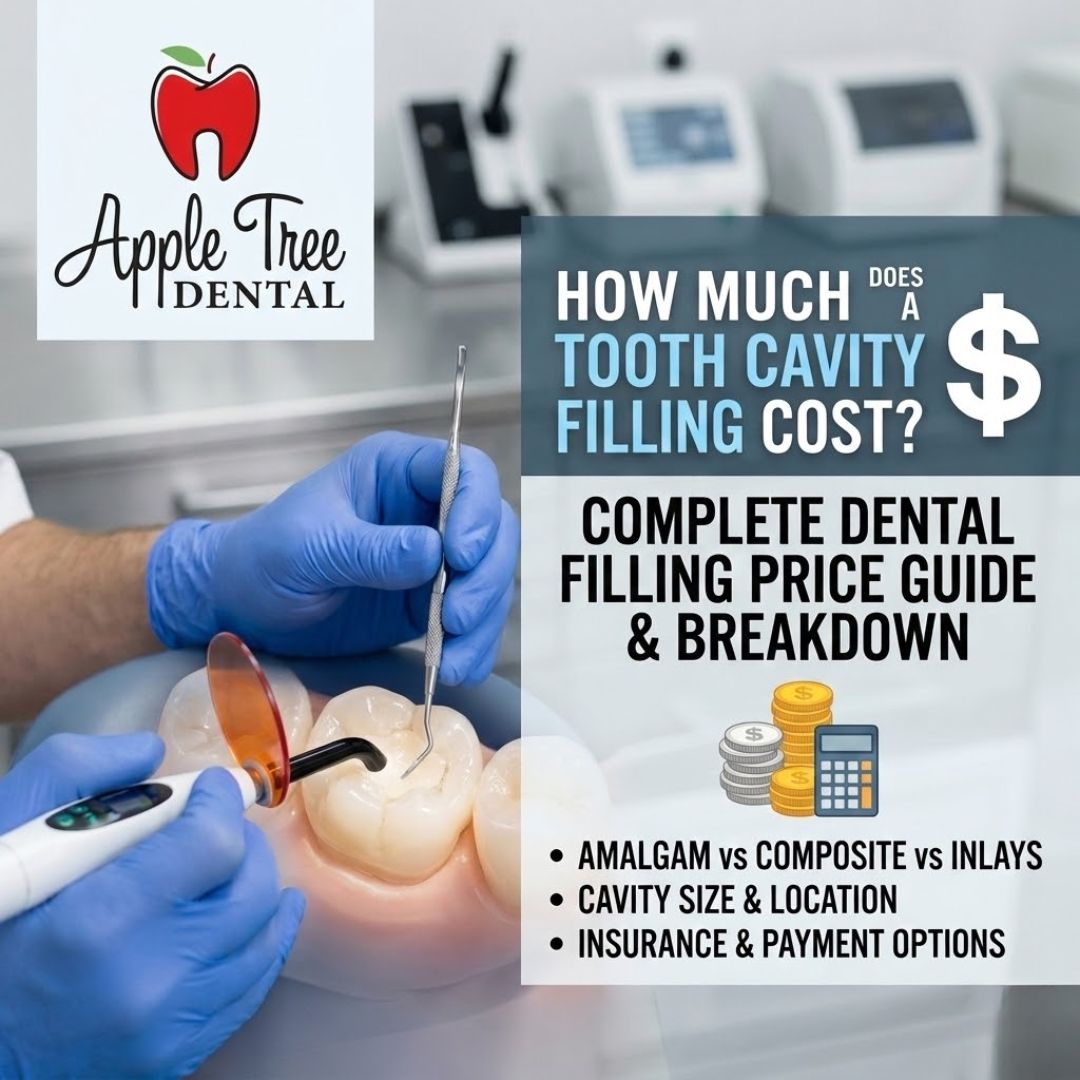
Tooth decay is one of the most common oral health issues, and treating cavities early is essential for protecting both your teeth and your long-term dental health. When a cavity forms, dentists usually repair the damaged tooth using a dental filling. Because many people research treatment costs before scheduling a dental visit, the tooth cavity filling cost is one of the most commonly searched dental topics online.
Patients frequently ask questions such as how much does it cost to fill a cavity, how much is a filling, or how much does dental filling cost in Canada. Understanding the typical dental filling cost, the price of filling procedures, and average dentist filling charges can help patients plan their dental care more confidently.
Quick Answer: Tooth Cavity Filling Cost
The tooth cavity filling cost in Canada usually ranges between $150 and $400 per tooth, depending on the filling material, cavity size, and number of tooth surfaces affected.
Typical dental charges for fillings include:
- Small cavity filling: $150 – $250
- Composite tooth filling: $200 – $400
- Larger cavity filling: $300 – $600+
Patients commonly search for questions such as:
- how much does a filling cost in Ontario
- how much does tooth filling cost in Canada
- how much is a filling in Canada
- how much is tooth filling
The exact tooth cavity filling cost is determined during a dental examination.
What Is a Tooth Cavity Filling?
A tooth cavity filling is a restorative dental treatment used to repair a tooth damaged by decay. When bacteria break down tooth enamel, they create a cavity that can grow larger if left untreated.
During the procedure, a dentist removes the decayed portion of the tooth and fills the space with a restorative material. This restores the tooth’s strength and prevents further decay.
The tooth filling price depends on the material used and the complexity of the cavity.
Common filling materials include:
- Composite (tooth-colored fillings)
- Amalgam (silver fillings)
- Ceramic or porcelain fillings
- Gold fillings
Each material affects the cost tooth fillings require, which is why the teeth filling price and filling cost teeth treatments involve can vary between patients.
Average Dental Filling Cost in Ontario
Many patients researching treatment want to know how much is a filling in Ontario or how much does a filling cost in Ontario before visiting a dentist.
Dental clinics in Ontario typically follow the provincial dental fee guide, which helps standardize dentist filling charges.
Typical tooth filling cost Ontario estimates include:
| Filling Type | Average Cost |
|---|---|
| Amalgam filling | $120 – $250 |
| Composite filling | $180 – $400 |
| Ceramic filling | $300 – $700 |
| Gold filling | $600 – $1,200 |
These ranges represent the average dental filling cost, although the final cavity fill cost depends on the dentist and treatment complexity.
Patients often search phrases such as:
- how much is a filling cost
- how much tooth filling cost
- how much for filling teeth
All of these questions relate to the overall cost of filling dentist treatments.
Tooth Filling Cost Across Canada
Across Canada, the tooth filling cost Canada patients pay varies depending on the cavity size, filling material, and clinic location.
Typical filling cost ranges include:
- Basic cavity filling: $150 – $300
- Composite filling: $200 – $450
- Large or complex filling: $350 – $600+
These estimates help answer common questions such as:
- how much does tooth filling cost in Canada
- how much does filling teeth cost
- how much does a filling cost in Canada
- how much is a filling in Canada
While these numbers provide guidance, a dentist must examine the tooth to determine the exact tooth cavity filling cost.
Factors That Affect Dental Filling Cost
Several factors influence the filling cost teeth treatments involve.
Type of Filling Material
Composite fillings are popular because they match the natural color of teeth. Ceramic and gold fillings can increase the tooth filling price due to higher material and laboratory costs.
Size of the Cavity
Small cavities require less treatment time and material, resulting in a lower cavity fill cost. Larger cavities increase the dental filling cost.
Number of Tooth Surfaces
If decay affects multiple sides of the tooth, dentists must restore each surface, which increases the dental charges for fillings.
Dental Examination and Diagnosis
Before treatment, dentists perform an examination and may take X-rays to diagnose the cavity. Many patients ask how much is a dental check up, which typically ranges from $80 to $200.
Insurance Coverage
Some insurance plans cover part of the tooth cavity filling cost, while patients without coverage pay the full how much is a tooth filling without insurance amount.
How Much Is a Tooth Filling Without Insurance?
Without insurance, the filling cost teeth procedures require usually ranges between $150 and $400 per tooth, depending on the cavity size and filling material.
Because the price of filling procedures varies, dentists usually provide a treatment estimate after examining the tooth.
Signs You May Need a Dental Filling
Recognizing early symptoms of tooth decay can help reduce the cavity fill cost and prevent more serious dental problems.
Common signs include:
- Tooth sensitivity to hot or cold foods
- Toothache or pain when chewing
- Visible dark spots or holes on a tooth
- Rough or chipped tooth surfaces
- Food frequently getting stuck between teeth
If you notice these symptoms, a dentist can determine whether a tooth cavity filling is required.
Why Early Treatment Saves Money
Treating cavities early usually results in a lower tooth cavity filling cost. Small cavities can be repaired quickly with a simple filling.
If decay spreads deeper into the tooth, more complex treatments such as root canal therapy or dental crowns may be required, significantly increasing dental treatment costs.
According to guidance from the Canadian Dental Association, early cavity treatment helps prevent more serious dental problems and protects long-term oral health.
Preventing Cavities and Reducing Dental Costs
Preventive dental care helps reduce the need for teeth filling charges and lowers long-term dental expenses.
Dentists recommend:
- Brushing twice daily with fluoride toothpaste
- Flossing regularly to remove plaque between teeth
- Limiting sugary foods and drinks
- Scheduling regular dental checkups
- Visiting the dentist for professional cleanings
Public health resources from Health Canada also highlight preventive oral care as a key step in maintaining healthy teeth.
Professional Dental Evaluation for Accurate Costs
While online guides provide general information about tooth cavity filling cost, every patient’s dental condition is unique.
A dentist can:
- evaluate the severity of tooth decay
- recommend the most appropriate filling material
- explain the tooth filling price and treatment options
- provide an accurate estimate of the dental filling cost
At Apple Tree Dental in London, Ontario, dental professionals focus on preventive care and personalized treatment plans to help patients maintain healthy smiles.
Frequently Asked Questions
How much does it cost to fill a cavity?
The how much does it cost to fill a cavity estimate usually ranges between $150 and $400, depending on the filling material and cavity size.
How much does dental filling cost in Canada?
The dental filling cost in Canada typically ranges between $150 and $600, depending on the complexity of the treatment.
How much is a filling in Ontario?
Most tooth filling cost Ontario estimates range between $180 and $400 for composite fillings.
How much does filling teeth cost?
The how much does filling teeth cost depends on the number of tooth surfaces treated and the filling material used.
Conclusion
Understanding the tooth cavity filling cost helps patients prepare for dental treatment and make informed decisions about their oral health. While the dental filling cost typically ranges between $150 and $400 per tooth, the final cost tooth fillings require depends on several factors, including the filling material, cavity size, and dental clinic fees.
Maintaining good oral hygiene, scheduling regular dental checkups, and treating cavities early can help reduce the overall filling cost teeth treatments may require and protect long-term oral health.
About the Author – Apple Tree Dental
Apple Tree Dental is a dental clinic based in London, Ontario, Canada, providing preventive, restorative, and family dental care. The clinic offers services including dental fillings, cavity treatment, dental exams, preventive dentistry, and restorative procedures designed to support long-term oral health.
The dental team at Apple Tree Dental regularly reviews oral health recommendations from organizations such as the Canadian Dental Association and Health Canada to ensure patients receive accurate, evidence-based information about dental treatments, preventive care, and oral health management.
Content published by Apple Tree Dental is written to help patients understand common dental concerns such as tooth cavity filling cost, dental filling cost, and cavity treatment options in Ontario. Each article focuses on patient education, clear explanations of dental procedures, and practical guidance for maintaining healthy teeth and gums.
The goal of Apple Tree Dental is to make dental information easier to understand while helping patients in London, Ontario make informed decisions about their oral health and dental treatments.
Editorial Standards
Articles published by Apple Tree Dental follow professional healthcare content standards and focus on:
- Patient-focused educational information
- Evidence-based dental guidance
- Clear explanations of dental procedures and treatment costs
- Preventive oral health recommendations
Content is reviewed to ensure it aligns with public dental health information from the Canadian Dental Association and oral health guidance provided by Health Canada.
Entity Information
Organization: Apple Tree Dental
Location: London, Ontario, Canada
Services: Dental fillings, cavity treatment, dental exams, preventive dentistry, restorative dentistry
Focus: Patient education, preventive oral care, and long-term dental health