
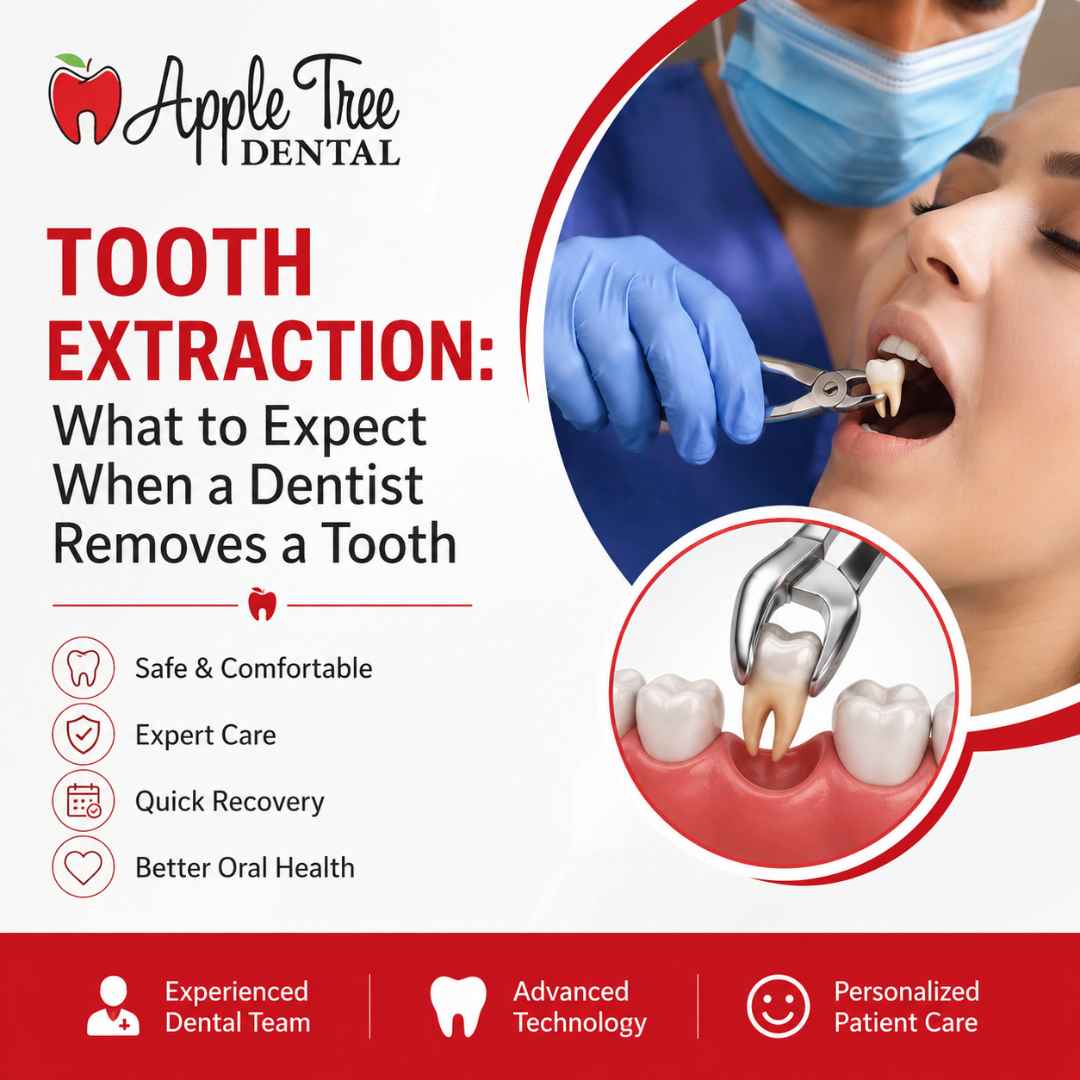
- A tooth extraction removes a tooth that decay, infection, trauma, or crowding has made unsalvageable.
- Simple extractions use local anesthetic and take under 40 minutes; surgical extractions involve cutting gum or bone and take longer.
- In Ontario, a simple extraction typically costs $180 to $260, and the federal Canadian Dental Care Plan (CDCP) can cover part of the cost for eligible residents.
- Most people return to normal eating and light activity within 7 to 10 days, though full bone healing takes several months.
- Dry socket is the most common complication, and avoiding straws, smoking, and vigorous rinsing for the first three days largely prevents it.
Nobody plans on losing a tooth. But when extraction turns out to be the best option, the “why” and “what happens next” matter more than anything else. This guide walks through both, using what our team sees in daily practice at our London, Ontario clinics.
Why Would a Tooth Need to Be Removed?
Dentists only recommend extraction after ruling out restorative options. Specifically, the most common reasons include:
- Deep decay or infection that has destroyed too much of the tooth structure for a filling or crown to hold.
- Advanced gum disease that has loosened the tooth in its socket beyond saving.
- Impacted wisdom teeth that are stuck under the gum or growing at the wrong angle.
- Severe crowding, often to make room before orthodontic treatment.
- Trauma or fracture below the gumline that cannot be restored.
- Failed root canal where infection persists despite retreatment.
Nearly 1 in 4 adults still has at least one untreated cavity at any given time (CDC/NCHS FastStats, 2026), and untreated decay is the leading path to an eventual extraction. Because of this, catching problems early with regular checkups is still the cheapest way to avoid this outcome.
Simple Extraction vs. Surgical Extraction
However, not every extraction is the same procedure. The split matters because it changes appointment length, anesthetic, and recovery.
Dentists use a simple extraction when the tooth is fully visible above the gumline. The dentist loosens it with an instrument called an elevator, then removes it with forceps under local anesthetic. In most cases, this takes just 20 to 40 minutes.
A surgical extraction becomes necessary when a tooth breaks at the gumline, hasn’t fully erupted, or sits impacted (most commonly wisdom teeth). This involves a small incision in the gum and sometimes removing a bit of bone, occasionally sectioning the tooth into pieces to take it out. Even so, the dentist still performs it comfortably, usually with local anesthetic plus sedation options for anxious patients.
Comparison: Extraction vs. Saving the Tooth
| Factor | Tooth Extraction | Root Canal + Crown |
|---|---|---|
| Upfront cost (ON) | Lower ($180–$400+) | Higher ($900–$1,600+ with crown) |
| Keeps natural tooth | No | Yes |
| Bite and jawbone impact | May shift neighbouring teeth over time without replacement | Preserves natural bite and bone stimulation |
| Follow-up needed | Often requires an implant, bridge, or denture later | Usually none beyond the crown |
| Best for | Teeth too damaged or infected to save | Teeth with a salvageable root and structure |
Overall, we always walk patients through both paths when either is realistic, since saving a natural tooth is usually better for long-term bite alignment when the tooth can actually be saved.
What Happens on Extraction Day
Here’s the actual sequence, step by step:
- Numbing. First, the dentist injects local anesthetic around the tooth. You’ll feel pressure during the procedure, not sharp pain.
- Loosening. Next, the dentist gently rocks the tooth to widen the socket, sometimes using an elevator tool first.
- Removal. Then, forceps lift the tooth free. Surgical cases may need a small gum incision or tooth sectioning.
- Gauze placement. After that, a folded gauze pad goes over the socket, and you bite down to control bleeding and start clot formation.
- Instructions. Finally, you leave with written aftercare steps and, for surgical cases, a follow-up appointment.
Overall, most patients describe the procedure itself as pressure without pain, and are surprised at how quickly it’s over.
Recovery Timeline: Day by Day
| Time | What’s Happening |
|---|---|
| First 24 hours | Blood clot forms; mild bleeding and swelling are normal. Rest with your head elevated. |
| Day 2–3 | Swelling typically peaks, then starts easing. Cold compress and soft foods help most. |
| Day 4–7 | Pain and puffiness noticeably drop. Gentle salt-water rinses can begin after 24 hours. |
| Day 7–10 | Soft tissue mostly closes over. Stitches, if used, dissolve or come out. |
| 2–4 months | Underlying bone continues remodelling. This is when tooth-replacement options are usually planned. |
For example, a 2022 clinical survey found most patients cannot return to normal work duties for up to three days after an extraction, which is worth planning around if your job is physical.
Avoiding Dry Socket
Dry socket happens when the protective blood clot dislodges too early, exposing bone and nerve. In fact, it’s the most common complication — and largely preventable:
- Skip straws for at least 3 days — suction can pull the clot loose.
- No smoking or vaping for 72 hours minimum, ideally a full week.
- Avoid vigorous rinsing or spitting on day one.
- Stick to soft foods and chew on the opposite side.
If throbbing pain radiates toward your ear a few days after extraction, and it’s getting worse rather than better, call the clinic. In short, that pattern is the classic sign of dry socket, and treatment works quickly once caught.
Tooth Extraction Cost in Canada (and CDCP Coverage)
This is the part most extraction guides skip, and it matters most to Canadian readers.
Typical Extraction Costs in Ontario
In Ontario, a simple extraction generally falls in the $180 to $260 range, with surgical or impacted extractions running higher depending on complexity. Pricing follows the provincial fee guide and varies slightly by clinic.
How CDCP Coverage Works
Enrolled in the federal Canadian Dental Care Plan? Extractions fall under the oral surgery category it covers. From there, your out-of-pocket share depends on your adjusted family net income:
- Under $70,000: CDCP covers the extraction at 100% of its fee schedule.
- $70,000–$79,999: You cover roughly 40% as a co-payment.
- $80,000–$89,999: You cover roughly 60% as a co-payment.
- $90,000 and above: not eligible for CDCP.
That said, two things catch people off guard. First, CDCP pays its own fee schedule, not the clinic’s full posted price, so a balance can remain even at 100% coverage. Second, more complex surgical extractions often need preauthorization before CDCP will confirm coverage. To help with this, our front desk handles that paperwork directly with Sun Life so you know your cost before you sit in the chair.
When Extraction Becomes a Dental Emergency
That said, some situations shouldn’t wait for a routine appointment. Seek same-day care if you have:
- Facial swelling that’s spreading, especially near the eye or throat.
- A fever alongside tooth pain.
- Pain sharp enough to disrupt sleep or eating entirely.
- A cracked tooth with visible pulp or heavy bleeding that won’t stop.
In other words, these signs can point to a spreading infection, which needs same-day attention rather than a wait-and-see approach.
Real Patient Experience
One of our South London patients came in for what looked like a routine extraction, only for the tooth to turn out to be ankylosed mid-procedure, meaning it had fused directly to the jawbone rather than sitting in a normal ligament-cushioned socket. As a result, that fusion made the tooth far harder to remove with standard technique. Even so, our team adjusted the approach on the spot and successfully removed it in the same visit, ending months of chronic pain the patient had been living with. Ultimately, it’s a good reminder that experience matters as much as the tool in hand once a case gets complicated.
After Extraction: What Comes Next
A missing tooth doesn’t just leave a gap. In fact, neighbouring teeth can drift, and the jawbone underneath starts to lose density without a tooth root stimulating it. That’s why replacement options usually come up at your follow-up, whether that’s a dental implant, a bridge, or a removable denture, depending on your bone health, budget, and how many teeth are involved. However, if the extraction was a wisdom tooth, replacement usually isn’t necessary at all since wisdom teeth don’t play a major role in your bite.
Frequently Asked Questions
A: No, not during the procedure. Local anesthetic fully numbs the area, so you’ll feel pressure and movement, not sharp pain. Afterward, some soreness once the anesthetic wears off is normal and manageable with over-the-counter pain relief.
A: A simple extraction usually takes 20 to 40 minutes. By comparison, surgical extractions, including impacted wisdom teeth, can take 45 to 90 minutes depending on complexity.
A: Stick to cool, soft foods for the first 24 hours, such as yogurt, mashed potatoes, or a smoothie eaten with a spoon rather than a straw. After that, most people gradually return to normal food by day 7 to 10.
A: If you only had local anesthetic, yes, most patients drive themselves. However, if you’re using sedation dentistry, you’ll need someone to drive you home.
A: A simple extraction removes a tooth that’s fully visible above the gum using forceps. A surgical extraction, on the other hand, treats teeth that are broken, unerupted, or impacted, and involves a small gum incision.
A: In most cases, yes. Extractions fall under the oral surgery category CDCP covers, with your co-payment share depending on your adjusted family net income.
A: Throbbing pain that starts improving, then suddenly worsens 2 to 4 days after extraction, often radiating to the ear, is the classic sign. If this happens, contact the clinic right away.
A: For visible teeth or molars used in chewing, we usually recommend replacing them with an implant, bridge, or denture to prevent shifting and bone loss. Wisdom teeth, on the other hand, typically don’t need replacement.
A: A simple extraction generally runs $180 to $260 before insurance or CDCP coverage. Surgical or impacted extractions cost more, depending on complexity.
A: Sometimes. If the tooth’s root structure is intact, a root canal and crown can save it. Either way, we always explain both options when saving the tooth is realistic.
Need a Tooth Looked At in London, Ontario?
Apple Tree Dental offers same-week extraction consultations at both our South and North London locations, with CDCP billing handled for you.
If your extraction involves an impacted wisdom tooth, or if you’re anxious about the procedure and want to ask about sedation options, mention it when you book so the right appointment length and approach can be planned. For sudden pain or swelling that can’t wait, our emergency dental care line takes same-day calls.