
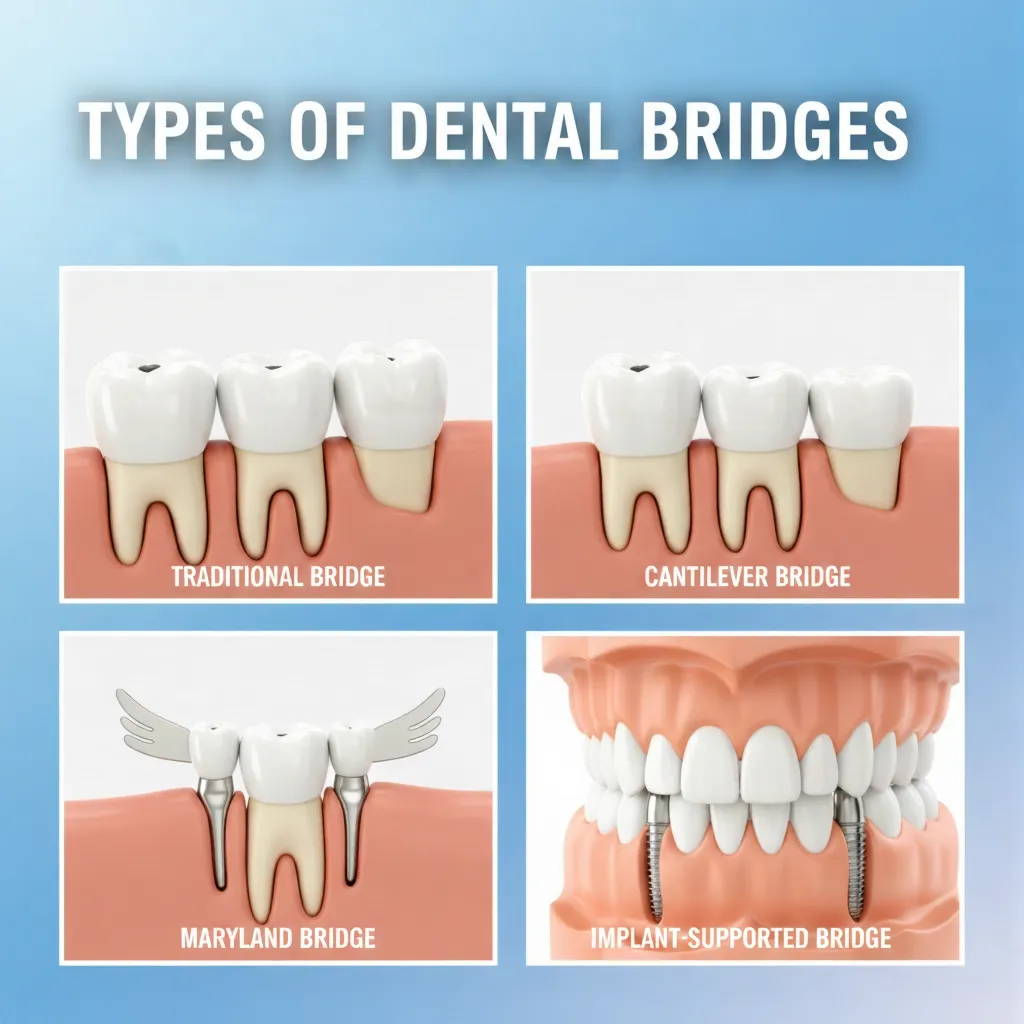
Dental bridges are prosthetic devices designed to replace missing teeth by bridging the gap between existing natural teeth or dental implants. They restore chewing function, improve speech, maintain facial structure, and enhance your smile’s appearance. Whether you’re seeking a dental bridge in London or elsewhere, understanding the different types of dental bridges and their specific applications helps you make an informed decision about the best tooth replacement option for your unique dental needs.
The Four Main Types of Dental Bridges
Traditional Fixed Bridge
Traditional dental bridges london are the most common type, consisting of one or more artificial teeth (pontics) held in place by dental crowns cemented onto the abutment teeth on either side of the gap. This design requires the natural teeth adjacent to the missing tooth to be reshaped to accommodate the crowns. Traditional bridges offer excellent durability and reliability, making them ideal for patients with strong adjacent teeth and multiple missing teeth. They typically last 10–15 years with proper care and are suitable for both front and back teeth replacements. Many dental clinics offering dental bridge treatments in London recommend traditional fixed bridges due to their proven effectiveness and longevity.
- Best for: One or more missing teeth with strong adjacent teeth
- Pros: Reliable, widely available, good longevity
- Consider: Requires reshaping adjacent teeth
Cantilever Bridge
Cantilever bridges are similar to traditional bridges but are supported by a crown on only one abutment tooth rather than on both sides of the gap. This type is used when there’s only one natural tooth available adjacent to the gap. While cantilever bridges can be effective, they tend to be less strong than traditional bridges due to support from only one side. They work best for replacing teeth in areas with lower bite pressure and should be used with caution to avoid undue stress on the supporting tooth. Dental bridge specialists in London often use cantilever bridges for specific mouth areas where the false tooth needs support on only one side.
- Best for: Gaps with only one adjacent natural tooth
- Pros: Conservative when only one side available
- Consider: Lower strength; limit to low-bite-pressure zones
Maryland (Resin-Bonded) Bridge
Maryland bridges consist of a pontic anchored to adjacent natural teeth using a metal or porcelain framework. The framework is bonded to the back of the adjacent teeth with minimal tooth preparation, preserving most natural structure. This conservative approach makes Maryland bridges an excellent choice for front teeth where aesthetics are paramount. They are cost-effective but may not be suitable for back teeth that experience heavy chewing forces.
- Best for: Missing front teeth with good enamel
- Pros: Minimal prep, highly aesthetic, budget-friendly
- Consider: Not ideal for heavy bite forces
Implant-Supported Bridge
Implant-supported bridges use dental implants placed into the jawbone rather than relying on natural teeth for support. This option offers the most stable and long-lasting solution, with a typical lifespan of 15–30+ years. Ideal for multiple consecutive missing teeth, implant bridges help prevent bone loss by stimulating the jawbone and do not require altering adjacent healthy teeth. Leading providers in London recommend implant-supported solutions when there aren’t teeth on either side of the gap to support a traditional bridge.
- Best for: Multiple adjacent missing teeth; long-term results
- Pros: Preserves bone, spares adjacent teeth, superior longevity
- Consider: Requires surgery and adequate bone; higher upfront cost
Materials Used in Dental Bridges
| Material | Durability | Aesthetics | Best For |
|---|---|---|---|
| Zirconia | 10–15+ years | Natural appearance | All teeth positions; bruxism |
| Porcelain | 10–15 years | Excellent aesthetics | Front teeth; color matching |
| Porcelain-Fused-to-Metal (PFM) | 10–15 years | Good appearance | Back teeth; cost-effective |
| Porcelain-Fused-to-Zirconia (PFZ) | 15+ years | Superior aesthetics | Both front and back teeth |
Zirconia has emerged as the strongest and most durable bridge material in modern dentistry, offering exceptional fracture resistance and biocompatibility. Multi-layered zirconia bridges now mimic natural teeth with gradual color transitions and improved translucency. Porcelain remains popular for its natural tooth-like appearance and ability to match existing tooth color, though it’s slightly less durable than zirconia. Many clinics use ceramic materials matched to natural tooth shades for bridges that are visually indistinguishable from real teeth.
Choosing the Right Dental Bridge
- Location: Front vs. back teeth and bite pressure
- Condition of adjacent teeth: Strength and restorability
- Jawbone health: Adequate density for implants; bone grafting if needed
- Aesthetics & budget: Material and design selection
- Bite alignment: Even force distribution to prevent damage
For patients with strong adjacent teeth, traditional bridges offer a straightforward, reliable solution. If you have missing front teeth and want to preserve natural structure, Maryland bridges provide excellent cosmetic results. When only one adjacent tooth is available, a cantilever bridge may be considered, though its limitations should be discussed with your dentist. Where long-term stability and bone preservation are priorities, implant-supported bridges are the gold standard.
Cost Considerations & Treatment Timeline
Typical Costs
- India
- Traditional bridges: ₹15,000–₹30,000 per unit
- Cantilever bridges: ₹20,000–₹35,000
- Maryland bridges: ₹12,000–₹25,000
- Implant-supported bridges: ₹30,000–₹50,000 per unit (higher upfront, superior longevity)
- London (UK)
- Fixed (traditional) bridges: £250–£800 per unit
- Bonded (Maryland) bridges: £250–£1,000
- Implant-supported bridges: starting from £2,900+
Timeline (What to Expect)
- Visits: 2–4 appointments over ~3 weeks
- Steps: Diagnosis & planning → tooth preparation (if needed) → impressions/scan → try-in (if applicable) → final bridge cementation
- Material impact: Zirconia typically costs more than PFM due to superior durability and aesthetics
Tip: Balance upfront cost with expected lifespan and maintenance to determine true long-term value.
Frequently Asked Questions
How long do dental bridges last?
Traditional and Maryland bridges typically last 10–15 years, while implant-supported bridges can last 15–30+ years with proper care and maintenance.
Are dental bridges painful to get?
Treatment is performed under local anesthesia, so you shouldn’t feel pain during the procedure. Mild sensitivity afterward is common and usually subsides within a few days.
Can I eat normally with a dental bridge?
Yes. Bridges restore chewing function. Avoid extremely hard or sticky foods that could damage the bridge.
Which is better: zirconia or porcelain bridges?
Zirconia offers superior strength and durability (10–15+ years), making it ideal for long-term use. Porcelain provides excellent aesthetics for front teeth.
Do I need to reshape adjacent healthy teeth?
Traditional and cantilever bridges require reshaping adjacent teeth. Maryland bridges need minimal preparation. Implant-supported bridges don’t affect adjacent teeth.
How much does a dental bridge cost in London?
Fixed bridges range from £250–£800 per unit, bonded bridges £250–£1,000, and implant-supported bridges start from £2,900 or more.
Aftercare & Maintenance
- Brush twice daily and clean under the pontic with floss threaders or interdental brushes
- Attend regular dental check-ups and professional cleanings
- Wear a night guard if you grind your teeth (bruxism)
- Avoid biting very hard objects (ice, hard candy)
Disclaimer: Costs are indicative, vary by clinic, material, and case complexity. Consult your dentist for a personalized treatment plan.