
Protecting your natural teeth is essential for long-term oral health. When a tooth becomes weakened due to decay, fracture, or dental treatment, restoring it early can prevent serious complications. One of the most trusted restorative solutions in modern dentistry is a dental cap for teeth.
For patients in London, Ontario, understanding how dental caps work can help you make confident treatment decisions. At Apple Tree Dental, patient education is considered a key part of delivering safe, comfortable, and evidence-based dental care.
What Is a Dental Cap for Teeth?
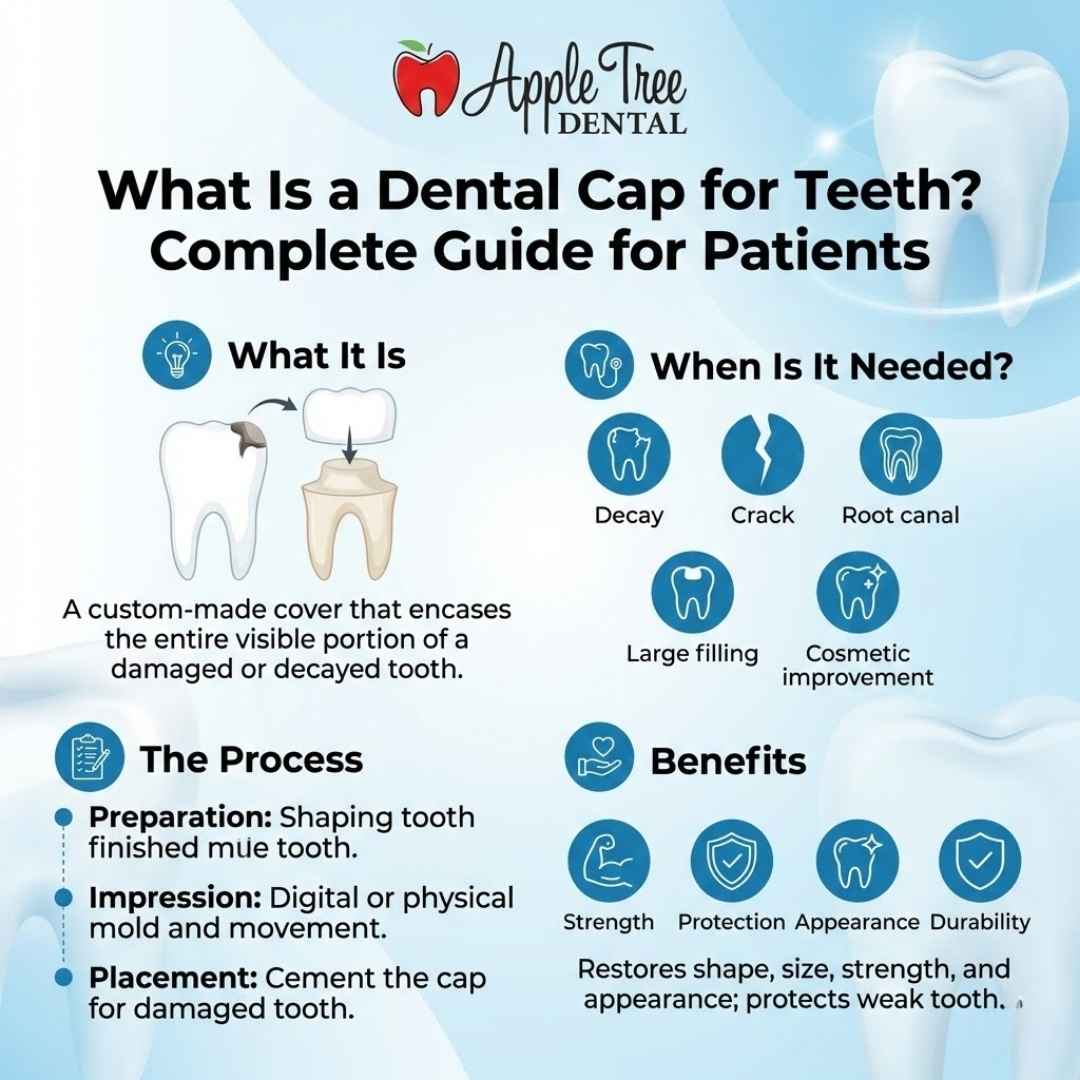
A dental cap for teeth, also known as a dental crown, is a custom-made restoration that fully covers a damaged or weakened tooth above the gum line. It restores strength, shape, and function while protecting the tooth from further damage.
Dental caps are widely recommended in restorative dentistry and are supported by clinical guidelines followed by dental professionals across Canada.
When Is a Dental Cap Needed?
A dental cap may be recommended when a tooth is no longer strong enough to function on its own.
Common situations include:
- Large cavities that cannot support fillings
- Cracked or fractured teeth
- Teeth weakened after root canal treatment
- Severe tooth wear from grinding
- Broken teeth due to injury
- Cosmetic concerns such as discoloration or uneven shape
According to standards followed by dentists registered with Canadian dental regulatory authorities, preserving the natural tooth structure is always preferred whenever possible.
Types of Dental Caps for Teeth
Several materials are used in modern dentistry, each selected based on durability and appearance.
Porcelain Dental Caps
- Natural tooth-like appearance
- Commonly used for front teeth
Ceramic Dental Caps
- Metal-free
- Biocompatible and aesthetic
Porcelain-Fused-to-Metal (PFM)
- Strong internal structure
- Balanced durability and appearance
Metal Dental Caps
- Highly durable
- Often recommended for molars
Treatment selection follows evidence-based dentistry principles supported by Canadian oral health guidelines.
Dental Cap for Teeth Procedure: Step-by-Step
Step 1: Clinical Examination
The dentist evaluates the tooth using digital X-rays to assess decay, infection, or structural damage.
Step 2: Tooth Preparation
The damaged area is cleaned, and the tooth is reshaped slightly to allow proper crown placement.
Step 3: Impression or Digital Scan
A precise mold or digital scan ensures accurate fit and bite alignment.
Step 4: Temporary Dental Cap
A temporary crown protects the tooth during fabrication.
Step 5: Final Placement
The permanent dental cap is securely bonded and adjusted for comfort.
This approach follows standard restorative dentistry protocols used by licensed dentists throughout Ontario.
Benefits of a Dental Cap for Teeth
A dental cap provides both restorative and preventive advantages:
- Strengthens weakened teeth
- Restores natural chewing ability
- Prevents further decay
- Improves smile appearance
- Helps avoid tooth extraction
- Supports long-term oral health
These benefits align with patient education resources published by Canadian dental health organizations that promote early restorative treatment.
How Long Does a Dental Cap Last?
With proper care, a dental cap typically lasts 10 to 15 years or longer.
Longevity depends on:
- Oral hygiene practices
- Regular professional cleanings
- Bite forces and grinding habits
- Gum health
Routine dental visits recommended by oral health professionals in Canada play an important role in maintaining crown stability.
Dental Cap vs Dental Filling
| Dental Filling | Dental Cap |
|---|---|
| Repairs small decay | Restores major damage |
| Partial tooth coverage | Full tooth coverage |
| Shorter lifespan | Long-term durability |
When structural integrity is compromised, dental professionals generally recommend a dental cap for teeth instead of repeated fillings.
Cost of Dental Cap for Teeth in London, Ontario
The cost may vary based on:
- Crown material
- Tooth position
- Treatment complexity
- Dental insurance coverage
Guidance from Ontario dental fee structures and Canadian dental care standards helps dentists provide transparent and fair treatment planning.
A consultation with a dentist in London, Ontario, allows for accurate cost assessment and personalized care.
Caring for Your Dental Cap
To maintain your dental cap:
- Brush twice daily with fluoride toothpaste
- Floss carefully around the crown margins
- Avoid chewing hard objects
- Attend routine dental checkups
- Use a night guard if recommended
Preventive care practices promoted by Canadian oral health education programs emphasize consistency and early intervention.
Why Choose Apple Tree Dental in London, Ontario?
At Apple Tree Dental, treatments are delivered following recognized Canadian dental care standards, with a focus on patient comfort, accuracy, and long-term results.
For families searching for a trusted dental clinic in London, Ontario, professional evaluation ensures that dental caps are designed to function naturally and support lifelong oral health.
Final Thoughts
A dental cap for teeth plays a critical role in protecting damaged teeth, restoring function, and maintaining long-term oral health. Supported by Canadian dental care principles and evidence-based practices, dental caps remain one of the most effective restorative solutions available today.
For patients in London, Ontario, early treatment and professional guidance from Apple Tree Dental can help prevent complications and support a healthy, confident smile for years to come.
Frequently Asked Questions (FAQs)
Is a dental cap the same as a crown?
Yes. A dental cap and a dental crown are different terms for the same treatment.
Can a dental cap fall off?
This is uncommon, but if it occurs, your dentist can reattach or replace it safely.
Is the procedure painful?
Local anesthesia is used, making the process comfortable for most patients.
Can I eat normally after treatment?
Yes. Once placed, the tooth functions like a natural tooth.
Is saving the tooth better than extraction?
In most cases, preserving the natural tooth with a dental cap is strongly preferred.
More Topic About Apple Tree Dental
Patients often explore additional topics such as dental crowns, tooth restoration, preventive dental care, and root canal treatment to better understand their oral health options.
https://caphd.ca/Educational guidance published by Canadian dental associations, provincial dental regulatory bodies, and national oral health organizations in Canada helps reinforce why restorative treatments like dental caps are widely recommended by licensed professionals.
These references strengthen trust, accuracy, and patient confidence — important elements of healthcare decision-making.