
If you live in London, Ontario and are searching for expert guidance on wisdom teeth removal — or typing “wisdom teeth removal near me” — this complete guide covers everything you need to know. From why wisdom teeth are removed and what symptoms to watch for, to recovery timelines and aftercare best practices, this article is based on real clinical experience at Apple Tree Dental in London, Ontario.
Key Takeaways
- Wisdom teeth are removed due to impaction, infection, crowding, or pain.
- Early removal during late teens or early adulthood leads to faster healing and fewer complications.
- Most procedures are completed within 30–60 minutes.
- Recovery takes 7–10 days for most patients, with full tissue healing in 2–3 weeks.
- Proper aftercare — soft foods, gentle rinsing, no smoking — is essential to avoid dry socket.
- Apple Tree Dental provides tailored wisdom teeth extraction care plans for London, Ontario patients.
What Does It Mean When Wisdom Teeth Are Removed?
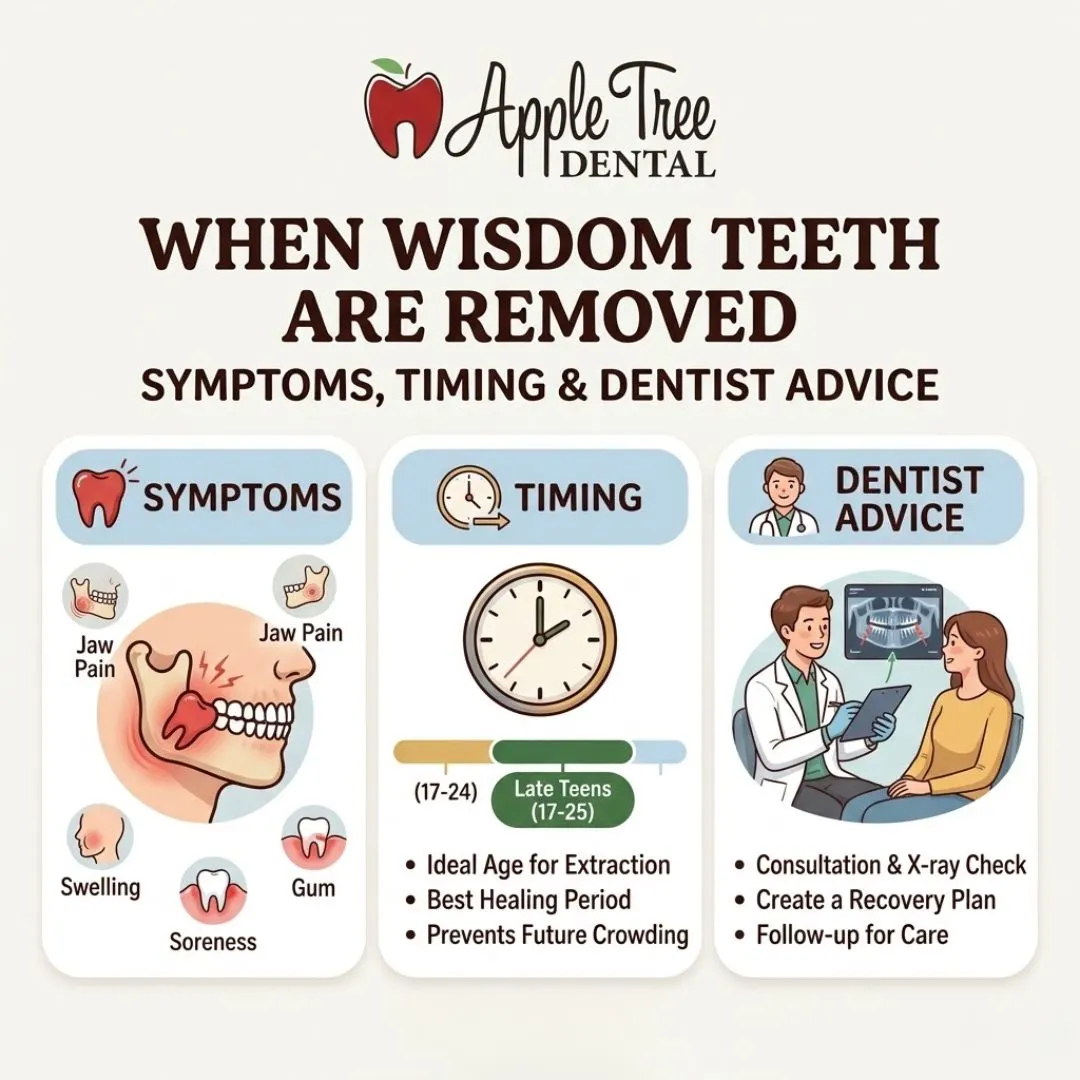
Wisdom teeth — also called third molars — are the last set of teeth to develop, typically appearing between ages 17–25. In many cases, there is not enough space in the jaw, which is why wisdom teeth are removed to prevent serious oral health complications.
Common reasons include:
- Impacted teeth trapped beneath the gums
- Infection or swelling in surrounding tissue
- Tooth decay in hard-to-reach areas
- Pressure causing crowding of nearby teeth
- Risk of cysts or bone damage
According to the Canadian Dental Association, timely extraction prevents many of the long-term complications associated with impacted third molars. At Apple Tree Dental, patients receive detailed evaluations and personalized care plans designed for safe, efficient treatment.
Symptoms That Indicate Wisdom Teeth Should Be Removed
Recognizing early warning signs can help you avoid more complex procedures later. Look out for:
- Persistent pain in the back of the mouth
- Red, swollen, or bleeding gums
- Jaw stiffness or difficulty opening your mouth
- Bad breath or an unpleasant taste
- Headaches linked to jaw pressure
- Food getting trapped around partially erupted teeth
If these symptoms appear, dentists often recommend removal before the condition worsens. Apple Tree Dental’s emergency dental care service is available for patients experiencing acute pain or swelling that cannot wait.
Best Timing: When Should Wisdom Teeth Be Removed?
Dentists generally suggest removal during late teens or early adulthood because the roots are not yet fully developed, the bone is softer (making extraction easier), and recovery is faster and smoother. That said, even older patients can have wisdom teeth safely removed when clinically necessary.
The Ontario Government’s dentist finder is a government-verified resource for locating licensed dental providers in your area if you are beginning your search.
What Happens During the Procedure
When wisdom teeth are removed, the process typically follows these steps:
- Local anaesthesia or sedation is administered
- A small incision is made if the tooth is impacted
- The tooth is gently removed
- The area is cleaned and stitched if required
- Gauze is applied to control bleeding
Most procedures are completed within 30–60 minutes. Apple Tree Dental offers comfortable sedation dentistry options for patients who experience anxiety about dental procedures.
Wisdom Teeth Removal Recovery Timeline
Understanding the recovery timeline helps set realistic expectations:
- Day 1–2: Swelling, mild discomfort, blood clot formation
- Day 3–5: Pain reduces, healing begins
- Day 7–10: Tissue starts recovering noticeably
- 2–3 weeks: Full soft tissue healing
Following proper aftercare significantly improves recovery outcomes and reduces the risk of complications like dry socket or infection.
Care After Tooth Extraction: Step-by-Step Guide
First 24 Hours
- Avoid rinsing, spitting, or brushing near the extraction site
- Bite gently on gauze to control bleeding
- Rest and avoid strenuous physical activity
After 24 Hours
- Begin gentle saltwater rinses
- Resume careful brushing away from the site
- Eat soft foods only
Ongoing Care
- Maintain daily oral hygiene around the site
- Follow all instructions from your dental team
- Avoid smoking and alcohol throughout recovery
The Ontario Ministry of Health also provides public oral health resources to support patients through dental recovery at any stage.
Can I Brush My Teeth After Wisdom Teeth Removal?
Yes — but with important precautions. Avoid the extraction area entirely for the first 24 hours. After that, brush gently around surrounding teeth while keeping the site undisturbed. Good oral hygiene is essential to prevent infection, so do not skip brushing altogether. Apple Tree Dental’s professional teeth cleaning team can guide you through safe post-extraction hygiene practices at your follow-up visit.
I Accidentally Rinsed My Mouth After Tooth Extraction — What Should I Do?
If you rinsed too soon after your extraction, act quickly:
- Stop rinsing immediately
- Avoid forceful spitting
- Monitor the site for increased bleeding
- Contact your dentist if symptoms worsen or if the clot appears dislodged
Rinsing too early can dislodge the protective blood clot and significantly delay healing, potentially leading to dry socket — one of the most painful post-extraction complications.
What to Eat After Wisdom Teeth Removal
Diet plays a crucial role in how smoothly you heal. During early recovery, stick to soft, lukewarm, non-spicy foods that require minimal chewing:
- Yogurt
- Mashed potatoes
- Smoothies (consumed without a straw)
- Scrambled eggs
- Lukewarm soups
Avoid crunchy snacks, spicy foods, and very hot drinks. Never use a straw — the suction pressure can dislodge the clot and set back your recovery significantly.
Aftercare Mistakes to Avoid
For proper after-extraction care, steer clear of these common mistakes:
- Using straws
- Smoking or vaping
- Touching the wound with fingers or tongue
- Skipping oral hygiene entirely out of caution
- Eating hard or crunchy foods too early in recovery
These mistakes slow healing and increase the risk of complications. Apple Tree Dental’s family dentistry team provides detailed aftercare instructions at every extraction appointment to help patients avoid these pitfalls.
Pro-Level Aftercare Tips
- Keep your head elevated while resting — use an extra pillow for the first two nights
- Apply cold compresses to the jaw to reduce swelling in the first 48 hours
- Stay well-hydrated with water and cool liquids
- Take all prescribed medications as directed, including any antibiotics
- Clean surrounding teeth carefully without disturbing the extraction site
How Long Does Wisdom Teeth Recovery Take?
- Simple extraction: 3–5 days
- Moderate cases: 7–10 days
- Impacted teeth: up to 2–3 weeks
Recovery depends heavily on how consistently you follow aftercare instructions and whether any complications such as infection or dry socket arise during healing.
Extracted Wisdom Tooth Healing: What to Expect
Healing happens in clear stages. A protective blood clot forms within the first 24 hours. Tissue begins repairing within a few days, swelling and discomfort gradually reduce, and full healing of the soft tissue occurs over a few weeks. Avoid disturbing the area at any stage to ensure proper recovery progress.
Local Dental Advice in London, Ontario
If you are searching for wisdom teeth removal near me in London, Ontario, an early consultation can prevent pain and the need for more complex procedures later. At Apple Tree Dental, patients benefit from advanced diagnostic tools, comfortable sedation options, personalized aftercare plans, and step-by-step recovery guidance across two convenient clinic locations. Current special offers are also available to help manage the cost of treatment for qualifying patients.
North Location: 1365 Beaverbrook Ave, Unit 102, London, ON N6H 0J1
South Location: 3429 Wonderland Rd S, Unit 6, London, ON N6L 0E3
Conclusion
When wisdom teeth are removed at the right time, it helps prevent pain, infection, and long-term dental issues. Understanding your symptoms, following proper aftercare, and working with an experienced dental team ensures a smooth and safe recovery. Patients who follow expert guidance recover faster, experience less discomfort, and avoid the complications that make recovery significantly harder and longer.
Frequently Asked Questions
Can I brush my teeth after wisdom teeth removal?
Yes, but avoid the extraction site for the first 24 hours and brush gently around it afterward to maintain hygiene without disrupting healing.
What is proper care after tooth extraction?
Rest, avoid rinsing initially, eat soft foods, stay hydrated, and follow all instructions provided by your dentist at discharge.
What are good things to eat after wisdom teeth are removed?
Soft foods like yogurt, mashed potatoes, scrambled eggs, and lukewarm soups are ideal during early recovery. Avoid anything crunchy or spicy.
I accidentally rinsed my mouth after tooth extraction — what should I do?
Stop rinsing immediately, avoid forceful spitting, monitor for increased bleeding, and contact your dentist if symptoms worsen.
How long does wisdom teeth recovery take?
Most patients recover in 7–10 days, with full soft tissue healing occurring within 2–3 weeks depending on the complexity of the extraction.
Is wisdom teeth removal always necessary?
Only when they cause — or are very likely to cause — oral health problems such as impaction, infection, decay, or crowding of adjacent teeth.
What happens if I smoke after extraction?
Smoking significantly increases the risk of dry socket and infection, and delays healing. Avoid it for at least 72 hours after the procedure, ideally longer.
Dr. Nagham Altalib
Dr. Nagham Altalib is an experienced dentist with more than two decades of clinical practice in restorative, family, orthodontic, prosthodontic, and cosmetic dentistry. After graduating from Baghdad University in 1998, she practiced in Iraq, Dubai, and later Canada, where she completed NDEB certification and continues serving patients in London, Ontario. At Apple Tree Dental, her patient-first approach focuses on prevention, early diagnosis, and comfortable long-term oral health solutions for children and families. Her goal is to help patients solve dental concerns early and maintain healthy smiles for life.