
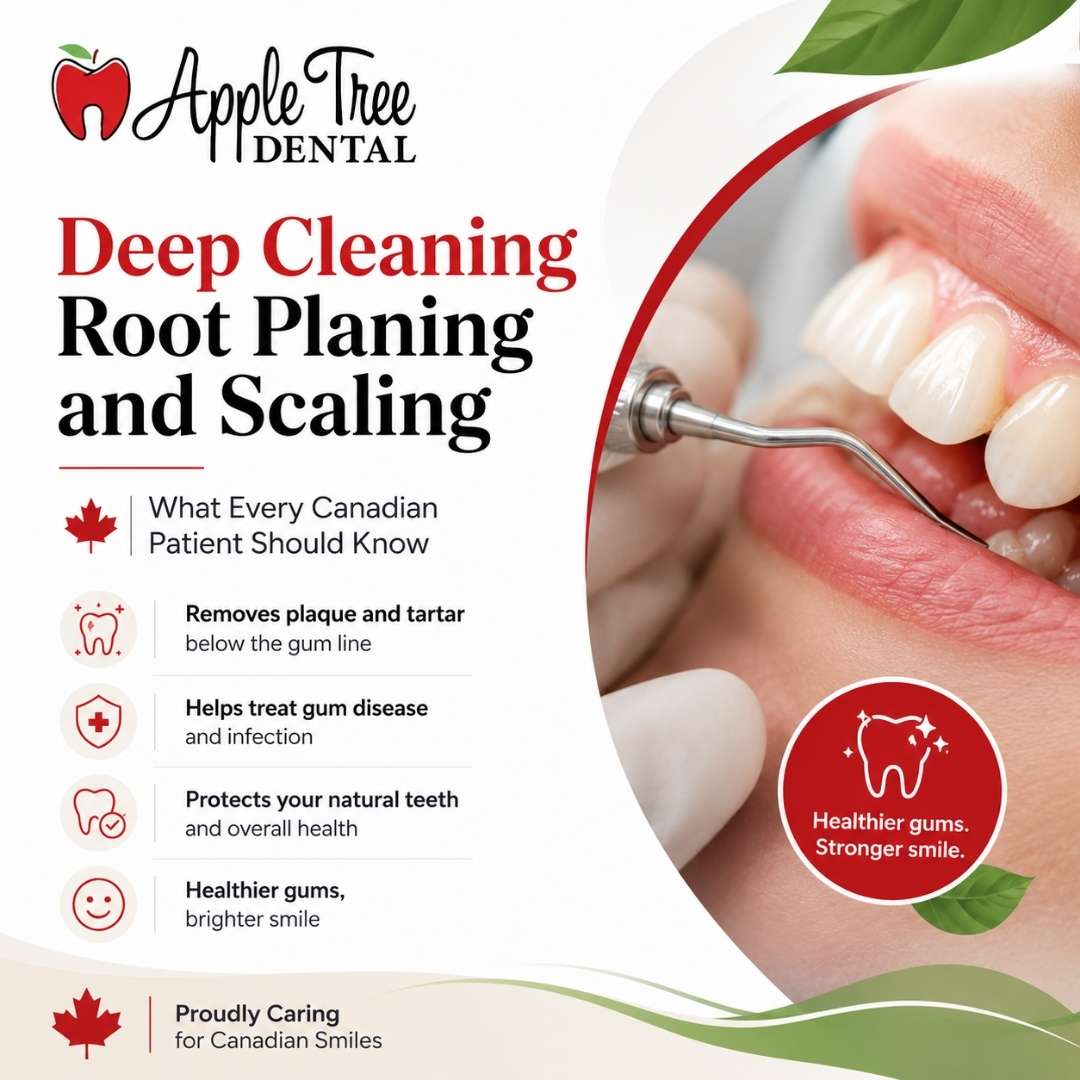
If your dentist has recently recommended a deep cleaning, scaling and root planing procedure, you might be feeling a little uncertain about what that actually means — and that is completely normal. A lot of patients hear the words “deep cleaning” and immediately picture something intimidating. But the truth is, dental scaling and root planing is one of the most straightforward, non-surgical ways to treat gum disease and protect your long-term oral health. At Apple Tree Dental in London, Ontario, we walk every patient through what to expect before, during, and after the procedure so nothing catches you off guard. This guide covers everything you need to know about scaling and root planing, including what root scaling actually involves, how it differs from a regular cleaning, what recovery looks like, and how it fits into your overall dental health picture in Canada.
What Is Scaling and Root Planing?
Scaling and root planing — also called a dental deep cleaning — is a non-surgical periodontal procedure that cleans below the gumline to remove plaque, tartar, and harmful bacteria from the root surfaces of your teeth. It is the most effective non-surgical treatment for early to moderate gum disease (periodontitis) and is one of the most commonly recommended procedures at dental offices across Canada.
So what does scaling teeth actually mean? The procedure has two distinct parts that work together:
- Scaling: Your dental hygienist or dentist uses specialized tools — either ultrasonic instruments or hand scalers — to carefully remove hardened plaque (tartar) and bacterial deposits from the tooth surface, all the way down to the bottom of any infected gum pockets.
- Root Planing: Once scaling is complete, the rough, irregular surfaces of the tooth roots are smoothed out. This is called dental root planing. Smooth roots make it significantly harder for bacteria to reattach, and they help the gum tissue heal and reattach naturally to the tooth.
Think of it this way: if a regular dental cleaning is maintaining a clean countertop, dental root cleaning is scrubbing underneath the appliances — the areas you cannot see or reach on your own but where bacteria cause the most damage.
Did You Know?
Plaque starts hardening into tartar in as little as 24 to 72 hours if it is not brushed away. Once tartar forms, no amount of brushing at home can remove it — only a dental professional with the right instruments can. This is why consistent brushing, flossing, and regular dental visits are your best defence against needing deep cleaning.
Why Is Deep Cleaning Necessary? Understanding Gum Disease
To understand why root planing and scaling is recommended, it helps to understand how gum disease develops in the first place. Every day, a sticky film of bacteria called plaque forms on your teeth. When plaque is not removed through brushing and flossing, it hardens into tartar — a tough, calcified deposit that cannot be removed at home. Once tartar builds up below the gumline, it irritates the surrounding gum tissue.
Over time, this irritation causes the gums to pull away from the teeth, creating deep pockets. Bacteria thrive inside these pockets, continuing to damage the soft tissue and, eventually, the bone structure that holds your teeth in place.
A regular cleaning cannot reach these deep pockets. That is where deep cleaning root planing and scaling comes in — it is specifically designed to clean inside those pockets and give the gum tissue a chance to heal and recover.
Warning
Gum disease is largely painless in its early stages. Many patients have no idea they have periodontitis until significant damage has already occurred. Do not wait for pain to be your signal — regular dental exams with pocket depth measurements are the only reliable way to catch gum disease early.
Signs You May Need Scaling and Root Planing
Many patients are surprised when their dentist recommends a deep cleaning because they feel like their teeth look fine. But gum disease often develops quietly, without obvious pain in the early stages. Here are some common signs that dental scaling and root planing may be needed:
- Gums that bleed when you brush or floss
- Red, swollen, or tender gum tissue
- Persistent bad breath that does not go away with brushing
- Gums that appear to be pulling away from the teeth (gum recession)
- Teeth that look longer than they used to
- Gum pocket measurements of 4mm or deeper (measured during your dental exam)
- Loose or shifting teeth
- Visible tartar buildup around the gumline
Pro Tip
Bleeding gums when you brush are never normal — even if it happens every single day. Healthy gums do not bleed from gentle brushing or flossing. If you notice bleeding regularly, it is a clear signal that your gums need professional attention. Book an exam at Apple Tree Dental in London before the condition progresses.
At Apple Tree Dental in London, Ontario, your dentist will measure your gum pocket depths during your comprehensive exam. Pockets deeper than 3mm are a strong indicator that a dental deep cleaning is warranted.
Deep Cleaning vs. Regular Cleaning: What Is the Difference?
One of the most common questions patients ask is: “I just had a regular cleaning — is a deep cleaning really that different?” The answer is yes, and it matters. Understanding what is dental scaling in comparison to a routine clean helps explain why both are important and why one cannot replace the other.
| Feature | Regular Dental Cleaning | Deep Cleaning (Scaling & Root Planing) |
|---|---|---|
| Purpose | Preventive maintenance | Treats active gum disease |
| Area Treated | Above the gumline | Below the gumline, into pockets |
| Who It’s For | Patients with healthy gums | Patients with periodontitis or gingivitis |
| Anesthesia Needed | No | Often yes — local anesthetic |
| Number of Visits | 1 visit | Typically 2–4 visits (by quadrant) |
| Recovery Time | None | Mild sensitivity for 1–7 days |
| Frequency | Every 6 months | As needed, based on disease severity |
Did You Know?
Some patients feel hesitant about a deep cleaning because their last regular cleaning felt fine. It is important to understand that a standard cleaning and a deep cleaning are medically different procedures treating different conditions. Skipping a recommended deep cleaning does not make gum disease go away — it allows it to quietly progress.
What Happens During a Scaling and Root Planing Appointment?
Knowing exactly what to expect can make the whole experience far less stressful. Here is a step-by-step walkthrough of what a root planing and scaling appointment looks like at Apple Tree Dental in London:
Step 1: Comprehensive Exam and X-Rays
Before any treatment begins, your dentist will examine your gums, measure pocket depths, and review X-rays to assess the extent of tartar buildup and bone loss. This determines how many quadrants need treatment and how many appointments to schedule.
Step 2: Local Anesthetic
To keep you comfortable throughout the procedure, a local anesthetic is applied to numb the area being treated. Most patients are genuinely surprised by how comfortable the experience is once the anesthetic takes effect. If dental anxiety is a concern, let our team at Apple Tree Dental know ahead of time — we have options to make you feel at ease.
Step 3: Scaling Below the Gumline
Your dental hygienist uses an ultrasonic scaler or hand instruments to carefully remove all plaque, tartar, and bacterial deposits from the tooth surfaces and below the gumline — all the way to the bottom of each pocket. This is the root scaling phase and the part that makes this procedure distinctly different from a regular clean.
Step 4: Root Planing
Once scaling is complete, the root surfaces are carefully smoothed out. What is dental root planing? It is the process of removing any remaining infected root tissue and creating a clean, smooth surface that promotes gum tissue reattachment and discourages future bacterial adhesion. Smooth roots are one of the key reasons deep cleaning produces such lasting results.
Step 5: Antibacterial Rinse or Medication (If Needed)
In some cases, an antimicrobial rinse or localized antibiotic medication is applied directly into the treated pockets to further reduce infection and support healing. Your dentist will advise whether this step is recommended for your specific case.
Step 6: Scheduling Follow-Up Visits
Because dental scaling and root planing is done one or two quadrants at a time, most patients need two to four appointments spaced one to two weeks apart. A follow-up exam is typically scheduled four to six weeks after the final treatment to measure pocket depths and evaluate healing progress.
Pro Tip
Ask your dental team to treat the two most severely affected quadrants first. This targets the worst infection early and often produces the most noticeable improvement in gum health and comfort before your remaining appointments.
How Many Visits Does Deep Cleaning Take?
This is one of the most searched questions about scaling and root planing, and the answer depends on the severity of your gum disease and how many areas of the mouth are affected.
- Mild gum disease: 1–2 visits (one or two quadrants treated)
- Moderate gum disease: 2–3 visits (two to three quadrants)
- Severe or full-mouth involvement: 3–4 visits (all four quadrants)
At Apple Tree Dental in London, Ontario, our team will assess your specific situation and provide a clear treatment plan before any procedure begins — no surprises, no pressure.
Recovery After Scaling and Root Planing: What to Expect
Most patients find recovery from dental deep cleaning to be very manageable. You may experience some mild discomfort, sensitivity, or tenderness in the treated area for a few days after each appointment. Here is what recovery looks like day by day:
First 24–48 Hours
Some soreness, mild swelling, and bleeding is normal after scaling and root planing. Over-the-counter pain relievers like ibuprofen can help manage discomfort. Avoid very hot or cold foods and drinks during this window, and rinse gently with warm salt water.
Days 3–7
Sensitivity gradually reduces. Gums may look slightly different — even slightly receded — as swelling resolves and the tissue begins healing. This is completely normal and is actually a positive sign that the inflammation is going down and healthy tissue is emerging.
Weeks 1–4
Gum pockets should begin to shrink as the tissue heals and reattaches to the now-smooth root surfaces. Many patients notice their gums look healthier, feel less tender, and bleed much less when brushing — often for the first time in years.
What to Eat After Scaling and Root Planing
Stick to soft, cool foods for the first few days after your deep cleaning appointment. Good choices include yogurt, mashed potatoes, scrambled eggs, smoothies, soup, oatmeal, avocado, and soft fish. Avoid crunchy, hard, spicy, or very hot foods until sensitivity resolves. Learn more through our professional teeth cleaning and aftercare guidance.
Post-Treatment Care Tips
- Brush gently with a soft-bristle toothbrush — avoid scrubbing near treated areas for the first few days
- Rinse with warm salt water two to three times daily to reduce bacteria and soothe tissue
- Continue flossing carefully — good hygiene between visits is essential for healing
- Avoid smoking — tobacco significantly slows gum tissue healing and increases the risk of treatment failure
- Avoid alcohol for at least 24–48 hours after treatment
- Attend your follow-up appointment — your dentist needs to confirm that healing is progressing correctly
Warning
Do not skip your follow-up appointment after scaling and root planing. The post-treatment exam is where your dentist measures whether pocket depths have reduced and the gum tissue has responded to treatment. Without this check, recurrence can go undetected and gum disease can return quickly.
Scaling and Root Planing Recovery Timeline
| Timeframe | What to Expect |
|---|---|
| First 24–48 Hours | Mild soreness, tenderness, light bleeding near treated gums |
| Days 3–7 | Sensitivity reduces, gums may look slightly different as swelling resolves |
| Week 2 | Gum tissue begins reattaching to smoothed root surfaces, less bleeding with brushing |
| Weeks 3–4 | Significant improvement in gum health, pocket depths begin reducing |
| 4–6 Weeks Post-Treatment | Follow-up exam to measure pocket depths and evaluate healing progress |
Benefits of Scaling and Root Planing
The benefits of dental scaling and root planing go well beyond fresher breath and cleaner-looking gums. This procedure has genuine, evidence-based impacts on your overall health:
- Stops gum disease in its tracks — halts the progression of periodontitis before it causes irreversible bone loss
- Reduces gum pocket depths — healthy gum pockets measure 1–3mm; deep cleaning helps restore this range
- Prevents tooth loss — the leading non-traumatic cause of tooth loss in Canadian adults is untreated gum disease
- Reduces systemic health risks — treating periodontal disease lowers systemic inflammation markers linked to heart disease, stroke, and diabetes complications
- Eliminates chronic bad breath — bacteria living in deep gum pockets are a primary source of persistent bad breath that mouthwash alone cannot fix
- Supports healthier gum tissue — smoothed root surfaces allow gums to reattach and remain stable long-term
- Protects existing dental work — crowns, implants, and bridges are better supported by healthy surrounding gum and bone tissue
The Link Between Gum Disease and Your Overall Health
This is a section most dental websites skip — but it is one of the most important things to understand about why deep cleaning root planing and scaling matters beyond your mouth. The bacteria responsible for periodontal disease do not stay in your gums. Research has consistently shown that these bacteria can enter the bloodstream and contribute to systemic inflammation throughout the body.
Canadians with untreated gum disease have been shown to have elevated levels of C-reactive protein — a key marker of systemic inflammation associated with cardiovascular disease. Studies also show a significant relationship between periodontitis and poorly controlled blood sugar in diabetic patients. In other words, your gum health and your overall health are deeply connected. Treating gum disease with scaling and root planing is not just a dental decision — it is a health decision.
Did You Know?
People with periodontal disease are 2 to 3 times more likely to suffer a heart attack or stroke compared to those with healthy gums. If you have been diagnosed with diabetes, heart disease, or are pregnant, treating active gum disease becomes even more medically important — not just for your smile, but for your whole body.
How Much Does Scaling and Root Planing Cost in Canada?
The cost of dental scaling and root planing in Canada varies based on the severity of gum disease, the number of quadrants treated, the dental office, and your insurance coverage. Generally, full-mouth deep cleaning ranges from $600 to $1,600 or more without insurance, depending on how extensive the treatment needs to be. Per-quadrant pricing is typically used, and most treatment plans involve two to four quadrants.
Does Canadian Dental Insurance Cover Scaling and Root Planing?
The good news for many Canadians is that dental scaling and root planing is generally classified as a therapeutic (medically necessary) procedure, which means most private dental benefit plans cover a portion of the cost — often 50% to 80% after your deductible, depending on your plan. The Canadian Life and Health Insurance Association (CLHIA) recommends reviewing your specific policy to understand your periodontal therapy coverage limits.
Canadian Dental Care Plan (CDCP) and Scaling
The federal Canadian Dental Care Plan (CDCP) — which now covers millions of eligible Canadians without private dental insurance — includes coverage for scaling procedures. Coverage frequency is based on age: adults aged 17 and older are eligible for up to 4 units of scaling within a 12-month period. If you are unsure whether your scaling and root planing treatment is covered under the CDCP, the team at Apple Tree Dental in London, Ontario can help you navigate your eligibility and maximize your benefits before treatment begins.
Pro Tip
Before your deep cleaning appointment, ask your dental office to submit a pre-authorization request to your insurance provider. This gives you a written estimate of exactly what your plan will cover so there are no billing surprises after treatment. At Apple Tree Dental, our team handles this process for you.
Because every patient’s situation is unique, the best way to get an accurate cost estimate is to book a consultation at Apple Tree Dental for a comprehensive periodontal exam and personalized treatment plan.
Life After Deep Cleaning: Keeping Your Gums Healthy Long-Term
Completing your scaling and root planing treatment is a major step — but it is not the finish line. Maintaining your results requires consistent effort at home and regular professional care. After a successful course of deep cleaning, most patients are placed on a periodontal maintenance schedule — typically every three to four months rather than the standard six-month interval. This more frequent schedule helps prevent tartar from rebuilding in previously treated pockets and catches any early signs of recurrence quickly.
At home, prioritizing thorough twice-daily brushing, daily flossing, and using an antibacterial mouthwash keeps bacteria levels low between appointments. Our team at Apple Tree Dental in London will provide personalized home care guidance based on your specific gum health profile. For ongoing care, explore our professional teeth cleaning and family dentistry services.
Pro Tip
Switch to an electric toothbrush after your deep cleaning. Clinical studies consistently show that electric toothbrushes remove significantly more plaque than manual brushing — especially along the gumline where gum disease starts. Pair it with daily flossing and a water flosser if your dentist recommends one for your pocket depths.
Frequently Asked Questions About Scaling and Root Planing
What is scaling and root planing?
Scaling and root planing is a non-surgical dental procedure that deep cleans below the gumline to remove plaque, tartar, and bacteria from the tooth roots and infected gum pockets. It is the most effective non-surgical treatment for early to moderate gum disease (periodontitis).
What is dental scaling?
Dental scaling is the process of using specialized instruments to remove hardened tartar deposits from the tooth surface, including below the gumline. It forms the first phase of a deep cleaning procedure and targets areas that brushing and flossing cannot reach.
What is root scaling?
Root scaling refers to cleaning the root surfaces of your teeth below the gumline — removing tartar and bacterial buildup that accumulates inside deepened gum pockets caused by periodontal disease.
What does scaling teeth mean?
Scaling teeth means using dental instruments to scrape away calculus (hardened tartar) and plaque from tooth surfaces. During a deep cleaning, this extends below the gumline to treat areas affected by gum disease.
What is dental root planing?
Dental root planing is the second phase of deep cleaning. After scaling removes deposits, root planing smooths out the irregular root surfaces so bacteria cannot reattach easily and the gum tissue can heal and reattach firmly to the tooth.
Is scaling and root planing painful?
Most patients find the procedure very manageable with local anesthetic. You may feel some pressure and vibration during treatment but should not experience significant pain. Mild soreness and sensitivity in the days following treatment is normal and usually resolves within one week.
How long does scaling and root planing take?
Each quadrant appointment typically takes 45 minutes to one hour. Most patients require two to four appointments to complete the full treatment, depending on how many areas of the mouth are affected.
How many times do I need scaling and root planing?
The initial course of treatment addresses existing disease. After that, most patients move to a periodontal maintenance schedule every three to four months rather than the standard six-month cleaning. This prevents the disease from returning and keeps pocket depths stable.
Can scaling and root planing reverse gum disease?
Gingivitis — the earliest stage of gum disease — is fully reversible with proper treatment and consistent home care. Periodontitis causes permanent structural changes, but scaling and root planing can halt its progression, reduce pocket depths, and prevent further bone and tissue loss. The earlier it is treated, the better the long-term outcome.
How much does scaling and root planing cost in Canada?
Full-mouth scaling and root planing in Canada typically ranges from $600 to $1,600 depending on severity and the number of quadrants treated. Most private dental insurance plans cover 50% to 80% of the cost. The Canadian Dental Care Plan (CDCP) also provides scaling coverage for eligible Canadians. Contact Apple Tree Dental in London for a personalized estimate and to confirm your coverage before treatment begins.
Dentist Tip
Final Thoughts: Protect Your Smile Before Gum Disease Progresses
Gum disease is far more common than most people realize — and the earlier it is caught and treated with deep cleaning, scaling and root planing, the better your long-term outcomes will be. Whether you have been told you need a deep cleaning or you simply want to understand your options, the team at Apple Tree Dental in London, Ontario is here to help. We make the process clear, comfortable, and completely tailored to your individual needs — because every smile deserves the right care at the right time.