
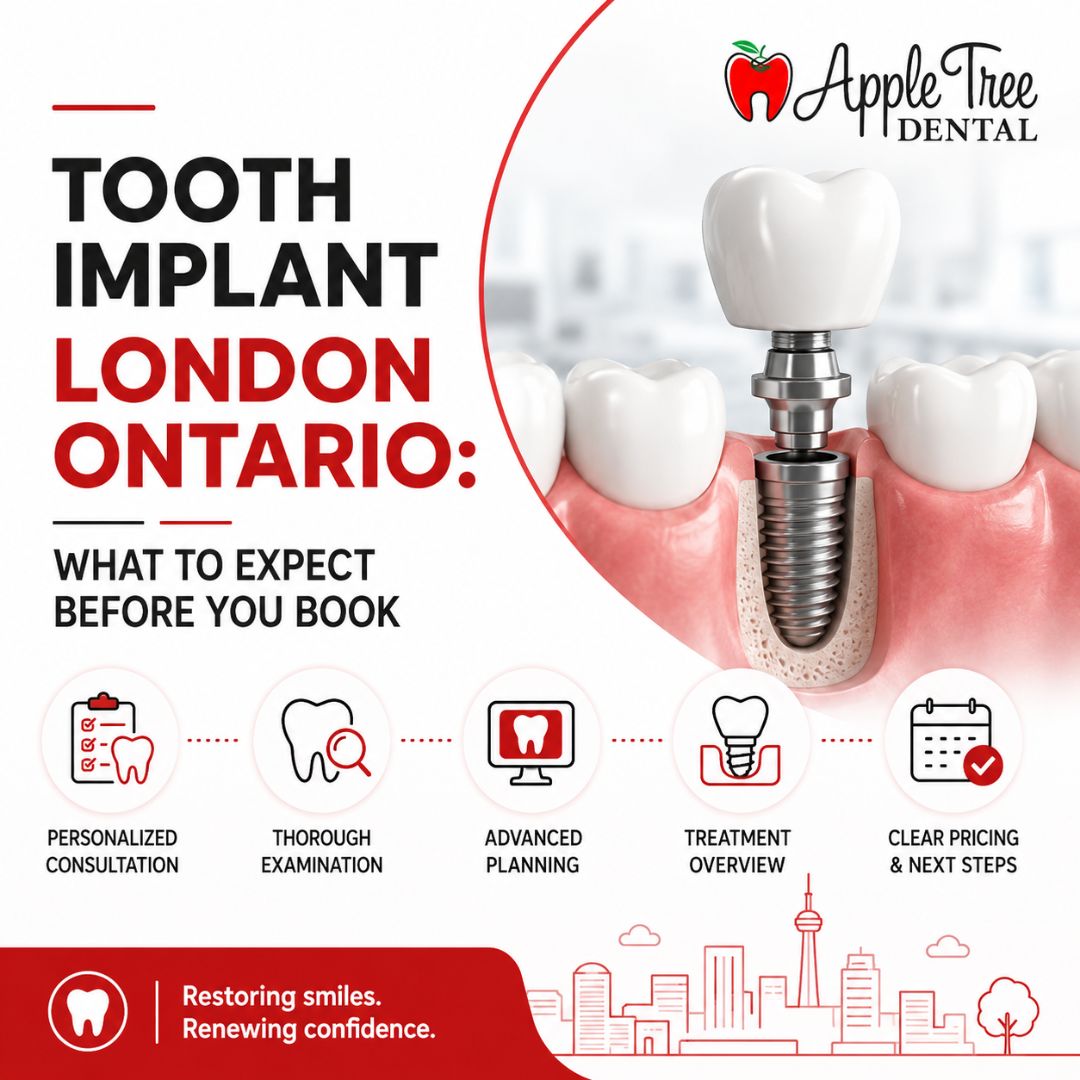
- A tooth implant replaces both the missing tooth and its root, which is what sets it apart from a bridge or denture.
- The full process takes 3 to 6 months because the implant needs time to fuse with your jawbone before the crown goes on.
- Long-term studies show implant survival rates between 92% and 98%, with smoking and untreated gum disease as the biggest risk factors.
- Bone density is checked before treatment, and grafting can rebuild volume in patients who don’t qualify right away.
- Most patients are candidates regardless of age, as long as gums are healthy and the jawbone can support the implant.
Missing one tooth changes more than your smile. It shifts how you chew, how nearby teeth drift, and eventually how your jawbone holds its shape. A tooth implant in London is the only replacement option that addresses all three, not just the gap.
Here’s what actually goes into getting one done, who qualifies, and where patients usually get surprised.
What a Tooth Implant Actually Replaces
A tooth implant isn’t one part. It’s three pieces working as a system, and each one does a different job. You can see how each piece fits together on our dental implants service page.
The Three Components
- The implant post, a small titanium screw placed directly into the jawbone, standing in for the natural tooth root.
- The abutment, a connector piece that attaches to the post once healing is complete.
- The crown, the visible replacement tooth, custom-shaded and shaped to match your bite.
The post is what makes an implant different from a bridge or denture. Because it fuses with your jawbone through a process called osseointegration, it keeps stimulating the bone the same way a natural root does. Bridges and dentures sit on top of the gum. Over time, that unused bone underneath starts to shrink.
Who Is a Candidate for a Tooth Implant?
Age alone doesn’t rule anyone out. What matters is jawbone volume, gum health, and whether any conditions affect healing.
Good Candidates Usually Have
- Enough jawbone density to anchor the post, confirmed through 3D imaging
- Healthy gums, or gum disease that’s been treated first through our general dentistry team
- Good overall health, with controlled diabetes and no active infection at the site
- Willingness to quit or reduce smoking, since it’s the single largest risk factor for implant failure
Patients with lower bone density aren’t automatically disqualified. Grafting can rebuild the site over several months, which simply extends the timeline rather than closing the door on treatment.
Tooth Implant vs. Bridge vs. Partial Denture
This is the comparison most patients actually need before they can decide anything.
| Factor | Implant | Bridge | Partial Denture |
|---|---|---|---|
| Affects neighbouring teeth | No | Yes, teeth are filed down as anchors | Uses clasps on nearby teeth |
| Prevents bone loss | Yes | No | No |
| Typical lifespan | 20+ years with care | 10–15 years | 5–8 years |
| Daily maintenance | Brush and floss like a natural tooth | Special floss threaders needed | Removed nightly for cleaning |
An implant asks more of you upfront, but it’s the only option built to last decades rather than years, and it’s the only one that doesn’t require altering healthy teeth next to it. If you’re weighing a full arch instead of a single tooth, our All-on-4 dental implants page covers that comparison separately.
The Tooth Implant Process, Step by Step
- Consultation and imaging. First, 3D imaging maps your bone density and confirms whether grafting is needed.
- Bone grafting, if required. When bone volume is low, grafting adds several months of healing before the next step.
- Implant placement. The titanium post is placed under local anesthetic, usually in under an hour for a single tooth. Patients who feel anxious about this step can review our sedation dentistry options beforehand.
- Osseointegration. Over 3 to 6 months, the post fuses with the surrounding bone. This step can’t be rushed.
- Abutment placement. Once fused, the connector piece is attached, and gum tissue heals around it.
- Final crown. A custom crown, shade-matched to your smile, completes the restoration.
Total timeline runs 3 to 6 months for straightforward cases, longer if grafting is needed. That sounds slow, but rushing osseointegration is the single biggest cause of implant failure.
How Long Do Tooth Implants Actually Last?
Long-term data backs up what clinics tell patients. A well-known Toronto-based clinical study following implants for 4 to 9 years recorded an osseointegration success rate of 89% (Source: PubMed, Toronto Study), and more recent large-scale registry data covering over 158,000 implants places overall survival closer to 97.8%. Smoking and untreated gum disease remain the two factors most consistently linked to early implant loss, which is why a periodontal check comes before surgery, not after.
Aftercare That Actually Protects Your Implant
- Brush and floss around the crown exactly as you would a natural tooth
- Keep regular check-ups through our dental cleaning program, since gum health around the implant matters long-term
- Avoid chewing ice or very hard foods directly on a new crown in the first few weeks
- Report any looseness or swelling right away rather than waiting for your next routine visit
Frequently Asked Questions
A: It involves placing a titanium post into the jawbone, letting it fuse with the bone over several months, then attaching an abutment and a custom crown on top.
A: A straightforward single implant takes 3 to 6 months from placement to final crown, since the post needs time to fuse with the jawbone before the crown can be attached.
A: Placement is done under local anesthetic, so most patients feel pressure rather than pain. Mild soreness for a few days afterward is normal and manageable with over-the-counter pain relief.
A: Yes, in most cases. Bone grafting can rebuild enough volume to support an implant, though it adds several months to the overall timeline.
A: A single tooth implant replaces one missing tooth. All-on-4 uses four implants to anchor a full arch of replacement teeth, typically for patients missing most or all teeth in one jaw.
A: With proper care, implants commonly last 20 years or more. Long-term registry data shows survival rates between roughly 92% and 98%, depending on the study and patient risk factors.
A: No. Age isn’t a disqualifying factor on its own. What matters is bone density, gum health, and overall ability to heal, which is assessed during your consultation.
A: Nearby teeth can drift into the gap, your bite can shift, and the jawbone under the gap gradually loses density from lack of stimulation.
Ready to Talk to a Tooth Implant Dentist in London, Ontario?
Apple Tree Dental offers implant consultations at both London locations, with a full assessment before you commit to anything.
Curious what treatment involves at each of our locations? See details for our South London clinic and our North London office on the contact page. If you’re missing most or all of your teeth in one jaw, our All-on-4 dental implants page walks through that path. Nervous about the procedure itself? Our sedation dentistry page covers your comfort options. If gum disease is part of your situation, our general dentistry team can treat that before implant surgery, and ongoing implant maintenance ties into our dental cleaning program.