
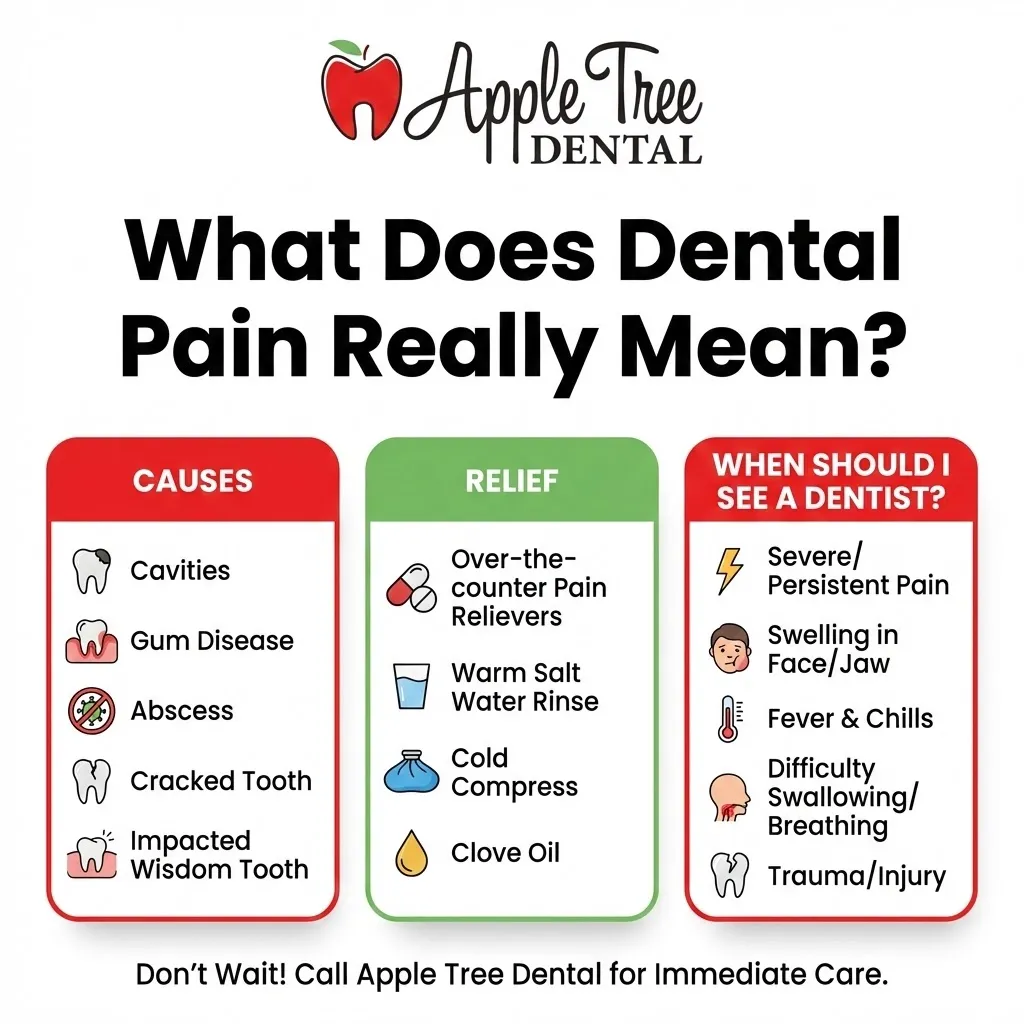
Dental pain can be confusing, stressful, and sometimes frightening. I see this regularly in my dental clinic. Patients often arrive worried because the discomfort started suddenly or gradually worsened. Many tell me they spent hours searching “dental near me” before deciding to book an appointment.
If you’re experiencing dental discomfort right now, take a breath. Pain doesn’t always signal a serious emergency — but it always deserves attention.
Let me walk you through what dental pain may indicate and how I guide patients through it.
Understanding Dental Pain: Why It Happens
Dental pain is your body’s warning system. It typically appears when something irritates the tooth, nerve, gums, or surrounding tissues.
In my clinical experience, pain most commonly stems from:
- Tooth decay
- Enamel wear
- Gum inflammation
- Cracked teeth
- Bite imbalance
- Infection
The key is recognizing the type and pattern of discomfort.
Not All Dental Pain Feels the Same
One of the biggest misconceptions I encounter is assuming every toothache means infection. That simply isn’t true.
1. Mild Sensitivity or Temporary Discomfort
This usually feels:
- Short-lived
- Triggered by cold, heat, or sweets
- Manageable
Common causes include enamel thinning, recent dental treatment, or temporary gum irritation.
In many cases, this improves within a few days.
2. Inflammation Inside the Tooth (Pulpitis)
When the tooth nerve becomes irritated, symptoms shift:
- Sharp sensitivity
- Lingering discomfort
- Pain while biting
Early evaluation at a dental office can often prevent more complex procedures.
3. Infection or Dental Abscess
Infection produces stronger warning signs:
- Persistent throbbing
- Increasing intensity
- Pain at night
- Swelling
- Pressure sensation
At this stage, professional care at a dental clinic near me becomes essential.
How Dental Pain Typically Progresses
Dental pain rarely jumps from “nothing” to “severe” overnight. It often follows a predictable pattern:
- Occasional sensitivity
- Repeated discomfort
- Constant ache
- Severe throbbing
- Swelling or pressure
Patients frequently tell me, “It started months ago but didn’t bother me much.” This gradual escalation is extremely common.
Pain Location: Important Diagnostic Clues
Where the pain occurs often helps identify the cause.
Front Teeth Pain
May indicate:
- Enamel erosion
- Trauma
- Gum recession
- Bite stress
Back Tooth Pain
Often linked to:
- Cavities
- Cracked teeth
- Grinding (bruxism)
- Infection
Gum Pain
Possible causes:
- Gingivitis
- Periodontal inflammation
- Trapped food or plaque
Jaw or Ear-Like Pain
Dental nerves can refer pain. A molar issue may feel like ear discomfort or jaw tension.
What I Recommend First (Safe Immediate Steps)
Before panic sets in, I encourage patients to take calm, safe measures.
What To Do
Rinse With Warm Salt Water
Helps soothe irritated gum tissues.
Floss Gently
Removes trapped debris.
Apply Cold Compress Externally
Reduces inflammation.
Use Over-the-Counter Pain Relief (If Suitable)
Follow dosage instructions carefully.
Observe Pain Triggers
Cold? Heat? Pressure? Nighttime?
These details help your dentist diagnose efficiently.
What NOT To Do
Do NOT place aspirin on the tooth
This can burn gum tissue.
Do NOT apply heat to the face
Heat may worsen infection.
Do NOT ignore swelling
Swelling is never normal.
Do NOT rely solely on home remedies
They rarely treat underlying causes.
You’re Not Overreacting
Dental pain affects sleep, concentration, eating, and emotional well-being. Many patients apologize for “making a fuss.”
You’re not alone — and you’re not exaggerating.
Pain is a legitimate medical signal.
When NOT to Google
Online research helps, but certain symptoms require immediate professional care.
Visit a Dental Clinic Immediately If You Notice:
- Facial swelling
- Fever
- Severe unrelenting pain
- Difficulty swallowing
- Pus or foul taste
- Broken or knocked-out tooth
These signs may indicate infection or abscess requiring urgent treatment at a dental clinic.
Searching “Dental Clinic Near Me”? What to Consider
When looking for a dental clinic near me, I suggest evaluating:
- Professional qualifications
- Emergency availability
- Clear treatment explanations
- Patient-centered care
Quality and trust matter far more than proximity alone.
Prevention: The Most Reliable Pain Strategy
Most severe dental emergencies begin as small, manageable issues.
Core Preventive Habits
- Routine dental exams
- Professional cleanings
- Early sensitivity evaluation
- Night guards for grinding
- Consistent oral hygiene
Preventive care protects enamel, nerves, and periodontal tissues.
Dental Braces vs Invisalign: Can Alignment Influence Pain?
Yes. Bite imbalance can contribute to pressure-related discomfort, jaw strain, and uneven tooth wear.
Dental Braces
- Fixed appliances
- Ideal for complex corrections
- Temporary soreness expected
Invisalign
- Removable aligners
- Discreet appearance
- Requires consistent wear
Both options improve occlusion, which may reduce long-term mechanical stress.
Understanding Coverage & Dental Plan Canada Discussions
Patients sometimes ask about systems like a dental plan Canada provides when comparing insurance or relocation scenarios.
Coverage structures vary by:
- Employer benefits
- Provincial programs
- Private insurance
Regardless of location, prevention remains the most cost-effective strategy.
Why Professional Standards Matter
Organizations such as the Ontario Dental Association help maintain:
- Ethical guidelines
- Continuing education
- Evidence-based care standards
These frameworks strengthen patient safety and treatment quality.
My Final Advice
If dental pain appears:
Pause
Assess
Take safe interim steps
Seek evaluation when symptoms persist or worsen
Pain rarely resolves permanently without addressing its root cause.
Frequently Asked Questions
Is throbbing dental pain always an infection?
Not always. However, persistent throbbing often suggests inflammation or infection affecting the tooth nerve.
How long should tooth sensitivity last?
Mild sensitivity may resolve within days. If it persists beyond 1–2 weeks, clinical evaluation is recommended.
Can dental pain disappear without treatment?
Symptoms may temporarily fade, but untreated decay or infection usually progresses silently.
Is swelling from a tooth serious?
Yes. Swelling may indicate infection and requires prompt dental care.
Should I search “dental near me” for mild discomfort?
Short-lived, mild discomfort can be monitored briefly. Persistent or worsening pain should be examined by a dentist.
About the Author
Dr. Nagham Altalib is a licensed dental professional practicing at Apple Tree Dental in London, Ontario. She has extensive clinical experience in patient care, oral pain diagnosis, restorative dentistry, orthodontics, prosthodontics, and preventive dental health.
Dr. Altalib’s work focuses on evidence-based dentistry, early diagnosis, minimally invasive treatment, and long-term oral wellness. Her clinical approach aligns with modern dental standards and patient safety frameworks referenced by organizations such as the American Dental Association (ADA), Canadian Dental Association (CDA), and Ontario Dental Association.
How This Article Was Created
This article is based on established dental science, real-world clinical observations, and patient education principles consistent with recognized professional guidelines. No fabricated statistics or exaggerated claims were used.
Sources of clinical alignment include:
- American Dental Association (ADA)
- Canadian Dental Association (CDA)
- Ontario Dental Association
- Health Canada
The goal is to provide accurate, responsible, and patient-focused dental guidance.
Conclusion: Listen to What Your Dental Pain Is Telling You
Dental pain is rarely random. In most cases, it reflects sensitivity, inflammation, mechanical stress, or infection developing beneath the surface. While some discomfort may be temporary, persistent or worsening pain usually signals a problem that needs professional evaluation.
I always remind patients of something simple but important: early attention prevents complex treatment. A small cavity is easier to manage than an abscess. Mild sensitivity is easier to address than nerve damage. Waiting often allows conditions to progress quietly.