
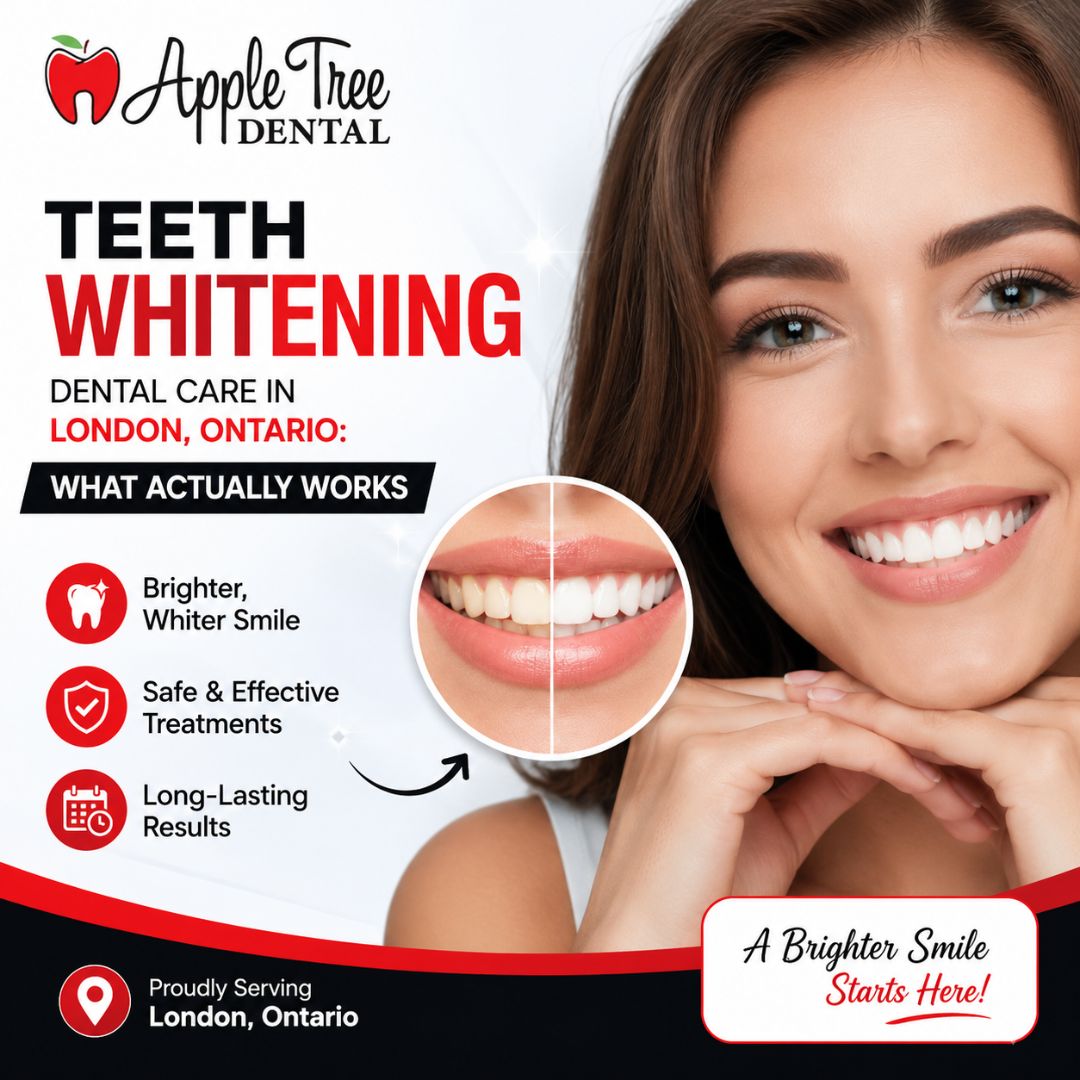
- Professional teeth bleaching uses a stronger peroxide concentration than anything sold over the counter, which is why results last longer.
- In-office whitening lifts shade fastest, but take-home trays give more even, controlled results over 1 to 2 weeks.
- Not all stains respond to bleaching — grey tetracycline staining and stains on old fillings need a different fix entirely.
- Natural remedies like baking soda or charcoal don’t bleach the tooth; they only scrub the surface, and some can wear enamel down.
- Sensitivity during whitening is common and usually temporary, and a proper fit tray reduces it significantly.
Coffee stains build up slowly. So does the yellowing that comes with age. By the time most people notice, whitening toothpaste has already stopped working.
Here’s what teeth whitening dental care actually involves, what changes your shade and what doesn’t, and where people waste money on the wrong method.
How Teeth Whitening Dental Care Actually Works
Whitening gel uses hydrogen peroxide or carbamide peroxide. Once applied, it breaks down and releases oxygen molecules that travel into the enamel and dentin underneath. Because of this, those molecules break apart the pigment compounds causing discolouration, without removing any tooth structure. You can review the full range of options on our teeth whitening service page.
Why Peroxide Concentration Matters in Teeth Bleaching
- Over-the-counter strips use roughly 6% to 10% peroxide, enough for mild change over weeks of daily use.
- Take-home professional trays use 10% to 22% carbamide peroxide, custom-fitted to your teeth for even contact.
- In-office bleaching uses 25% to 40% hydrogen peroxide, applied under supervision with gum protection.
Higher concentration means faster results. However, it also means higher sensitivity risk. That’s why in-office treatment is supervised, not just stronger.
What Causes Stains Changes Your Teeth Whitening Options
Not every yellow tooth responds to bleaching the same way. In fact, where the stain sits determines what will actually work.
Extrinsic Stains (Surface Level)
Coffee, tea, red wine, and smoking build up pigment on the enamel surface. As a result, these respond well to both take-home and in-office bleaching, often within one or two treatments.
Intrinsic Stains (Inside the Tooth)
Age-related yellowing, tetracycline staining from childhood antibiotic use, and fluorosis sit deeper in the dentin. Because of this, these need longer treatment cycles, and tetracycline-grey stains sometimes need veneers instead of bleach, since peroxide can’t fully clear that grey tone.
Stains That Bleaching Won’t Fix
- Old fillings, crowns, or veneers, since peroxide only whitens natural tooth enamel
- Dead or root-canal-treated teeth, which often need internal bleaching done differently through general dentistry
- Deep tetracycline banding, which usually needs cosmetic bonding or veneers for full coverage
Teeth Bleaching Options: In-Office vs. Take-Home vs. Natural
So, which method actually fits your situation? Here’s the comparison most patients need before picking one.
| Factor | In-Office | Take-Home Trays | Natural / OTC |
|---|---|---|---|
| Time to visible change | Single 60–90 min visit | 1 to 2 weeks | Minimal, if any, on intrinsic stain |
| Shade improvement | 6–8 shades typical | 4–6 shades over full course | Surface polish only |
| Fit and even coverage | Custom, professionally applied | Custom-fit tray at home | Generic strips, uneven contact |
| Enamel safety | Supervised, gums protected | Safe with dentist-fitted tray | Abrasive pastes (baking soda, charcoal) can wear enamel |
Natural whitening methods, like brushing with baking soda or activated charcoal, only scrub surface stain. They don’t bleach the tooth from within. In fact, repeated abrasive scrubbing can thin enamel over time, which actually makes teeth look more yellow, not less, since it exposes the dentin underneath.
The Teeth Whitening Process, Step by Step in London Ontario
Choosing the right teeth whitening dental care provider matters as much as the method itself. Here’s how the process actually unfolds:
- Shade assessment and exam. Your current shade is recorded, and existing fillings or crowns near the front teeth are flagged, since they won’t whiten.
- Cleaning first. A cleaning through our dental cleaning program removes surface plaque and tartar, since bleaching over buildup gives uneven results.
- Gum protection. A barrier gel or dam protects gum tissue from the peroxide during in-office treatment.
- Gel application. Peroxide gel is applied in cycles, often activated with a special light, over 15 to 20 minute intervals.
- Shade re-check. Shade is compared against your starting point, with additional cycles if needed.
- Maintenance plan. A take-home touch-up kit is often provided to extend results between visits.
Most in-office sessions run 60 to 90 minutes total. Meanwhile, take-home tray plans run nightly or daily for 1 to 2 weeks, depending on gel strength.
Sensitivity During Teeth Whitening Dental Care
Temporary sensitivity to cold happens in a large share of patients during treatment. That’s because peroxide temporarily opens tiny channels in the enamel. However, this settles within 24 to 48 hours in most cases. A 2023 clinical review found professionally supervised whitening carries a substantially lower sensitivity complaint rate than unsupervised over-the-counter use (Source: PMC, Clinical Review). This is largely because tray fit and gel exposure are controlled by a professional.
How Long Teeth Whitening Results Actually Last
So, how long can you expect results to stick around? Typically, results last 6 months to 2 years, depending on diet and habits. For example, coffee, red wine, tea, and smoking all bring stain back faster than a diet lower in those foods. As a result, maintenance matters just as much as the initial treatment.
Keeping Your Teeth Whitening Results Longer
- Use a straw for staining drinks when possible
- Rinse with water right after coffee, tea, or wine
- Keep up regular check-ups so staining is caught and treated early
- Ask about touch-up trays instead of restarting a full treatment from scratch
Frequently Asked Questions
Here are the questions we hear most about teeth whitening dental care at both our London locations.
A: A peroxide gel is applied to the teeth, where it breaks down and releases oxygen molecules that break apart the pigment compounds causing discolouration, inside the enamel and dentin.
A: It runs 60 to 90 minutes, with gum protection, a stronger peroxide gel applied in cycles, and a shade check between cycles to track progress.
A: Use a dentist-fitted tray with professional-grade gel, follow the recommended wear time exactly, and avoid over-the-counter generic strips that don’t fit your bite evenly.
A: Natural methods like baking soda only remove surface stain through mild abrasion. They don’t bleach the tooth internally, and frequent use can wear down enamel over time.
A: Strips use a lower peroxide concentration and don’t fit every tooth evenly. If your stain is intrinsic, sitting inside the dentin, strips often can’t reach it at all.
A: Most sensitivity settles within 24 to 48 hours after treatment. A properly fitted tray and supervised gel exposure reduce the chance and severity of it.
A: Results commonly last 6 months to 2 years, depending on diet, smoking, and how often you drink coffee, tea, or red wine afterward.
A: No. Peroxide gel only whitens natural enamel. Existing crowns, veneers, and fillings stay the same shade, which is why shade matching happens before any cosmetic work.
Ready for Real Teeth Whitening Results in London, Ontario?
Apple Tree Dental offers shade assessments and whitening consults at both London locations, so you know exactly what will work before you spend a dollar.
Curious about deeper stains or older fillings near the front of your mouth? Our general dentistry team can assess those first. If sensitivity worries you, our sedation dentistry page covers comfort options. See both clinic details, North and South London, on the contact page. Keeping results long-term ties directly into our dental cleaning program.