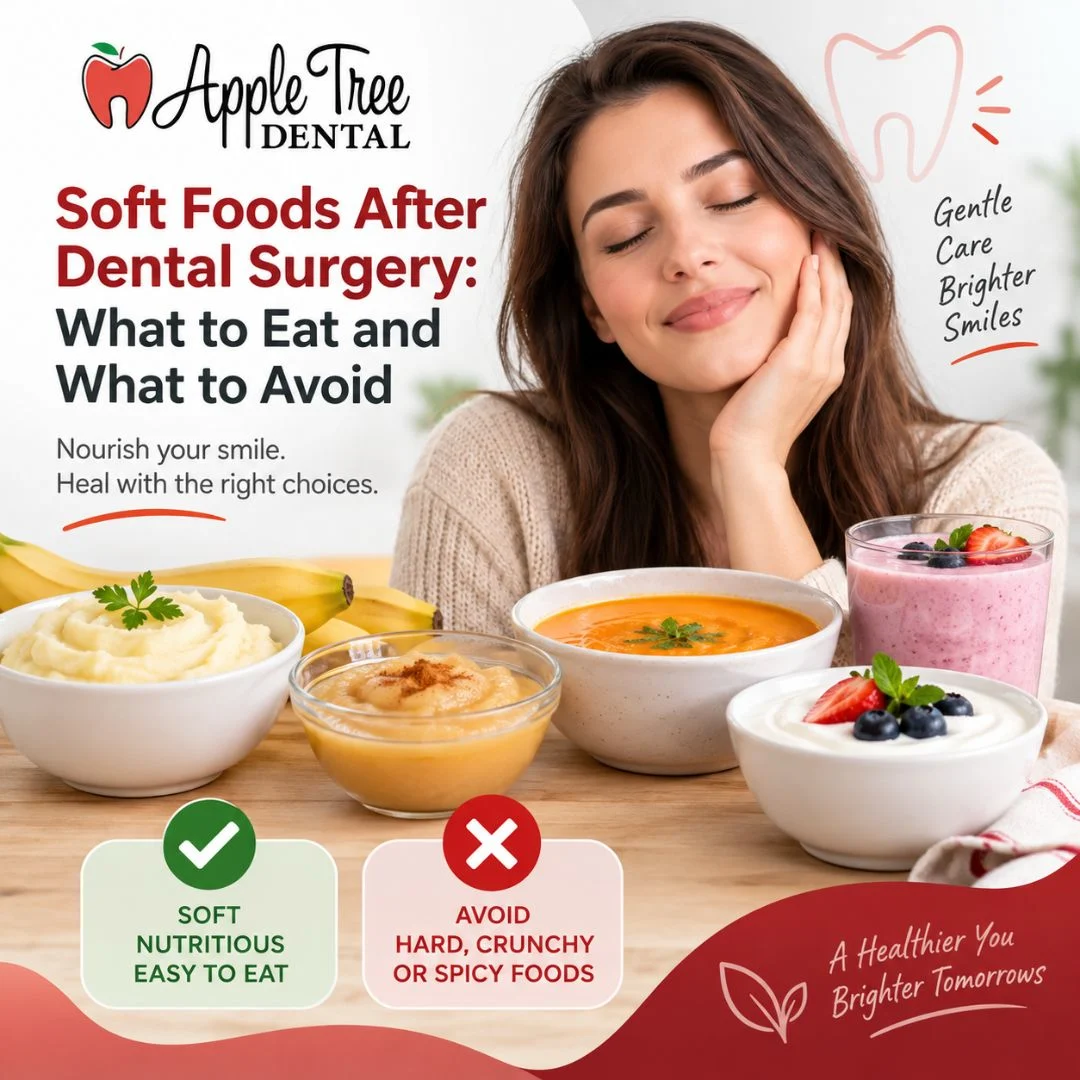
Soft foods after dental surgery protect the extraction site while it clots and closes, usually for the first 3 to 5 days. The right foods also carry enough protein and calories to actually help you heal, not just fill you up.
Apple Tree Dental sends every extraction and wisdom teeth patient home with a written eating plan from its Beaverbrook Avenue North and Wonderland Road South clinics in London.
You’re sitting in the car with gauze in your cheek, and the only instructions you can remember are “nothing hard for a while.” Then you get home, open the fridge, and realize you have no idea what actually counts.
This guide covers what to eat after wisdom teeth removal or any extraction, day by day, plus the mistakes that send people back to the dentist with a dry socket. It’s written the way a dentist would explain it chairside, not a generic recipe roundup.
1. Why soft foods matter after surgery
2. 50 soft foods sorted by day
3. Foods and habits that cause dry socket
4. A 5-day sample meal plan
5. When to move back to normal food
6. Special cases: kids, dentures, diabetes
7. Getting care in London, Ontario
8. FAQs
1Why Do You Need Soft Foods After Dental Surgery?
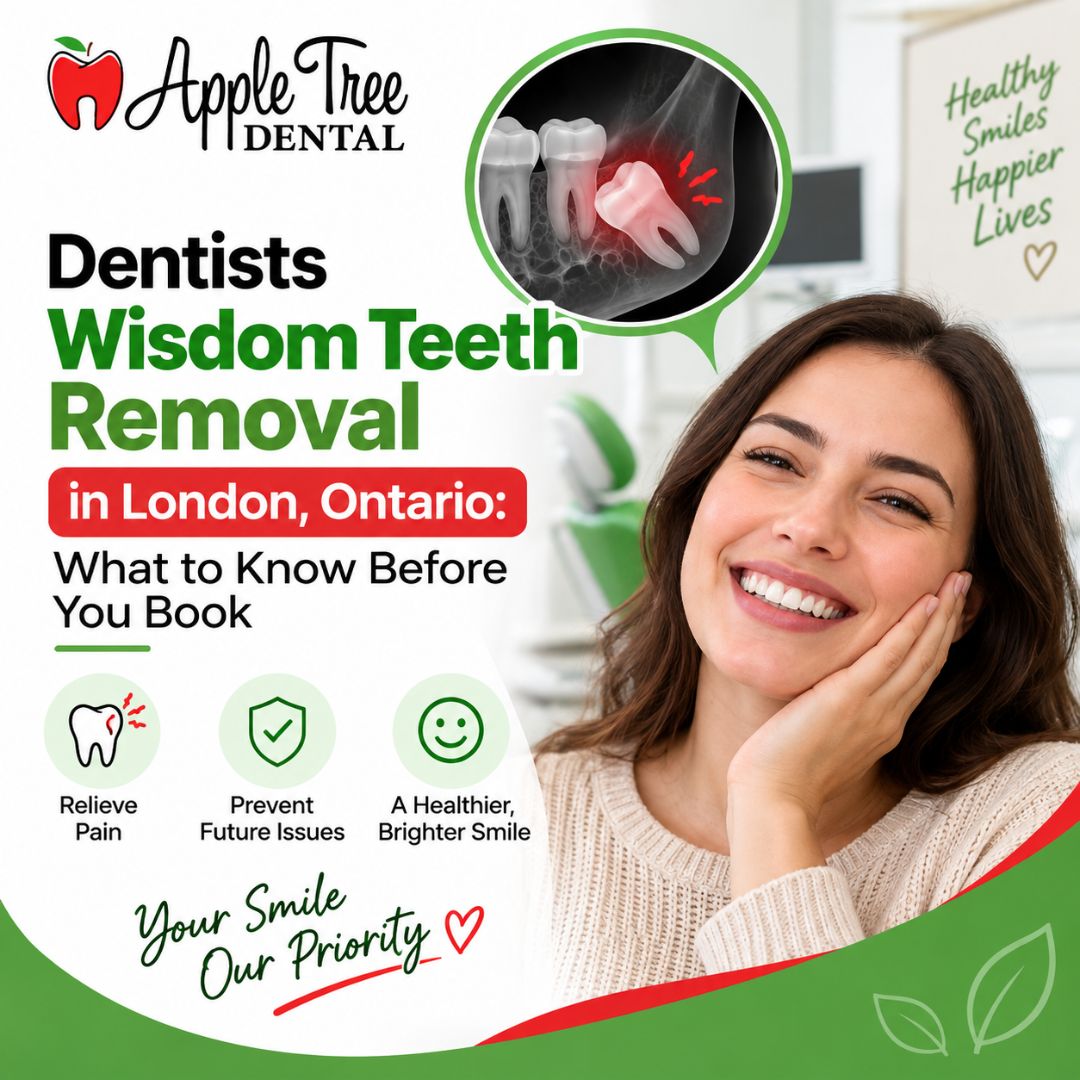
A blood clot forms in the socket within the first hour after extraction. It’s the foundation everything else builds on. Gum tissue grows over it, then bone slowly fills in underneath over the following weeks.
Crunchy or hard food doesn’t just hurt. It can physically pull that clot loose, especially in the first three days when it’s still fragile. Once it’s gone, the bone and nerve endings underneath are exposed to air and food, which is where dry socket pain comes from.
There’s a nutrition side too. Wound healing needs protein for tissue repair, vitamin C for collagen, and enough calories that your body isn’t scrambling for energy. A few days of broth and toast won’t cut it. That’s the gap most food lists skip: they’ll tell you pudding is soft, but not that it has almost nothing your body actually needs right now.
250 Soft Foods to Eat After Tooth Extraction, Sorted by Recovery Day
Days 1 to 2: no chewing at all
Everything here should require zero bite force. Lukewarm or room temperature only, since heat can loosen the clot and cold can spike sensitivity.
- Blended vegetable soup
- Bone broth
- Plain Greek yogurt
- Protein smoothie
- Mashed banana
- Unsweetened applesauce
- Cottage cheese
- Instant oatmeal, thinned
- Cream of wheat
- Mashed sweet potato
- Pureed carrots
- Plain pudding
- Protein shake
- Milk or fortified plant milk
- Blended lentil soup
- Mashed avocado
Days 3 to 5: mashable, minimal chewing
- Mashed potatoes
- Scrambled eggs
- Soft tofu
- Flaked salmon
- Refried beans
- Hummus, no pita
- Mac and cheese, well cooked
- Ricotta cheese
- Well-cooked oatmeal
- Mashed squash
- Soft-cooked pasta
- Risotto
- Egg salad
- Tuna salad, finely flaked
- Polenta
- Well-mashed chickpeas
- Baked apple, no skin
- Ripe mango, blended
Days 5 to 7: soft solids, chew away from the site
- Baked fish fillet
- Slow-cooked shredded chicken
- Meatloaf
- Soft-cooked rice
- Steamed soft vegetables
- Pancakes, no syrup crust
- French toast, soaked soft
- Soft dumplings
- Congee
- Well-cooked lentils
- Baked pears
- Soft cheese omelette
- Well-steamed dumplings
- Soft-cooked quinoa
- Pumpkin puree
- Cooked spinach
- Soft banana bread
Every list online repeats jello and smoothies. What they rarely mention is that most of those foods are low in protein and calories, which is exactly what your gums need to close the socket. Aim for at least one protein source, egg, yogurt, tofu, or blended beans, at every meal for the first week.
3What Causes Dry Socket, and Which Foods Make It Worse?
This is the section most competitor guides leave out, and it’s the one that actually prevents an emergency visit.
| Avoid this week • Straws, of any kind • Chips, nuts, popcorn • Seedy foods (strawberries, bagels with seeds) • Carbonated or very hot drinks • Spicy or acidic sauces • Alcohol and smoking |
Safe substitutes • Sip straight from the cup • Hummus, mashed avocado • Blended fruit, seeds strained out • Room temperature water • Mild broths, no chili • Herbal tea, decaf |
The straw rule surprises most patients. The suction pulls on pressure inside the mouth the same way spitting or blowing your nose does, and that’s often enough to pop a two-day-old clot loose. Skip straws for a full week, not just the first day.
If you’re a smoker, this is also the week nicotine does the most damage. It restricts blood flow to the gums right when they need it most, which is a major reason dry socket rates run higher in smokers.
4A 5-Day Sample Meal Plan After Wisdom Teeth Removal
| Day | Breakfast | Lunch | Dinner |
|---|---|---|---|
| 1 | Protein smoothie | Blended vegetable soup | Greek yogurt with mashed banana |
| 2 | Thinned oatmeal | Bone broth with soft tofu | Mashed sweet potato and cottage cheese |
| 3 | Scrambled eggs | Mashed potatoes with flaked salmon | Well-cooked pasta with ricotta |
| 4 | Egg salad | Risotto | Hummus with mashed avocado |
| 5 | Soft French toast | Congee with shredded chicken | Baked fish fillet, soft rice |
5When Can I Go Back to Normal Food?
Simple extractions heal faster than surgical ones. A tooth that comes out in one piece with a straightforward socket usually lets you chew normally within a week. Impacted wisdom teeth, especially ones that needed bone removal, take longer because the socket is deeper.
A practical test: try a small piece of soft-cooked chicken or fish away from the surgical side. If there’s no sharp pain, add texture gradually over the next few days rather than jumping straight to steak and raw vegetables.
If pain gets worse after day 3 instead of better, or you notice a foul taste and an empty-looking socket, that’s a sign of dry socket. Call your dentist rather than waiting it out.
6Soft Food Notes for Kids, Denture Wearers, and Diabetics
Quick answer: Kids need smaller, more frequent portions. Denture wearers should avoid wearing the appliance over a fresh extraction for the first 24 hours unless told otherwise. People with diabetes should watch blood sugar closely, since a soft-food diet is often lower in protein.
- Kids: Offer smaller portions every 2 to 3 hours instead of three large meals. Popsicles (no wooden stick chewing) help with swelling and keep them hydrated.
- Denture wearers: A partial denture resting on a fresh socket can irritate the clot. Ask your dentist when it’s safe to wear it again, especially after implant-supported denture procedures.
- Diabetes: Blood sugar swings can slow wound healing. Favor protein-forward soft foods like eggs and Greek yogurt over pudding and juice, and monitor levels more closely for the first week.
- Patients mid-Invisalign: If you’re between aligner trays during Invisalign treatment, tell your dentist. Swelling can change how a tray fits for a few days.
7Getting an Extraction or Wisdom Teeth Consult in London, Ontario
Apple Tree Dental is a family practice with RCDSO-registered dentists. You can verify any Ontario dentist’s registration through the RCDSO public register before booking anywhere.
Every extraction includes a printed food and care sheet, plus a direct line to call if something feels off during recovery. If you’re closer to the south end of the city, the South London clinic page has directions and hours.
Patients from Masonville, Byron, Westmount and Oakridge typically pick whichever location is closer to home. Both clinics offer the same extraction and wisdom teeth care, and both follow the same aftercare protocol described in this guide.
Booked for an extraction or wisdom teeth removal?
Get a personalized recovery and eating plan at your consultation.
Frequently Asked Questions
What are the best soft foods to eat after wisdom teeth removal?
Blended soups, Greek yogurt, mashed banana, scrambled eggs, and protein smoothies are among the best options. Choose foods with protein and calories, not just soft texture, since your gums need real nutrients to heal properly.
What can I eat after a tooth extraction on day one?
Stick to liquids and purees that need zero chewing, like broth, blended soup, applesauce, and yogurt. Keep everything room temperature or lukewarm, and avoid straws completely for the first week.
How long do I have to eat soft foods after oral surgery?
Most people need 3 to 5 days of no-chew foods, then can add mashable foods through day 7. Full recovery to normal chewing usually takes 7 to 10 days for simple extractions, longer for impacted wisdom teeth.
Can I eat mashed potatoes after wisdom teeth removal?
Yes, mashed potatoes are a good choice from around day 2 onward. Let them cool to lukewarm first, and avoid adding crunchy toppings like bacon bits or raw green onion near the extraction site.
Why can’t I use a straw after wisdom teeth removal?
The suction from a straw can dislodge the healing blood clot in the socket, leading to dry socket. This risk lasts about a week, so drink straight from a cup or spoon-feed liquids instead.
What foods should I avoid after tooth extraction?
Avoid chips, nuts, popcorn, seedy fruit, spicy or acidic food, carbonated drinks, and anything eaten through a straw. These can irritate the socket or dislodge the clot that’s protecting it.
How do I know if I have dry socket instead of normal healing pain?
Normal pain eases each day after surgery. Dry socket pain gets worse around day 3 or 4, often with a foul taste and visible bone in the socket. Call your dentist the same day if this happens.