Want a Perfect Smile Fast? Try Dentist Bonding Teeth in London, Ontario

A chipped tooth, uneven edges, small gaps, or stubborn stains can make people feel self-conscious about smiling. The good news is that you may not need major dental work to improve your smile. Dentist bonding teeth treatments are one of the fastest and most affordable cosmetic dentistry solutions available today. At Apple Tree Dental in London, patients choose composite bonding teeth procedures to restore confidence, improve tooth appearance, and create natural-looking smiles without invasive treatment. If you want a minimally invasive cosmetic dental solution that delivers noticeable results quickly, dental bonding may be the perfect option.

What Is Teeth Bonding?

Teeth bonding is a cosmetic dental treatment where a tooth-colored composite resin material is applied directly to the surface of the tooth. The resin is shaped, hardened, and polished to improve the appearance of the smile.

This procedure is commonly used to:

  • Repair chipped teeth
  • Fix cracked teeth
  • Improve tooth shape
  • Close small gaps
  • Cover discoloration
  • Lengthen worn teeth
  • Smooth uneven edges
  • Restore damaged enamel

Unlike more extensive cosmetic procedures, composite resin bonding teeth treatments usually require little to no enamel removal. According to the Canadian Dental Association, preserving natural tooth structure is a core principle of modern restorative dentistry — and composite bonding aligns with that philosophy. That means patients can improve their smiles while preserving more of their natural tooth structure.

Many patients in London prefer composite bonding teeth because the treatment is:

  • Fast
  • Affordable
  • Conservative
  • Natural-looking
  • Comfortable
  • Minimally invasive

In many cases, bonding can be completed in just one appointment. This makes it ideal for busy patients who want immediate cosmetic improvements without lengthy treatment plans. At Apple Tree Dental, every bonding treatment is customized to match your smile, facial aesthetics, and natural tooth shade.

Benefits of Dental Bonding

Quick Smile Enhancement

Dental bonding can dramatically improve the appearance of teeth in a single visit.

Natural Appearance

Modern composite resin materials are designed to mimic the look of natural enamel. The National Institutes of Health recognizes that oral health is directly tied to overall wellbeing, making natural-looking restorations an important part of holistic patient care.

Affordable Cosmetic Dentistry

Compared to dental implants and crowns, bonding is often a more budget-friendly cosmetic option.

Minimally Invasive Treatment

Most bonding procedures require very little alteration to the natural tooth.

Same-Day Results

Patients often leave the office with a noticeably improved smile after just one appointment.

Versatile Cosmetic Solution

Bonding can address multiple cosmetic concerns at once, including chips, gaps, uneven teeth, and discoloration.

Teeth Bonding Before and After: What Results Can You Expect?

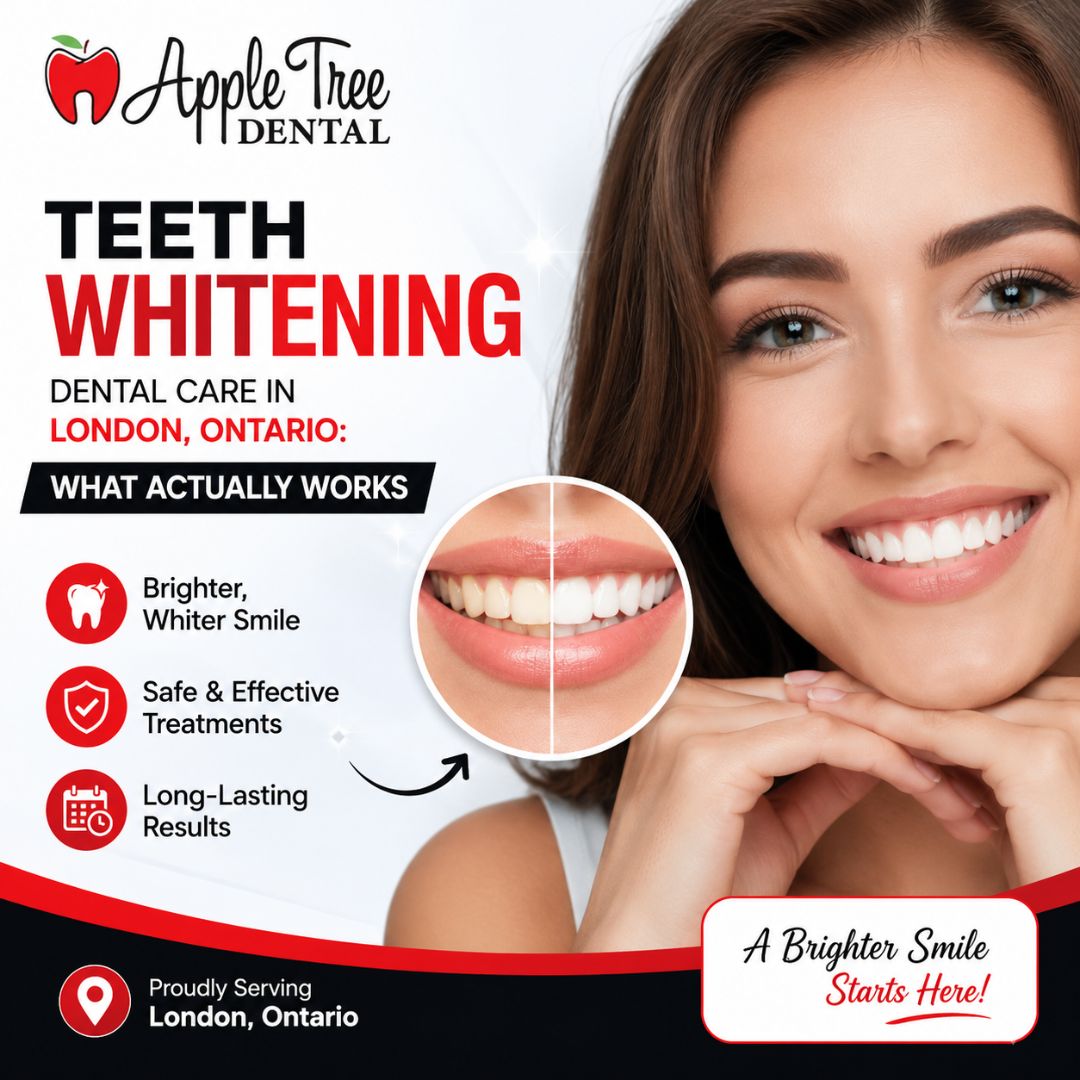
One of the reasons teeth bonding before and after results are so impressive is because even small cosmetic changes can completely transform a smile.

Dental bonding can:

  • Make teeth appear straighter
  • Improve smile symmetry
  • Restore chipped teeth
  • Reshape uneven teeth
  • Brighten stained teeth
  • Close spaces between teeth
  • Create smoother tooth edges

Patients often notice an immediate boost in confidence after treatment. Because bonding is customized to match surrounding teeth, results typically look subtle and natural rather than overly cosmetic.

Common Cosmetic Problems Dental Bonding Can Fix

Cosmetic Concern How Bonding Helps
Chipped teeth Restores natural tooth shape
Tooth gaps Closes spaces naturally
Minor cracks Repairs enamel damage
Uneven teeth Improves smile symmetry
Stained teeth Covers discoloration
Short teeth Adds cosmetic length
Worn edges Rebuilds tooth structure

Composite Bonding Teeth vs Tooth Porcelain Veneers

Patients often compare composite bonding teeth with tooth porcelain veneers when exploring cosmetic dentistry options. Both treatments improve smile aesthetics, but they work differently.

Feature Composite Bonding Porcelain Veneers
Treatment Time Usually one visit Multiple visits
Enamel Removal Minimal More extensive
Cost More affordable Higher investment
Repairs Easier to repair Often replaced
Procedure Type Conservative More permanent
Cosmetic Results Natural-looking Highly aesthetic

If you want a less invasive cosmetic option, bonding is often an excellent starting point. For larger smile makeovers, veneers may sometimes be recommended.

Who Is a Good Candidate for Teeth Bonding?

You may be a good candidate for dental bonding if you:

  • Have healthy teeth and gums
  • Want cosmetic smile improvements
  • Have small chips or cracks
  • Want to close minor gaps
  • Need tooth reshaping
  • Want affordable cosmetic dentistry
  • Prefer minimally invasive treatments
  • Want quick smile correction

Bonding is ideal for mild to moderate cosmetic concerns. Patients with severe damage or major alignment issues may require alternative cosmetic dental treatments such as dentures or other restorative solutions.

The Dental Bonding Process at Apple Tree Dental

At Apple Tree Dental, the bonding process is designed to be comfortable, efficient, and personalized.

Consultation & Smile Assessment

Your dentist evaluates your teeth, discusses your cosmetic goals, and recommends the most suitable treatment options.

Shade Matching

The composite resin is carefully matched to your natural tooth color for seamless results.

Tooth Preparation

The surface of the tooth is gently prepared to help the bonding material adhere properly. In some cases, a prior tooth extraction may be necessary before bonding treatment begins.

Composite Resin Application

The bonding material is applied, shaped, and sculpted to improve the tooth’s appearance.

Curing & Polishing

A special curing light hardens the material before the tooth is polished to create a smooth finish.

Most appointments take approximately 30 to 60 minutes per tooth.

How Long Does Composite Bonding Last?

With proper care, composite bonding teeth can last several years. The longevity of bonding depends on:

  • Oral hygiene habits
  • Diet
  • Teeth grinding
  • Smoking
  • Regular dental visits

To extend the life of bonded teeth:

  • Brush twice daily
  • Floss consistently
  • Avoid biting hard objects
  • Limit coffee and red wine
  • Wear a nightguard if needed
  • Schedule regular dental cleanings

The Government of Canada’s oral health guidelines also stress that consistent hygiene practices are essential to the durability of any dental restoration. Good maintenance helps preserve both appearance and durability.

Dental Bonding Price in London, Ontario

Many patients searching for dental bonding price want an affordable cosmetic solution that still delivers natural-looking results. The total cost of bonding depends on:

  • Number of teeth treated
  • Complexity of treatment
  • Amount of bonding material needed
  • Cosmetic goals

Compared to veneers or crowns, bonding is generally considered one of the more cost-effective cosmetic dentistry options. For personalized treatment recommendations, patients can contact Apple Tree Dental in London.

Why Patients Choose Apple Tree Dental for Cosmetic Bonding

Choosing the right cosmetic dentist matters when it comes to achieving natural-looking results. Patients visit Apple Tree Dental because of the clinic’s focus on:

  • Personalized smile design
  • Conservative cosmetic dentistry
  • Comfortable patient care
  • Modern dental technology
  • Natural-looking restorations
  • Detailed cosmetic consultations
  • Long-term oral health

The goal is not just improving teeth — it is creating a smile that looks balanced, healthy, and confident.

Is Teeth Bonding Worth It?

For many patients, dental bonding offers one of the best combinations of:

  • Affordability
  • Speed
  • Aesthetics
  • Comfort
  • Conservative treatment

If you want noticeable cosmetic improvements without extensive dental work, bonding can be an excellent investment in your smile and confidence. The Canadian Life and Health Insurance Association (CLHIA) provides resources to help Canadians understand what cosmetic and restorative dental procedures their benefit plans may cover.

Ready to Transform Your Smile?

Book Your Composite Bonding Consultation Today


Same-Day Results

No Enamel Removal

Affordable & Painless

Natural-Looking Finish

At Apple Tree Dental in London, Ontario, our cosmetic team customizes every bonding treatment to match your natural tooth shade and smile goals. Whether you have a chipped front tooth, a small gap, or years of staining — we can restore your confidence in just one visit.

Book a Free Consultation →
📍 Serving London, Ontario & surrounding areas

Caring for Bonded Teeth

To maintain your results after treatment:

  • Brush using a soft-bristle toothbrush
  • Avoid chewing ice or hard objects
  • Reduce stain-causing foods and drinks
  • Wear protection during sports
  • Visit your dentist regularly
  • Avoid smoking whenever possible

Consistent oral care helps bonded teeth stay smooth, bright, and natural-looking. For a full picture of all available dental services at our clinic, visit the family dentistry page.

Frequently Asked Questions About Dentist Bonding Teeth

Does dental bonding hurt?

Dental bonding is usually painless and rarely requires anesthesia unless it is being used to treat decay.

How long does teeth bonding last?

With proper care, bonding can last several years before touch-ups may be needed.

Can bonding fix front teeth?

Yes. Bonding is commonly used for front teeth to repair chips, close gaps, and improve appearance.

Is composite bonding safe?

Yes. Composite bonding is considered a safe and minimally invasive cosmetic dental treatment.

Can bonded teeth stain over time?

Yes. Composite resin can stain gradually, especially with smoking, coffee, tea, or red wine consumption.

Is bonding cheaper than veneers?

In most cases, bonding is more affordable than porcelain veneers.

Restore Your Smile With Composite Bonding Teeth in London, Ontario

If you are looking for a fast, natural-looking, and minimally invasive cosmetic dental treatment, dentist bonding teeth procedures may be the perfect solution. Whether you want to repair chips, close gaps, improve tooth shape, or enhance your smile, Apple Tree Dental in London provides personalized cosmetic dentistry designed around your smile goals.

Book your consultation today and discover how composite dental bonding can help you smile with confidence again.

✦ About the Author

Apple Tree Dental Logo

📍 London, Ontario

Apple Tree Dental

Your Trusted Family & Cosmetic Dental Clinic

The clinical team at Apple Tree Dental in London, Ontario is dedicated to helping patients of all ages achieve healthy, confident smiles. Combining modern cosmetic techniques with compassionate, personalized care, the clinic offers a full range of services — from composite bonding to complete smile restorations.

Serving patients across London, Ontario, and surrounding areas

Book a Consultation →

Dental Implants Cost Canada: What You Should Really Expect to Pay

One of the most common questions Canadians ask before exploring tooth replacement is simple: how much do dental implants cost in Canada? The honest answer is that it varies — by province, by treatment type, by bone condition, and by clinic. This guide gives you real national price ranges, a province-by-province breakdown, what drives cost differences, insurance realities, and practical ways to make implants more affordable. If you’re specifically looking for pricing in London, Ontario, see our dedicated dental implants cost London Ontario guide for clinic-specific figures from Apple Tree Dental.

✦ Key Takeaways

Dental Implants Cost Canada — Quick Facts

  • Single tooth implant in Canada: approximately CAD $3,000 – $6,500 national average.
  • Full mouth restoration: CAD $30,000 – $90,000+ depending on implant count and restoration type.
  • Major cities (Toronto, Vancouver) cost more than smaller cities due to higher clinic overhead.
  • No provincial plan in Canada covers implant surgery — private insurance may cover partial components.
  • Bone grafting adds CAD $500 – $3,000 if required before implant placement.
  • All-on-4 is a more affordable full-arch option vs. individual implants for every tooth.
  • Long-term value: implant posts last a lifetime — dentures need replacing every 5–8 years.

Dental Implant Cost in Canada: National Price Ranges

Here are realistic cost ranges across Canada for the most common implant treatments. These are national averages — actual pricing at any specific clinic depends on the factors covered below.

Treatment TypeCanada-Wide Range (CAD)Notes
Single Tooth Implant$3,000 – $6,500Includes post, abutment, crown
Implant-Supported Bridge$6,000 – $15,0002 implants, 3–4 teeth
All-on-4 (per arch)$20,000 – $35,000Full arch on 4 implants
Full Mouth (both arches)$40,000 – $90,000+Varies widely by case
Implant-Supported Denture$10,000 – $25,000More affordable full-arch option
Bone Grafting$500 – $3,000If bone loss has occurred
Sinus Lift$1,500 – $3,500Upper jaw only, if needed

Dental Implant Cost by Province / City in Canada

Location is one of the biggest cost drivers in Canada. Urban centres with higher overhead costs consistently charge more than mid-size cities:

Province / CitySingle Implant Approx. Range (CAD)vs. National Average
British Columbia (Vancouver)$4,500 – $9,000Above average
Ontario (Toronto / GTA)$4,000 – $8,000Above average
Ontario (London, smaller cities)$3,000 – $6,000At / below average ✅
Alberta (Calgary / Edmonton)$3,500 – $7,000Near average
Quebec (Montreal)$3,000 – $6,500Near average
Manitoba / Saskatchewan$2,800 – $5,500Below average
Atlantic Provinces$2,500 – $5,000Below average

London, Ontario Advantage

Patients in London, Ontario benefit from pricing that is consistently at or below the national average — without any compromise in clinical quality. For exact pricing at Apple Tree Dental’s two London locations, see our London Ontario cost guide.

What Are Dental Implants?

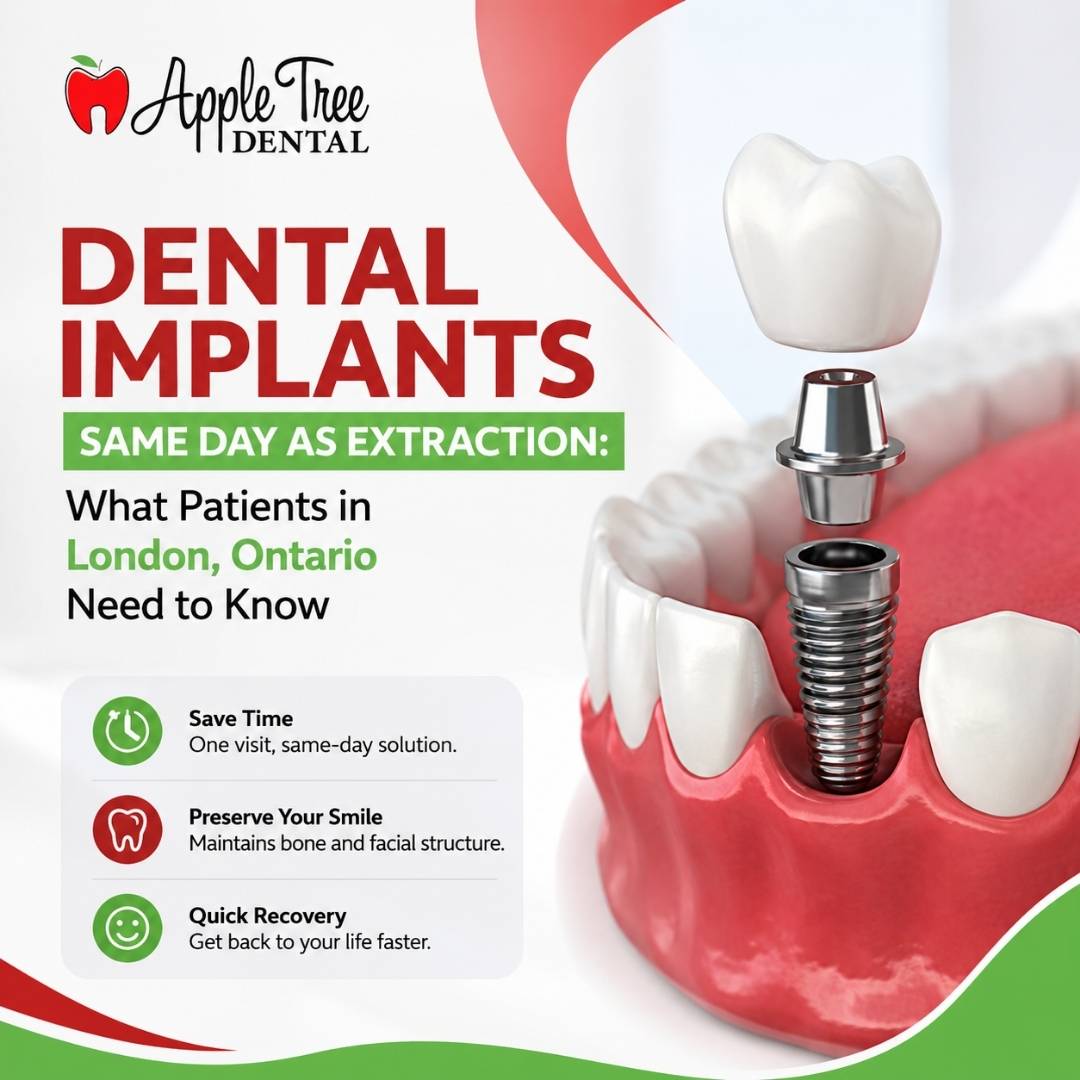
A dental implant is a small titanium post surgically placed into the jawbone to act as an artificial tooth root. Once the bone fuses around it through a process called osseointegration, a custom crown is attached on top — giving you a replacement tooth that looks, feels, and functions like a natural one. A complete implant restoration has three components:

  • Titanium Implant Post — the artificial root placed into the jawbone
  • Abutment Connector — links the post to the crown
  • Custom Crown — the visible tooth-shaped cap on top

According to the Canadian Dental Association, implants are one of the most predictable and successful procedures in modern dentistry, with long-term success rates consistently above 95% in healthy patients.

What Affects Dental Implant Cost in Canada?

Number of Missing Teeth

Replacing one tooth costs significantly less than replacing multiple teeth or a full arch. Each additional implant adds surgical time, materials, and laboratory work to the total.

Bone Density and Condition

When a tooth has been missing for some time, bone loss occurs at that site. Bone grafting rebuilds the foundation before implant placement and adds to the overall cost. A 3D imaging assessment at consultation confirms whether grafting is needed.

Implant System and Materials

Premium implant systems from established manufacturers cost more upfront but offer stronger long-term outcomes, better osseointegration rates, and manufacturer support. Zirconia crowns cost slightly more than porcelain-fused-to-metal but offer a more natural appearance.

Clinic Location

Urban clinics in Toronto and Vancouver have higher operational overhead — rent, staff costs, equipment — which directly impacts patient pricing. Mid-size cities like London, Ontario offer the same clinical quality at more competitive rates.

Additional Preparatory Procedures

Tooth extractions, sinus lifts, gum treatment, or sedation requirements all contribute to total cost. These are identified and itemised before treatment begins at a reputable clinic.

Provider Experience

Highly experienced implant providers — particularly those with prosthodontics training — may charge more, but the reduced risk of complications or implant failure makes this a sound long-term investment. A failed implant that needs removal and replacement costs far more than getting it right the first time.

Types of Dental Implants and Their Costs in Canada

Single Tooth Implant

The most common type. One implant post replaces one missing tooth without affecting adjacent teeth. Cost: $3,000 – $6,500 nationally depending on location, bone condition, and materials.

Implant-Supported Bridge

Two implant posts anchor a row of replacement teeth for several adjacent missing teeth — no healthy teeth ground down. Cost: $6,000 – $15,000 depending on span and materials.

All-on-4 Dental Implants

A full arch supported by just four strategically placed implants. More affordable than individual implants for every tooth, with faster recovery and strong long-term outcomes. Cost: $20,000 – $35,000 per arch. For a full guide, see All-on-4 dental implants in London, Ontario.

Implant-Supported Dentures

A more budget-friendly full-arch alternative — implants anchor a removable or fixed denture, providing far superior stability over traditional removable dentures. Cost: $10,000 – $25,000 depending on implant count and denture type.

Full Mouth Dental Implants

Complete upper and lower arch restoration. Cost varies significantly based on number of implants, materials, and bone conditions: $40,000 – $90,000+. A personalised consultation is the only way to get an accurate figure.

Implants vs. Dentures vs. Bridges: True Cost Over Time

The upfront cost of implants is higher — but the long-term picture looks very different:

OptionUpfront CostLifespan20-Year True Cost*Preserves Jawbone?
Dental Implant$3,000–$6,500Post: lifetime$3,000–$7,000✅ Yes
Dental Bridge$1,500–$3,0005–15 years$4,500–$9,000+❌ No
Dentures$1,000–$3,5005–8 years$4,000–$10,500+❌ No

*20-year true cost accounts for replacements, adjustments, and relining over time. Implant posts rarely require replacement — only the crown may need replacing after 10–15+ years.

Does Canadian Insurance Cover Dental Implants?

No provincial plan in Canada covers implant surgery. Private insurance coverage varies considerably:

ComponentTypical Insurance Coverage
Initial consultation / X-rays / 3D scansOften covered (basic diagnostic)
Dental crown (on implant)Sometimes covered as prosthetic
Abutment connectorOccasionally covered
Implant post / surgical placementRarely covered
Bone graftingRarely covered

Always verify your specific benefits directly with your insurance provider. The Canadian Life and Health Insurance Association (CLHIA) provides resources to help understand dental plan coverage. Statistics Canada dental care data shows cost remains one of the primary barriers to Canadians accessing restorative treatment — which is why transparent pricing and financing matter.

CDCP — Seniors Coverage

Canadian residents aged 70 and older may qualify for some dental coverage under the Canadian Dental Care Plan (CDCP). Eligibility depends on income, age, and existing dental insurance. Check the Government of Canada CDCP page for current eligibility and covered procedures.

How to Make Dental Implants More Affordable in Canada

1. Choose a Mid-Size City Clinic

Clinics in cities like London, Ontario, Kitchener, Hamilton, or Halifax offer the same clinical quality as major urban centres at significantly more competitive pricing. Travel costs are often offset by the savings.

2. Ask About Monthly Payment Plans

Many Canadian dental clinics offer financing arrangements that spread treatment costs over time — making implants manageable within a monthly budget without compromising on quality.

3. Consider All-on-4 for Full-Arch Cases

All-on-4 uses four implants to support an entire arch instead of individual implants per tooth — significantly reducing cost, surgical time, and recovery period for patients needing full arch replacement.

4. Use Insurance Benefits Across Two Calendar Years

If your plan has an annual benefit maximum that resets each January, timing treatment steps across two benefit periods can help maximise coverage — for example, surgery in December and crown placement in January.

5. Request Phased Treatment

For multiple implants, treatment can sometimes be completed in stages across different periods — distributing costs without compromising the clinical outcome.

6. Avoid “Cheapest” Providers

Extremely low implant prices can indicate lower-quality materials, limited diagnostics, or hidden fees added later. A failed implant that needs removal and replacement costs far more than quality treatment the first time. Seek genuine value — transparent pricing, experienced providers, quality materials.

Are Dental Implants Worth the Cost in Canada?

For the majority of patients, yes. While the upfront investment is higher than dentures or bridges, implants are the only tooth replacement option that:

  • Replaces the tooth root — not just the visible crown
  • Actively preserves jawbone and prevents facial structure changes
  • Can last a lifetime with proper care
  • Requires no adhesives, no overnight removal, no relining
  • Does not require grinding down healthy adjacent teeth

The National Institutes of Health confirms that dental implants have a very high success rate and that complications are uncommon in healthy patients who maintain good oral hygiene.

Frequently Asked Questions: Dental Implants Cost Canada

How much are dental implants in Canada on average?

The national average for a single tooth implant in Canada is approximately CAD $3,000 – $6,500, including the post, abutment, and crown. Prices vary by province — major cities like Toronto and Vancouver tend to be higher than mid-size cities.

Which province has the cheapest dental implants in Canada?

Atlantic provinces and prairie cities (Manitoba, Saskatchewan) tend to have lower implant costs. Ontario cities outside the GTA — like London — also offer competitive pricing at or below the national average.

Does any Canadian province cover dental implants?

No provincial plan currently covers implant surgery. Some private insurance plans may cover partial components like crowns or diagnostic imaging. Seniors 70+ may qualify for some coverage under the federal Canadian Dental Care Plan (CDCP) — check eligibility at canada.ca.

How much does a full mouth of implants cost in Canada?

Full mouth restoration (both arches) ranges from CAD $40,000 to $90,000+ depending on the number of implants, restoration type, and bone condition. All-on-4 offers a more affordable full-arch option at $20,000–$35,000 per arch.

How long do dental implants last in Canada?

With proper care and regular dental checkups, implant posts often last a lifetime. The crown typically lasts 10–15+ years before needing replacement. This longevity makes implants one of the most cost-effective tooth replacement options over the long term.

Is it cheaper to get implants in the US or Canada?

US pricing varies widely by state but is often comparable to Canadian major city pricing. Without travel costs and the complexity of cross-border dental care factored in, the savings are rarely significant enough to justify going abroad — and warranty/follow-up care becomes complicated.

Where can I get affordable implants in London, Ontario?

Apple Tree Dental offers competitive implant pricing at two London, Ontario locations — with transparent, itemised quotes and financing options. See our full dental implants cost London Ontario guide for clinic-specific pricing details, or book a consultation directly.

Final Thoughts: Getting the Best Value on Implants in Canada

Dental implant costs in Canada are genuinely variable — but the national average of CAD $3,000–$6,500 per tooth represents a long-term investment that typically outperforms dentures and bridges when viewed over 10–20 years. The key is finding a clinic that offers transparent pricing, quality materials, and experienced providers — not just the lowest headline number.

If you’re in Ontario and considering implants, London offers pricing at or below the national average without compromising on clinical quality. Our team at Apple Tree Dental is here to give you honest answers and a complete cost breakdown before any treatment begins.

✦ Get an Accurate Quote — Apple Tree Dental

Apple Tree Dental — London, Ontario

Serving patients in London, Ontario and surrounding communities. Implant consultations available at both North and South London locations — 3D imaging, itemised pricing, financing options.

📍 North London

1365 Beaverbrook Ave, Unit 102
London, Ontario N6H 0J1

(519) 641-1411

📍 South London

3429 Wonderland Rd S, Unit 6
London, Ontario N6L 0E3

(226) 667-4600

Mon–Wed: 9:30 AM–6:00 PM  |  Thu: 11:00 AM–7:00 PM  |  Sat: Twice monthly

Book a Consultation →

Orthodontic Treatment for Underbite: Best Options for Lasting Correction

An underbite can affect more than just the appearance of your smile. When the lower teeth sit in front of the upper teeth, it may lead to chewing difficulties, jaw strain, speech concerns, uneven tooth wear, and long-term oral health problems.The good news is that modern orthodontic treatment for underbite offers several effective solutions for children, teens, and adults. From orthodontic braces for teeth to advanced jaw alignment treatments, today’s orthodontics options are designed to improve both function and appearance.

At Apple Tree Dental in London, Ontario, patients receive personalized orthodontic care focused on long-term bite correction, smile health, and comfort. Whether you are exploring what orthodontics is, researching orthodontic braces for children, or searching for orthodontics near you, understanding your treatment options can help you make informed decisions.

What Is an Underbite?

An underbite is a type of dental misalignment where the lower teeth extend outward farther than the upper teeth when the mouth is closed. Some underbites are mild and mostly cosmetic, while others can significantly affect oral function.

Underbites may develop because of:

  • Genetics and inherited jaw structure
  • Thumb sucking during childhood
  • Prolonged pacifier use
  • Mouth breathing habits
  • Improper jaw growth
  • Missing or crowded teeth

Without treatment, an underbite may worsen over time and contribute to:

  • Jaw discomfort
  • Tooth damage
  • Difficulty chewing
  • Speech issues
  • Gum recession
  • Chronic bite imbalance

This is why early diagnosis and professional orthodontic treatment are important. According to the Canadian Dental Association, early intervention can prevent more complex complications later in life.

What Is the Best Orthodontic Treatment for Underbite?

The best orthodontic treatment for underbite depends on the severity of the bite issue, jaw alignment, age, and overall oral health. Mild cases may respond well to braces or clear aligners, while severe underbites may require combined orthodontic and jaw-focused treatment.

An experienced orthodontist will evaluate:

  • Tooth positioning
  • Jaw alignment
  • Facial structure
  • Growth patterns
  • Bite function

After a complete assessment, a customized treatment plan is created to provide lasting correction.

What Is Orthodontics?

Many patients ask, “what is orthodontics?” Orthodontics is a specialized area of dentistry focused on correcting problems related to tooth positioning, jaw alignment, and bite function.

Orthodontists use advanced diagnostic tools and treatment techniques to improve:

  • Crooked teeth
  • Overbites
  • Underbites
  • Crossbites
  • Crowding
  • Spacing problems
  • Jaw alignment

Modern orthodontics is designed to improve not only smile appearance but also long-term oral health and comfort. The Government of Canada’s oral health guidelines emphasize that properly aligned teeth and jaws support better overall health outcomes.

Why Orthodontic Treatment for Underbite Matters

Some people assume underbites are only cosmetic concerns, but untreated bite issues can create ongoing dental and jaw complications.

Benefits of orthodontic treatment for underbite include:

  • Improved chewing efficiency
  • Better speech clarity
  • Reduced jaw pressure
  • Lower risk of tooth wear
  • Better facial balance
  • Easier brushing and flossing
  • Improved confidence
  • Better long-term oral health

Correcting an underbite can also help prevent future dental complications that may require more extensive treatment later.

Orthodontic Braces for Teeth

Orthodontic braces for teeth remain one of the most effective solutions for underbite correction. Braces gradually move teeth into healthier positions using brackets and wires.

Braces can help:

  • Improve bite alignment
  • Correct crowding
  • Create balanced tooth positioning
  • Support jaw correction
  • Improve smile aesthetics

Modern braces are smaller, more comfortable, and more efficient than older systems. Many patients also choose ceramic braces for a more discreet appearance. For moderate to severe underbites, braces often provide the most predictable and stable long-term results.

Clear Aligners for Underbite Correction

Clear aligners are another popular orthodontics option for mild to moderate underbite cases. These removable trays gradually shift teeth into alignment.

Benefits of clear aligners include:

  • Nearly invisible appearance
  • Removable convenience
  • Easier oral hygiene
  • Fewer dietary restrictions
  • Comfortable fit

However, not all underbites can be corrected with aligners alone. Severe skeletal underbites may require braces or additional jaw-focused treatment. An orthodontic braces consultation can determine whether clear aligners are appropriate for your case.

Orthodontic Braces for Children

Early orthodontic care can make a major difference in underbite correction. Since children’s jaws are still developing, treatment can help guide proper growth and reduce the severity of bite problems.

Orthodontic braces for children may be combined with growth-guidance appliances to improve jaw positioning before development is complete.

Parents should consider an orthodontic evaluation if a child experiences:

  • Difficulty biting or chewing
  • Speech concerns
  • Mouth breathing
  • Jaw shifting
  • Early or delayed tooth loss
  • Visible bite problems

Early treatment may reduce the need for more invasive procedures later in life. The Canadian Dental Association recommends that children receive their first orthodontic evaluation around age seven to identify developing bite concerns early.

At Apple Tree Dental in London, Ontario, families receive customized orthodontic treatment plans designed for growing smiles.

Growth Appliances and Palatal Expanders

For younger patients, orthodontists may recommend appliances that help guide jaw development. These may include:

  • Palatal expanders
  • Functional appliances
  • Reverse-pull facemasks

These treatments are often most effective during childhood growth stages and can help improve bite balance before the jaw fully matures.

Tooth Extractions in Some Cases

In certain situations, tooth extraction may be recommended to create space for proper alignment. This is sometimes necessary when severe crowding contributes to bite imbalance. Tooth extractions are only recommended when they support healthier long-term bite function and alignment.

Jaw Surgery for Severe Underbites

For severe skeletal underbites, orthognathic jaw surgery may be necessary alongside orthodontic treatment. Jaw surgery can help:

  • Reposition the jaw
  • Improve facial symmetry
  • Enhance bite stability
  • Improve speech and chewing
  • Reduce jaw discomfort

Braces are often used before and after surgery to fine-tune alignment. Although surgery is not necessary for every patient, it can provide life-changing improvements for severe cases.

How Long Does Underbite Treatment Take?

Treatment timelines vary depending on the severity of the underbite and the chosen treatment method.

Average treatment times include:

  • Mild cases: 6–18 months
  • Moderate cases: 18–24 months
  • Severe cases with surgery: 2–3 years

Consistent appointments and following your orthodontist’s recommendations help maintain progress and support successful results.

What Happens During an Orthodontic Braces Consultation?

An orthodontic braces consultation helps determine the most effective treatment plan for your bite and smile. During the consultation, the dental team may:

  • Examine teeth and jaw alignment
  • Take digital scans or X-rays
  • Review symptoms and concerns
  • Discuss treatment options
  • Explain timelines and expectations
  • Answer questions about braces and aligners

This consultation provides a clear understanding of your orthodontics options and helps create a personalized treatment approach.

How to Choose the Right Orthodontist

When searching for orthodontics near you, choosing an experienced provider is important for achieving long-term results. Patients should consider:

  • Experience treating underbites
  • Modern orthodontic technology
  • Personalized treatment planning
  • Child and adult orthodontics experience
  • Comfortable office environment
  • Clear communication and education

Apple Tree Dental in London, Ontario provides patient-focused orthodontic care designed to support comfort, confidence, and healthy bite function.

Can Adults Get Orthodontic Treatment for Underbite?

Yes. Many adults choose orthodontic treatment for underbite correction later in life. Advances in orthodontics have made treatment more discreet and comfortable than ever before. Adult orthodontic treatment may improve:

  • Smile appearance
  • Jaw comfort
  • Bite function
  • Tooth alignment
  • Long-term oral health

It is never too late to improve your smile and oral function with professional orthodontic care. The National Institutes of Health notes that oral health is closely connected to overall systemic health at every age.

Tips for Maintaining Results After Treatment

After underbite correction, retainers are essential for maintaining alignment and preventing teeth from shifting. Patients should also:

  • Attend regular dental checkups
  • Wear retainers as instructed
  • Maintain excellent oral hygiene
  • Avoid damaging oral habits
  • Follow orthodontic recommendations

Long-term maintenance helps preserve treatment results and protect oral health.

Frequently Asked Questions About Orthodontic Treatment for Underbite

Can braces alone fix an underbite?

In many mild to moderate cases, braces can successfully correct an underbite. Severe skeletal underbites may require additional treatment such as jaw surgery.

Are clear aligners effective for underbite correction?

Clear aligners may work for mild to moderate underbites depending on the patient’s jaw structure and alignment needs.

Is underbite treatment painful?

Patients may experience temporary soreness after adjustments, but modern orthodontic treatment is generally comfortable and well tolerated.

When should children see an orthodontist?

Children should ideally receive an orthodontic evaluation around age seven to identify developing bite concerns early.

How do I know if I need orthodontic treatment?

If you experience jaw discomfort, difficulty chewing, bite imbalance, or visible tooth misalignment, an orthodontic consultation can help determine the right treatment approach.

Book an Orthodontic Consultation in London, Ontario

If you are experiencing bite problems, jaw discomfort, or concerns about an underbite, professional orthodontic care can help improve both function and appearance.

Apple Tree Dental provides personalized orthodontic treatment plans for children, teens, and adults in London, Ontario. Using modern orthodontic technology and customized treatment planning, the team focuses on lasting bite correction and healthier smiles.

Whether you are considering orthodontic braces for teeth, orthodontic braces for children, or exploring your orthodontics options for underbite correction, scheduling an orthodontic braces consultation is the first step toward a healthier, more confident smile.

Contact Apple Tree Dental today to learn more about orthodontic treatment for underbite in London, Ontario.

✦ About the Author

Apple Tree Dental Logo

📍 London, Ontario

Apple Tree Dental

Your Trusted Family & Orthodontic Dental Clinic

The clinical team at Apple Tree Dental in London, Ontario is dedicated to helping patients of all ages achieve healthy, confident smiles. Combining modern orthodontic technology with compassionate, personalized care, the clinic offers a full range of services — from early childhood evaluations to complex adult bite correction.


Serving patients across London, Ontario, and surrounding areas

Book a Consultation →

Denture for 1 Tooth: Best Replacement Options in London, Ontario

Losing one tooth may seem minor until it starts affecting your smile, confidence, chewing, or even the way you speak. The good news? Modern dentistry offers several effective solutions for replacing a single missing tooth without making your smile look artificial. If you are searching for a denture for 1 tooth, a single false tooth, or a removable denture single tooth option in London, this guide explains your options, benefits, costs, and what to expect. At Apple Tree Dental, many patients ask the same question: “What’s the best way to replace one missing tooth without overcomplicating treatment?” The answer depends on your oral health, lifestyle, budget, and long-term goals.

What Is a Denture for 1 Tooth?

A denture for one tooth is a custom dental appliance designed to replace a single missing tooth while blending naturally with surrounding teeth. Most single tooth dentures are removable partial dentures, although some patients choose fixed alternatives like implants or bridges.

A typical one tooth denture includes:

  • One artificial tooth
  • Gum-colored acrylic or flexible material
  • Small supports or clasps for stability

You may also hear dentists use terms like single tooth denture, single false tooth, partial denture for one tooth, or false teeth for one tooth. The purpose is simple: restore appearance, chewing ability, and bite alignment before other dental issues develop.

Why Replacing One Missing Tooth Is Important

One missing tooth can create bigger problems over time. According to the Canadian Dental Association, missing teeth may lead to shifting surrounding teeth, bite imbalance, jawbone loss, speech changes, and increased wear on nearby teeth. The National Institutes of Health (NIH) also notes that bone loss in the jaw can begin shortly after tooth loss. That means replacing even one missing tooth is often about protecting long-term oral health, not just improving appearance.

What Are the Best Options for Replacing One Missing Tooth?

There’s no universal solution. The best treatment depends on comfort, durability, aesthetics, and budget.

Removable Partial Denture for One Tooth

This is one of the most common and cost-effective solutions. A removable denture single tooth appliance attaches to nearby teeth and can be removed for cleaning and sleeping. Benefits include an affordable treatment, non-surgical approach, faster turnaround time, easy maintenance, and good cosmetic improvement. For many patients, this is the easiest way to replace a missing tooth without major dental procedures.

Flexible Single Tooth Denture

Flexible dentures use softer, bendable materials instead of rigid acrylic. Patients often choose them because they feel lighter in the mouth, look more natural, reduce gum irritation, and blend better with existing teeth. This option works especially well for visible front teeth.

Flipper Tooth (Temporary Single Tooth Denture)

A flipper tooth is usually a temporary solution. Dentists commonly recommend flippers after tooth extraction while preparing for a permanent restoration like a dental implant or bridge. Advantages include quick fabrication, lower cost, and a lightweight feel. However, flippers are generally less durable than permanent partial dentures.

Dental Implant for One Missing Tooth

Although not technically a denture, dental implants are one of the strongest long-term solutions for replacing a single tooth. A titanium post is surgically placed into the jawbone, then topped with a dental crown. According to the American Academy of Implant Dentistry, implants help preserve bone structure and closely mimic natural teeth. Benefits include excellent stability, natural appearance, long lifespan, bone preservation, and no removable appliance. Patients considering implants often also explore restorative dentistry and cosmetic dental treatments to improve overall smile function.

Which Single Tooth Replacement Looks Most Natural?

Dental implants and flexible partial dentures usually provide the most natural appearance. Modern dental materials have improved significantly in recent years. Today’s single false tooth restorations are carefully designed to match tooth shape, tooth color, gum contour, and smile symmetry. At Apple Tree Dental in London, Ontario, customized shade matching helps the replacement blend naturally with surrounding teeth instead of looking overly white or artificial.

Are Single Tooth Dentures Comfortable?

Most patients adjust surprisingly quickly. During the first few days, you may notice slight pressure, increased saliva, minor speech adjustments, and mild gum irritation. This is normal while your mouth adapts. The Mayo Clinic explains that properly fitted dentures should not cause ongoing pain. Persistent discomfort usually means adjustments are needed. Modern removable dentures are far more comfortable and lightweight than older denture styles many people remember.

How Much Does a Denture for One Tooth Cost?

Costs vary depending on the material used, whether it’s a temporary or permanent appliance, complexity of the case, supporting dental treatments, and implant vs removable option. Generally, flippers are more affordable, partial dentures fall in the mid-range, and implants cost more initially but may last longer. Most dental clinics recommend a consultation before giving exact pricing because every mouth is different. For personalized treatment recommendations in London, Ontario, it’s best to contact Apple Tree Dental for a price and evaluation.

Is It Better to Replace One Missing Tooth or Leave the Gap?

In most cases, replacing the tooth is the healthier long-term option. Leaving a gap untreated may cause teeth drifting, bite changes, uneven chewing pressure, increased plaque buildup, and jawbone shrinkage. The American Dental Association emphasizes that replacing missing teeth helps maintain proper oral function and alignment. Even back teeth matter more than many patients realize.

How Long Does a One Tooth Denture Last?

Lifespan depends on the type of restoration and how well it’s maintained. Typical estimates are: flipper dentures 1–3 years, acrylic partial dentures 5–8 years, flexible dentures several years, and dental implants potentially decades. Over time, your gums and jaw naturally change shape. That’s why occasional adjustments or replacements may be necessary. Routine dental checkups help extend the lifespan of removable dentures and implants alike.

How Do You Clean a Single Tooth Denture?

Good hygiene matters. Dentists generally recommend cleaning the appliance daily, using non-abrasive cleaners, avoiding hot water, removing removable dentures overnight, brushing surrounding teeth carefully, and scheduling regular dental visits. The Government of Canada Oral Health Resources stresses that oral hygiene directly affects long-term dental health and gum stability. Neglecting denture care can lead to staining, odor, bacteria buildup, and gum irritation.

Can You Eat Normally With a Partial Denture for One Tooth?

Yes, though there’s usually a short adjustment period. Most patients return to normal eating habits within a few weeks. Dentists often suggest starting with softer foods, chewing slowly, avoiding sticky candies initially, and cutting hard foods into smaller pieces. After adjustment, many patients barely notice the appliance during meals.

What Is the Process for Getting a Single Tooth Denture?

The process is usually simple and straightforward.

  1. Dental Examination — Your dentist evaluates gum health, remaining teeth, jawbone condition, and bite alignment. Digital X-rays may also be taken.
  2. Dental Impressions — Custom impressions ensure the denture fits naturally and comfortably.
  3. Shade Matching — The replacement tooth is matched to your surrounding teeth for a natural appearance.
  4. Fitting Appointment — Your dentist checks comfort, appearance, and stability. Minor adjustments are common.
  5. Follow-Up Care — As your mouth adapts, additional refinements may improve fit and comfort.

Who Is a Good Candidate for a Single Tooth Denture?

You may be a strong candidate if you are missing one tooth, want a non-surgical option, need a budget-friendly replacement, have healthy supporting teeth, or need a temporary restoration before implants. Patients with advanced gum disease may require periodontal treatment first.

Pros and Cons of a Single Tooth Denture

BenefitsPotential Drawbacks
More affordable than implantsRemovable versions may feel less stable
Faster treatment processSome materials stain over time
Non-invasive solutionTemporary appliances wear out faster
Restores smile appearanceOccasional adjustments are needed
Helps maintain tooth alignment

Every treatment option has trade-offs. A consultation helps determine the best fit for your lifestyle and oral health goals.

Teeth Partials Pictures and Partial Teeth Images: What Should You Look For?

When reviewing teeth partials pictures or partial teeth images online, focus on realism rather than perfection. High-quality restorations usually show natural gum blending, proper tooth proportions, smooth smile symmetry, minimal visible clasps, and realistic tooth shading. Before-and-after photos can help patients understand what modern restorative dentistry actually looks like.

Why Choosing a Local Dentist in London, Ontario Matters

Single tooth replacement is not just about filling a gap. Proper fit, comfort, bite balance, and aesthetics all matter. Working with a local dental clinic makes follow-up care easier if adjustments are needed later. Patients in London often prefer personalized restorative dentistry solutions instead of generic removable appliances. At Apple Tree Dental, treatment planning focuses on long-term function, smile aesthetics, and patient comfort.

Frequently Asked Questions

Can you get a denture for just one tooth?

Yes. Dentists commonly create single tooth dentures and partial dentures specifically designed for one missing tooth.

What is the cheapest way to replace one missing tooth?

A flipper tooth or removable partial denture is usually among the most affordable options.

Does a single tooth denture look fake?

Modern dentures can look very natural when properly customized to match surrounding teeth and gums.

Is a removable denture single tooth appliance uncomfortable?

Most patients adjust within a few weeks. Persistent discomfort usually means the fit needs adjustment.

How long does it take to make a one tooth denture?

Many partial dentures can be completed within a few appointments depending on complexity.

Is an implant better than a denture for one tooth?

Implants generally provide stronger long-term stability and bone preservation, but they cost more and require surgery.

Final Thoughts

A single missing tooth may seem small, but it can gradually affect chewing, speech, confidence, and long-term oral health. Today’s denture for 1 tooth solutions are more natural-looking, lightweight, and comfortable than many people expect. Whether you choose a removable partial denture, flexible appliance, or implant-supported restoration, replacing the missing tooth early often helps prevent future complications. If you are exploring options for a single tooth denture in London, Ontario, a personalized consultation can help determine the right balance between comfort, aesthetics, and long-term value. To learn more about dentures, restorative dentistry, or tooth replacement options, visit Apple Tree Dental.

Can Invisalign Fix Underbite? What London Patients Need to Know

If your bottom teeth sit in front of your upper teeth when you close your mouth, you’ve got an underbite. And yes, you’ve probably Googled it at least 3 times already. The short answer: Invisalign can fix an underbite — but the longer answer matters a lot more, because it depends entirely on why your bite is off and how severe it is. Here’s everything you need to know before booking a consultation at Apple Tree Dental in London, Ontario.

Quick Answer: Can Invisalign Fix an Underbite?

  • Yes, Invisalign clear aligners can fix mild to moderate underbites by gradually repositioning teeth into proper alignment.
  • Severe underbites caused by jaw structure may require braces, jaw surgery, or a combination approach.
  • Treatment typically takes 6–18 months depending on the severity of your case.
  • Aligners must be worn 20–22 hours per day for consistent, predictable results.
  • A professional bite evaluation at Apple Tree Dental’s orthodontic team is the only way to confirm which treatment fits your underbite.

What Exactly Is an Underbite?

An underbite, technically called a Class III malocclusion, is when your lower jaw or lower teeth protrude further forward than your upper teeth. In a healthy bite, the upper teeth sit slightly over the lower ones.

Underbites aren’t just a cosmetic issue. They can cause uneven tooth wear, jaw pain, difficulty chewing, and in some cases, speech problems. So treating one isn’t vanity — it’s practical oral health care. According to the Canadian Dental Association, untreated bite misalignments compound over time, making early intervention the most cost-effective path.

Underbite vs overbite: quick distinction

A lot of people mix these up, which is fair. Understanding underbite vs overbite helps clarify what you’re actually dealing with:

  • Normal bite: Upper teeth sit slightly over lower teeth
  • Overbite: Upper teeth overlap lower teeth excessively in a vertical direction
  • Underbite: Lower teeth protrude in front of upper teeth horizontally

If you’re unsure which one you have, a dentist can tell you in about 30 seconds.

Types of underbite

  • Dental underbite — the jaw is fine, the teeth are just positioned wrong. Responds well to Invisalign or braces.
  • Skeletal underbite — the lower jaw itself has grown too far forward. Mild cases can sometimes be managed with orthodontics alone, but severe ones often need jaw surgery.
  • Functional underbite — caused by childhood habits like thumb-sucking, tongue thrusting, or prolonged pacifier use. Mild-to-moderate cases often respond well to clear aligners.

Knowing which type you have is the first conversation to have with your dentist.

Why London, Ontario patients should treat an underbite early

Common risks of leaving an underbite untreated include:

  • Jaw discomfort and TMJ stress
  • Difficulty chewing or speaking clearly
  • Uneven and accelerated tooth wear
  • Long-term oral health complications that become more expensive to fix

Can Invisalign Fix Underbite in London, Ontario?

Yes — for the right candidate. At Apple Tree Dental in London, Ontario, Invisalign is used as a proven orthodontic treatment for underbite in patients with dental — rather than skeletal — bite issues. Clear aligners gradually shift teeth into more favorable positions using a series of custom-made trays, with each one applying controlled pressure to guide teeth toward improved alignment.

When Invisalign works best

Invisalign clear aligners are ideal if:

  • Your underbite is mild to moderate in severity
  • The issue is dental, not skeletal in origin
  • You are committed to wearing aligners consistently (20–22 hours per day)

How Invisalign corrects your bite

The process begins with advanced 3D scans that map tooth movement step-by-step, allowing the dental team to visualize how the bite will change throughout treatment. Apple Tree Dental maps your tooth movements before a single aligner is made — giving patients in London, Ontario a clear picture of their expected outcome from day one. The treatment works by:

  • Gradually shifting lower teeth backward into proper position
  • Moving upper teeth forward to close the gap
  • Using small tooth-colored attachments or elastics in some cases to guide complex movements

Each aligner is worn for roughly 1–2 weeks. That 20–22 hour daily wear rule isn’t optional — wear them less, and your treatment stretches out (and your costs can too). On average, treatment lasts 12–18 months, although many patients start noticing changes within the first few weeks.

When Invisalign Alone May Not Work

If your underbite is caused by a structural jaw issue rather than tooth positioning, aligners alone won’t fully correct it. The American Association of Orthodontists notes that skeletal bite issues often require more advanced correction beyond clear aligners. In those cases, a more involved plan is needed.

You may need:

  • Traditional braces — for moderate to severe dental underbites requiring more mechanical control
  • Orthognathic (jaw) surgery — for severe skeletal misalignment where the jaw itself needs repositioning
  • Combination treatment — aligners or braces paired with elastics or surgical preparation

Your Apple Tree Dental orthodontic consultation will determine exactly which path is right for your specific bite.

Invisalign vs Braces for Underbite

A common question from London, Ontario patients: “Do braces fix underbite better than Invisalign?” The honest answer depends on severity. Braces are fixed to your teeth — they work 24/7 without any compliance requirement. For patients who know they’ll forget to put aligners back in after lunch, braces are genuinely worth considering. Here’s how both options compare:

Feature Invisalign Braces
Appearance Clear, nearly invisible Visible brackets & wires
Comfort Smooth removable aligners Fixed with brackets & wires
Best for Mild to moderate cases Moderate to severe cases
Compliance required Yes — 20–22 hrs/day No — fixed throughout
Lifestyle Removable for eating & cleaning Fixed throughout treatment
Treatment time 12–18 months (typical) 1–2 years (typical)

For younger children aged 6–10, a palate expander may come before either option — it guides the upper jaw forward while it’s still developing. Apple Tree Dental offers both Invisalign and braces, and will recommend the most effective treatment based on your clinical assessment.

Severe Underbite Treatment: What Happens When Invisalign Isn’t Enough?

For a severe underbite, orthodontics alone sometimes can’t get the job done. In these cases, orthognathic surgery (jaw surgery) may be recommended. It repositions the lower jaw, upper jaw, or both. It sounds dramatic, but it’s a well-established procedure with strong outcomes for patients who need it.

Surgery is typically combined with orthodontic treatment: braces or Invisalign before surgery to align the teeth, then surgery to correct the jaw, then more orthodontics to fine-tune the result. According to the Canadian Dental Association’s treatment guidelines, a thorough clinical evaluation determines whether non-surgical treatment is a viable option for each patient.

If you’re in this category, your dentist will refer you to an oral and maxillofacial surgeon. The important thing is getting an accurate diagnosis first.

How Do You Fix an Underbite? Step-by-Step in London, Ontario

Here is what the underbite correction process looks like at Apple Tree Dental:

  1. Initial consultation in London — clinical examination and bite assessment with your dental team
  2. Digital scan & bite analysis — advanced imaging to map tooth positions and jaw structure
  3. Custom Invisalign or braces plan — personalized treatment designed around your specific underbite
  4. Treatment phase (6–18 months) — gradual tooth movement monitored at regular check-ins
  5. Retention phase — long-term stability maintained with a custom retainer

Underbite Treatment Cost in London, Ontario

Treatment cost depends on a few things: the severity of your underbite, whether Invisalign or braces is the right fit, and how many aligners or adjustments your case requires. There’s no single number that applies to everyone — which is why a consultation is the only way to get an accurate picture.

What most patients don’t realize is that dental insurance in Ontario often covers a portion of orthodontic treatment, including Invisalign. Flexible payment plans are also available at Apple Tree Dental, so cost doesn’t have to be a barrier to starting.

For a personalized cost estimate based on your specific case, book a consultation at Apple Tree Dental or call us directly at (519) 641-1411 (North) or (226) 667-4600 (South). We’ll walk you through your options, what’s covered, and what to expect — no surprises.

Why London Patients Choose Apple Tree Dental for Invisalign

There are plenty of dental clinics in London, Ontario. So why do patients choose Apple Tree Dental for underbite treatment and Invisalign? A few reasons come up consistently.

  • Digital scanning technology — Apple Tree Dental uses advanced digital imaging to map your bite and plan tooth movements before a single aligner is made. You see your expected outcome before treatment starts.
  • Experienced Invisalign provider — Dr. Nagham Altalib is a certified Invisalign dentist with specialized training in orthodontics and prosthodontics. Her experience diagnosing orthodontic needs spans decades across 3 countries. That matters when your case involves a bite correction, not just cosmetic straightening.
  • Flexible financing — Underbite treatment is an investment. Apple Tree Dental works with patients on payment plans that spread the cost over the course of treatment, making Invisalign accessible without a large upfront payment.
  • Family-friendly care — Whether it’s a child with a developing underbite or an adult who’s been putting off treatment for years, Apple Tree Dental treats patients of all ages. Family dentistry is at the core of what the practice does.
  • Sedation options — Dental anxiety is real, and it shouldn’t stop you from getting treatment you need. Apple Tree Dental offers sedation dentistry for patients who find dental visits stressful, so your comfort is managed from the first appointment through the last.
  • Local London, Ontario orthodontic support — Two locations in London mean you’re never far from your dental team during treatment. Regular check-ins are part of the process — not an afterthought.

Invisalign for Mild Underbite: What London Patients Can Expect

For patients with a mild underbite, Invisalign is often the most comfortable and discreet solution available. London, Ontario patients at Apple Tree Dental can typically expect:

  • Improved alignment within 6–12 months
  • Enhanced facial balance and bite function
  • Restoration of proper contact between upper and lower teeth

Consistency is the single most important factor. Wearing aligners for the full 20–22 hours daily produces the most predictable results. Apple Tree Dental’s teeth straightening team provides check-in support throughout the process to keep your treatment on track.

Invisalign Dentist in London, Ontario

Choosing the right clinic directly impacts your results. Apple Tree Dental is a certified Invisalign provider in London, Ontario. Dr. Nagham Altalib has specialized training in orthodontics and prosthodontics, with experience diagnosing orthodontic needs going back to her work at a European University team in Dubai before joining the London community. The Ontario Government’s dental provider directory is a government-verified resource to confirm licensed providers in your area.

At Apple Tree Dental, patients receive:

  • Advanced Invisalign treatment planning with digital bite mapping
  • Personalized underbite correction strategies for dental and borderline cases
  • Comfortable, modern care across two convenient London, Ontario locations
  • Access to sedation dentistry for patients with dental anxiety

North Location: 1365 Beaverbrook Ave, Unit 102, London, ON N6H 0J1 | (519) 641-1411
South Location: 3429 Wonderland Rd S, Unit 6, London, ON N6L 0E3 | (226) 667-4600

Final Verdict: Is Invisalign Right for Your Underbite?

  • Yes → Mild to moderate underbite of dental origin
  • Maybe → Borderline cases that may benefit from combination treatment
  • No (alone) → Severe skeletal jaw misalignment requiring surgery

An underbite doesn’t resolve on its own. The earlier you address it, the more straightforward the treatment tends to be. A local evaluation in London, Ontario will confirm your best option. Book your Invisalign consultation at Apple Tree Dental today.

Frequently Asked Questions: Can Invisalign Fix Underbite?

Can Invisalign fix underbite completely?

Yes, for mild to moderate cases caused by tooth positioning. Severe underbites involving the jaw structure may require surgery or combination treatment. A clinical assessment at Apple Tree Dental will confirm which category your case falls into.

How long does Invisalign take for underbite correction?

Typically 6–18 months depending on the severity of misalignment and how consistently aligners are worn. Mild cases often see results within 6–12 months. More complex cases can extend beyond 18 months.

Is Invisalign better than braces for underbite?

Invisalign is more comfortable and nearly invisible, making it the preferred choice for mild to moderate cases. Braces provide more controlled force and are better suited for complex or severe underbites. Your dentist will recommend the right fit based on your specific bite.

Can adults in London use Invisalign for underbite?

Yes. Invisalign works for both teens and adults and is available to patients of all ages at Apple Tree Dental in London, Ontario. The main difference is that jaw growth is complete in adults, so severely skeletal underbites are more likely to need surgical correction.

Does Invisalign move the jaw?

No. Invisalign primarily moves teeth. If jaw correction is needed, additional treatment such as orthognathic surgery may be required alongside or after aligner therapy.

How do you fix a mild underbite without surgery?

A mild underbite can often be corrected with Invisalign or braces alone. Elastics may be added to assist with bite adjustment. Surgery is generally reserved for severe skeletal cases only.

What is the difference between an underbite and an overbite?

In a normal bite, upper teeth slightly overlap lower teeth. An overbite means the upper teeth overlap excessively. An underbite is the opposite — the lower teeth protrude in front of the upper teeth when the mouth is closed.

Is underbite treatment covered by dental insurance in Ontario?

Many Ontario dental plans cover a portion of orthodontic treatment, including Invisalign and braces. Coverage amounts vary by plan. The best way to know exactly what you’re covered for is to contact Apple Tree Dental directly — the team can help you understand your benefits before committing to anything. Call (519) 641-1411 or book a consultation online.

About the Author

Dr. Nagham Altalib

Dr. Nagham Altalib is an experienced dentist with more than two decades of clinical practice in restorative, family, orthodontic, prosthodontic, and cosmetic dentistry. After graduating from Baghdad University in 1998, she practiced in Iraq, Dubai, and later Canada, where she completed NDEB certification and continues serving patients in London, Ontario. At Apple Tree Dental, her patient-first approach focuses on prevention, early diagnosis, and comfortable long-term oral health solutions for children and families. Her goal is to help patients solve dental concerns early and maintain healthy smiles for life.

Find the Right Dentist for Kids Near You: What Parents Should Know

If you live in London, Ontario and are searching for the best dentist for kids — or typing “dentist for kids near me” — you’re not just looking for a clinic. You’re looking for a place where your child feels safe, understood, and genuinely cared for. This guide covers everything parents need to know about choosing the right pediatric dentist in London, Ontario — from what to look for, to what services matter most, to when your child should first visit — based on real family dental care experience at Apple Tree Dental in London, Ontario.

Key Takeaways

  • The best dentist for kids offers a child-friendly environment, preventive care, and gentle communication.
  • Children should visit the dentist by age 1 and every 6 months after that.
  • Pediatric dentistry focuses on managing anxiety, growing teeth, and lifelong oral hygiene habits.
  • Not every general dental clinic is designed for children — specialized care produces better outcomes.
  • Apple Tree Dental helps families in London, Ontario with child-focused, fear-free dental visits.

What Is the Best Dentist for Kids?

The best dentist for kids is a pediatric-focused dental professional who offers gentle care, a child-friendly environment, preventive treatments, and clear communication with both children and parents.

Children need more than just dental treatment — they need a positive experience. Pediatric dentistry is designed specifically for managing dental anxiety, supporting growing teeth and jaws, preventing cavities early, and teaching lifelong oral hygiene habits.

A general dentist may treat children, but a specialized dentist for kids understands behavior, fear triggers, and developmental stages. The difference in outcome and experience can be significant, especially for young children visiting a dental clinic for the first time.

At Apple Tree Dental, many families visit after struggling to find a clinic where their child feels comfortable. Parents often share that their child’s first impression of the dentist shapes their attitude toward dental care for years. This is why the environment, the tone, and the approach all matter as much as the treatment itself. Families can also explore sedation dentistry at Apple Tree Dental if their child experiences significant dental anxiety.

Signs You’ve Found the Best Dentist for Kids

When evaluating options for “dentist near me for kids”, look for these proven indicators that a clinic is genuinely built for children:

1. A Truly Child-Friendly Environment

Bright, welcoming spaces with age-appropriate design reduce fear and help children feel relaxed before treatment even begins. A clinic designed for adults rarely achieves the same result, no matter how skilled the dentist.

2. Experience in Pediatric Dentistry

Clinics with focused experience in pediatric dentistry deliver better outcomes and smoother visits. Experience means knowing how to manage different ages, temperaments, and anxiety levels with consistency.

3. Gentle, Clear Communication

Top dentists explain procedures in simple, reassuring language. Children who understand what is happening — without scary clinical terms — are far less likely to feel anxious or resist care.

4. Preventive-First Approach

The goal isn’t just fixing problems — it’s preventing them. According to the Canadian Dental Association, early preventive care significantly reduces the likelihood of cavities, tooth loss, and complex dental problems later in childhood.

5. Positive Reviews from Local Parents

Real experiences from local families matter when choosing which dentist is good for kids near me. Consistent positive feedback from parents in your community is one of the strongest signals of quality care.

What Services Should a Dentist for Kids Offer?

A high-quality children’s dental care clinic should provide a full range of services that keep oral health on track from infancy through the teenage years. These include infant dental exams, routine cleanings and checkups, fluoride treatments, dental sealants, tooth-colored fillings, emergency dental care, and early orthodontic evaluations.

These services ensure that issues are caught early, teeth develop correctly, and children build the habits that protect their smiles long-term. For families who need urgent help, emergency dental care at Apple Tree Dental offers same-day appointments for acute situations involving children.

When Should Your Child First Visit a Dentist?

Dental experts recommend the first visit by age 1, with follow-up visits every 6 months after that. Early visits reduce fear and help detect issues before they become serious. Many parents are surprised to learn that waiting until a child has a full set of teeth — or until there is visible pain — often means problems have already developed.

A common pattern seen at Apple Tree Dental is parents who delay visits hoping early discomfort will settle on its own. In reality, earlier diagnosis almost always means simpler treatment, faster recovery, and fewer visits overall. Prevention is always easier — and more comfortable — than treatment.

The Ontario Government’s dentist finder also offers a government-verified resource to help parents locate licensed dental providers across the province when choosing where to begin.

Why Choosing a Local Dentist for Kids in London, Ontario Matters

If you’re searching for “dentist for kids near me” in London, Ontario, choosing a local clinic offers real practical advantages beyond just convenience. These include easier appointment scheduling, faster emergency support, continuity of care as your child grows, and personalized treatment based on community needs.

Continuity matters especially in pediatric dentistry. A dentist who knows your child over years — tracking their development, their anxiety triggers, and their dental history — provides care that a rotating or remote provider cannot replicate.

Why Parents Choose Apple Tree Dental

For families in London, Apple Tree Dental stands out for its child-focused approach to care. The clinic is designed specifically for kids, with experienced providers in pediatric dentistry, gentle and fear-free treatment methods, a strong focus on preventive care, and clear supportive communication for parents at every step.

The goal is simple: make every visit positive so children build lifelong healthy habits. Parents who bring children early find that by the time their child is school-aged, dental visits feel routine rather than frightening. That shift begins with the right first experience.

How to Prepare Your Child for Their First Visit

A successful first visit can shape your child’s attitude toward dental care for life. The preparation begins at home, well before the appointment.

What helps: using positive language when describing the visit, role-playing a dental checkup at home, scheduling morning appointments when children are typically more cooperative, and bringing a comfort item if your child needs it. What to avoid: sharing your own negative dental experiences with your child, or using words like “pain,” “needle,” or “hurt” in any context around the appointment.

Children take emotional cues from their parents. A calm, matter-of-fact approach — framing the dentist as a helpful person who keeps teeth strong — is one of the simplest and most effective things parents can do before the first visit.

Common Mistakes Parents Make

Several common patterns harm children’s oral health and make future dental visits harder. These include waiting until there is visible pain before booking an appointment, skipping regular 6-month checkups, ignoring early signs of cavities, and allowing poor brushing and flossing habits to continue without correction.

Each of these delays increases the complexity of treatment needed later. A small cavity caught at a routine visit becomes a much larger procedure if left for months. Prevention is always the easier and more comfortable path — for both the child and the parent.

Cost of a Dentist for Kids in London, Ontario

Costs depend on the type of treatment required, visit frequency, and insurance coverage. Rather than choosing based on price alone, the focus should remain on the quality of care, the environment, and the long-term outcome for your child’s oral health.

For accurate details on pricing based on your child’s specific needs, it is best to contact the clinic directly. Apple Tree Dental also offers current special offers that can help reduce out-of-pocket costs for families.

How to Choose the Right Dentist for Kids — Checklist

Before booking a first appointment, parents should confirm a few key things. Does the clinic specialize in pediatric dentistry? Is the environment genuinely designed for children? Does the team focus on prevention, not just treatment? Does your child feel comfortable in the space? And are local reviews from other parents consistently positive?

Running through this checklist before committing to a provider helps ensure the experience supports — rather than undermines — your child’s long-term relationship with dental care. To book an appointment directly, visit the Apple Tree Dental appointment page.

Final Thoughts

Choosing the right dentist for kids is one of the most important decisions for your child’s long-term health. The right clinic doesn’t just treat teeth — it builds confidence, comfort, and lifelong habits that stay with a child well into adulthood.

If you’re in London, Ontario and searching for the best dentist for kids, focus on experience, environment, and preventive care — not just convenience or cost. The first visit sets the tone for everything that follows. Getting it right early pays off in healthier teeth, lower treatment costs, and a child who doesn’t dread going to the dentist.

At Apple Tree Dental in London, Ontario, the approach is built around making every child’s visit calm, positive, and effective. Whether the concern is a first infant exam, a routine cleaning, or managing dental anxiety, the right support starts with a professional who genuinely understands how children think and feel.

North Location: 1365 Beaverbrook Ave, Unit 102, London, ON N6H 0J1
South Location: 3429 Wonderland Rd S, Unit 6, London, ON N6L 0E3

Frequently Asked Questions

Which dentist is best for kids near me?

Look for a pediatric-focused clinic with a child-friendly environment, preventive care approach, and strong local reviews from parents in your area.

How often should kids visit the dentist?

Every 6 months for routine checkups and cleanings, starting from the first visit at around age 1.

What is pediatric dentistry?

It is a specialized field of dentistry focused on dental care for infants, children, and teenagers, including behavior management and developmental monitoring.

Are dental treatments safe for kids?

Yes. Modern pediatric dental care is safe, gentle, and designed specifically for children’s comfort and developmental needs.

What if my child is afraid of the dentist?

Choose a clinic experienced in handling dental anxiety and creating a calm, friendly environment. Apple Tree Dental also offers sedation options for children who need additional support.

When should a child first see a dentist?

By age 1, or within 6 months of the first tooth appearing — whichever comes first. Early visits prevent problems and build comfort with dental care.

Can a general dentist treat my child?

Yes, but a clinic with specific pediatric experience will typically provide better outcomes, especially for managing anxiety and developmental monitoring over time.

About the Author

Dr. Nagham Altalib is an experienced dentist with more than two decades of clinical practice in restorative, family, orthodontic, prosthodontic, and cosmetic dentistry. After graduating from Baghdad University in 1998, she practiced in Iraq, Dubai, and later Canada, where she completed NDEB certification and continued serving patients in London, Ontario. At Apple Tree Dental, her patient-first approach focuses on prevention, early diagnosis, and comfortable long-term oral health solutions for children and families. Her goal is to help patients — and their parents — solve dental concerns early and maintain healthy smiles for life. Learn more at appletreedental.ca.

Is Your Wisdom Tooth Pain Normal? Causes, Relief, and Removal in London, Ontario

If you live in London, Ontario and have been waking up with jaw pain, pressure at the back of your mouth, or swollen gums, your wisdom teeth may already be causing problems. The question most patients ask at their first visit is simple: why does this hurt, and what do I actually need to do about it? This guide covers everything you need to know about wisdom tooth pain — causes, relief, infection signs, extraction, and exactly when removal is necessary — based on real clinical experience at Apple Tree Dental in London, Ontario.

Key Takeaways

  • Wisdom tooth pain is commonly caused by impaction, infection, swelling, or crowding.
  • Not everyone needs wisdom teeth removal, but untreated problems can become serious quickly.
  • Dry socket after wisdom tooth extraction can cause severe pain if healing is disrupted.
  • Early dental evaluation helps prevent wisdom tooth infection and damage to nearby teeth.
  • Apple Tree Dental helps patients in London, Ontario with diagnosis, pain relief, and safe treatment planning.

Understanding Wisdom Tooth Pain

A wisdom tooth is the final set of molars that usually appears between ages 17 and 25. Some people never develop them, while others experience significant pain as the teeth try to erupt without enough room.

At Apple Tree Dental, many patients visit after weeks of discomfort, hoping the pain will settle on its own. In reality, wisdom tooth pain often means there is already pressure under the gums, bacterial infection, or damage affecting nearby teeth.

Dr. Nagham Altalib has seen this pattern repeatedly through years of family and restorative dentistry. Patients often wait until chewing becomes difficult or swelling reaches the jawline. Earlier diagnosis almost always means simpler treatment, faster healing, and fewer complications.

From our local experience in London, Ontario, many patients delay treatment during colder months and holiday periods. This often turns a manageable issue into an emergency wisdom tooth infection requiring urgent extraction later. That is why wisdom tooth pain should never be treated as “normal” for too long.

What Causes Wisdom Tooth Pain?

Wisdom tooth pain usually starts when the tooth cannot erupt normally.

Impacted Wisdom Tooth

An impacted wisdom tooth is trapped under the gums or grows sideways against another tooth. This creates pressure, swelling, and pain.

Common symptoms include:

  • Pain at the back of the mouth
  • Jaw soreness
  • Swollen gums
  • Difficulty opening the mouth
  • Headaches near the jaw joint
  • Pressure on surrounding teeth
  • Pain while chewing

Impaction is one of the most common reasons for wisdom teeth removal. Some impacted wisdom teeth remain hidden for years and only become noticeable when infection or neighboring tooth damage begins.

Wisdom Tooth Infection and Gum Swelling

When a wisdom tooth only partially erupts, bacteria can enter the opening around the gums. This often causes a painful infection called pericoronitis.

Common symptoms include:

  • Red, swollen gums
  • Bad breath
  • Bad taste in the mouth
  • Pain while chewing
  • Tender lymph nodes
  • Pus near the gum
  • Facial swelling

A wisdom tooth infection should never be ignored. Infection can spread quickly into surrounding tissues and may require urgent treatment. According to the Canadian Dental Association, untreated oral infections can create serious complications beyond the tooth itself and affect long-term oral health.

Why Are Wisdom Teeth Taken Out?

Wisdom teeth are taken out when they cause pain, infection, crowding, gum disease, cyst formation, or damage to nearby teeth. Removal is recommended when keeping the tooth creates more risk than benefit.

Many patients ask: do you have to remove wisdom teeth?

The answer is no — not always. If wisdom teeth are healthy, fully erupted, easy to clean, and not affecting surrounding teeth, they may not require removal.

However, wisdom tooth extraction is commonly recommended when:

  • Teeth are impacted
  • Repeated infections occur
  • Orthodontic crowding develops
  • Cavities form in hard-to-clean areas
  • Gum disease affects nearby molars
  • Bone loss or cysts appear on X-rays

At Apple Tree Dental, preventive removal is often easier, faster, and more comfortable than emergency extraction after severe pain begins. Patients considering extraction as part of a broader treatment plan can also explore dental implants at Apple Tree Dental for replacing missing teeth that affect bite function after removal.

Do You Have to Remove Wisdom Teeth?

You do not always have to remove wisdom teeth. Removal depends on symptoms, tooth position, oral health risks, and whether the tooth can remain safely without causing future complications.

Some people ask: will everyone have wisdom tooth problems?

No. Some people never develop wisdom teeth at all. Others have enough jaw space for normal eruption without pain or crowding. However, even painless wisdom teeth can create hidden problems such as:

  • Bone loss
  • Hidden decay
  • Root damage to neighboring teeth
  • Deep gum pockets
  • Silent low-grade infection

This is why routine dental exams and digital X-rays are important, even when there is no obvious pain. At Apple Tree Dental, we often discover impacted wisdom teeth during regular exams before patients feel symptoms. Early discovery prevents larger procedures later.

Signs You May Need Wisdom Teeth Removal

You should schedule an evaluation if you notice:

  • Repeated pain at the back of your mouth
  • Swollen or bleeding gums
  • Jaw stiffness
  • Difficulty chewing
  • Persistent bad breath
  • Facial swelling
  • Pressure on nearby teeth
  • Ear pain connected to jaw pressure

A common example we see at Apple Tree Dental is patients who believe they have sinus pressure, only to discover impacted upper wisdom teeth creating that discomfort. Professional diagnosis prevents guesswork and helps avoid serious infection.

Wisdom Tooth Extraction: What to Expect

Wisdom tooth extraction is a procedure where the tooth is removed because of pain, infection, impaction, or long-term oral health risk. Recovery depends on complexity, healing response, and proper aftercare.

The process usually includes:

1. Dental Examination and X-rays

Your dentist checks tooth position, root shape, surrounding bone, and how close the roots are to nearby nerves.

2. Local Anesthesia or Sedation

Comfort options depend on the complexity of the case and patient preference. Patients who experience significant dental anxiety before any procedure can learn more about sedation dentistry at Apple Tree Dental.

3. Wisdom Extraction Procedure

The tooth may be removed whole or in sections if it is impacted below the gums.

4. Healing Instructions

You receive clear aftercare guidance for swelling control, bleeding management, and extracted wisdom tooth healing. Most routine extractions heal smoothly with the right aftercare.

Dry Socket Wisdom Tooth: A Common Recovery Concern

Dry socket happens when the protective blood clot at the extraction site becomes dislodged too early. This exposes bone and nerves, causing severe pain.

Signs of dry socket include:

  • Strong throbbing pain after initial improvement
  • Pain spreading to the ear or jaw
  • Bad odor from the area
  • Empty-looking extraction site
  • Delayed healing

Dry socket is more common after smoking, using straws, forceful rinsing, or poor post-operative care. Research published in the Journal of Oral and Maxillofacial Surgery shows dry socket affects around 2–5% of routine extractions and can be higher in surgical wisdom tooth extraction cases.

At Apple Tree Dental, careful aftercare guidance helps reduce the risk of dry socket and supports smoother healing.

Extracted Wisdom Tooth Healing Timeline

Healing depends on the patient, but the general recovery process includes:

Healing Stage What to Expect
First 24 Hours Blood clot forms. Mild bleeding and swelling are normal.
Days 2–3 Swelling usually peaks. Jaw tenderness may increase slightly.
Days 4–7 Pain should improve. Gum tissue begins closing.
Week 2+ Significant healing continues. Eating becomes easier. Daily activities feel more normal.

Bone healing continues beyond visible gum healing. Patients who follow post-treatment instructions closely usually recover faster and experience fewer complications.

Expert Insight From Dr. Nagham Altalib — Apple Tree Dental, London Ontario

“In family dentistry, wisdom tooth pain is one of the most delayed complaints we see. Patients often tolerate symptoms for months because they hope it will improve naturally. In reality, earlier treatment usually means a simpler procedure, lower risk, and faster recovery. I have treated many cases where mild gum tenderness became a serious wisdom tooth infection requiring urgent extraction. Prevention is always easier than emergency treatment.”

This is why early diagnosis matters. At Apple Tree Dental, we always encourage patients to treat warning signs early rather than waiting for severe pain.

Home Relief for Wisdom Tooth Pain Before Your Appointment

Temporary relief may include:

  • Warm saltwater rinses
  • Cold compress for swelling
  • Soft foods
  • Gentle brushing around the area
  • Over-the-counter pain relief when appropriate

However, home care is not treatment. If swelling, infection, or severe pain exists, professional dental care is necessary. Avoid placing aspirin directly on the gums, as it can damage soft tissue and worsen irritation.

When Wisdom Tooth Pain Becomes an Emergency

Seek urgent dental care if you experience:

  • Facial swelling
  • Fever
  • Difficulty swallowing
  • Trouble opening your mouth
  • Severe throbbing pain
  • Pus discharge
  • Swelling extending into the neck

These signs may indicate a serious wisdom tooth infection requiring immediate treatment. Ignoring these symptoms increases the risk of complications beyond the mouth and can affect overall health. For patients in London, Ontario facing acute pain or swelling, emergency dental care at Apple Tree Dental offers same-day appointments for urgent situations. Emergency dental care should never be delayed.

Why You Can Trust This Information

This content is based on real clinical experience, official Canadian dental guidelines, and current patient care standards at Apple Tree Dental in London, Ontario. For professional oversight and licensing of dental providers in Ontario, the Ontario Government’s dentist finder offers a government-verified resource to support patient decisions. For dental standards and member guidelines, the Canadian Dental Association (CDA) provides regularly updated professional guidance. For clinical research on oral surgery outcomes, the Journal of Oral and Maxillofacial Surgery serves as a peer-reviewed reference.

Conclusion

Wisdom tooth pain should never be ignored for too long. While mild discomfort during eruption can happen, ongoing pain usually signals impaction, infection, gum disease, or pressure affecting nearby teeth. Not everyone needs wisdom teeth removal, but when symptoms appear, early diagnosis protects long-term oral health and prevents more serious problems.

At Apple Tree Dental in London, Ontario, we help patients understand the real cause of wisdom tooth pain and create the safest treatment plan for lasting relief. Whether the concern is impaction, infection, crowding, or dry socket after wisdom tooth extraction, the right treatment begins with a professional exam and digital imaging. Many patients who come in early avoid more complex procedures and recover much faster.

If you are experiencing wisdom tooth pain, swelling, or jaw pressure, book an early consultation to protect your smile and prevent avoidable complications. The goal is not only pain relief — it is protecting your future oral health. To book an appointment, visit the Apple Tree Dental appointment page or check our current special offers to reduce your out-of-pocket costs.

North Location: 1365 Beaverbrook Ave, Unit 102, London, ON N6H 0J1
South Location: 3429 Wonderland Rd S, Unit 6, London, ON N6L 0E3

Frequently Asked Questions

How long does wisdom tooth pain last?

Mild discomfort may last a few days, but pain caused by impaction or infection usually continues or worsens until professional treatment is provided.

Do you have to remove wisdom teeth if they do not hurt?

Not always. If they are healthy, fully erupted, and not causing hidden damage, removal may not be necessary. Dental X-rays help confirm this.

Why are wisdom teeth taken out so often?

They are commonly removed because modern jaws often do not have enough space, leading to impaction, crowding, infection, and gum disease.

What does dry socket wisdom tooth pain feel like?

It feels like strong throbbing pain after extraction that often spreads to the jaw, ear, or temple and becomes worse instead of better.

Will everyone have wisdom tooth problems?

No. Some people never develop wisdom teeth, while others have enough space for normal eruption without complications.

Can wisdom tooth infection go away on its own?

Usually no. Symptoms may temporarily improve, but the infection often returns and becomes worse without professional treatment.

How long does extracted wisdom tooth healing take?

Soft tissue healing often improves within 1–2 weeks, while deeper bone healing takes several more weeks depending on the case.

Is wisdom tooth extraction painful?

The procedure itself is managed with anesthesia or sedation. Most discomfort happens during recovery and improves with proper aftercare.

About the Author

Dr. Nagham Altalib is an experienced dentist with more than two decades of clinical practice in restorative, family, orthodontic, prosthodontic, and cosmetic dentistry. After graduating from Baghdad University in 1998, she practiced in Iraq, Dubai, and later Canada, where she completed NDEB certification and continued serving patients in London, Ontario. At Apple Tree Dental, her patient-first approach focuses on prevention, early diagnosis, and comfortable long-term oral health solutions for adults and families. Her goal is to help patients solve dental concerns early and maintain healthy smiles for life. Learn more at appletreedental.ca.

How Long Does Dental Freezing Last? Complete Guide

If you’ve ever left a dental appointment in London, Ontario with half your face feeling like a marshmallow, you’ve already experienced dental freezing firsthand. But the question most patients ask on the way out the door is: how long does dental freezing last? The answer depends on more than just the clock — and this guide gives you the complete, honest breakdown so you know exactly what to expect before, during, and after your next procedure at Apple Tree Dental.

Key Takeaways

  • Dental freezing typically lasts 2 to 5 hours, depending on the procedure and anesthetic type.
  • Your lips, cheeks, and tongue stay numb longer than the treated tooth itself.
  • Lower jaw injections last significantly longer than upper jaw injections.
  • The most common — and preventable — side effect is accidentally biting your numb lip or cheek.
  • If numbness has not fully worn off after 8 hours, contact your dentist.

What Is Dental Freezing and How Does It Work?

Dental freezing is the Canadian term for local anesthesia — the injection your dentist gives you to block pain signals before a filling, extraction, root canal, or deep cleaning. The drug temporarily prevents nerve signals from reaching your brain, so you feel pressure but not pain.

Why It Lasts Longer Than You Expect

Almost all dental anesthetics used in Canadian clinics — including lidocaine and articaine — are mixed with a small amount of epinephrine (adrenaline). This is not to stimulate you. It constricts the blood vessels around the injection site, dramatically slowing how fast your body absorbs and clears the drug. Without epinephrine, the same dose of lidocaine would wear off in under 45 minutes. With it, you can expect 2 to 5 hours of numbness depending on your procedure.

For families wanting to understand how anesthesia works during children’s appointments, children’s dentistry services at Apple Tree Dental are tailored to make the experience as gentle and predictable as possible for young patients.

How Long Does Dental Freezing Last? (Direct Answer)

Dental freezing typically lasts between 2 and 5 hours after a dental procedure. Your tooth regains sensitivity first — usually within 1 to 2 hours — while soft tissues like your lips, cheeks, and tongue stay numb for 3 to 5 hours. Lower jaw procedures last significantly longer than upper jaw procedures due to the type of nerve block required.

How Long Does Numbing Last by Procedure Type?

Not all dental procedures produce the same duration of freezing. Here is a realistic breakdown based on clinical experience at Apple Tree Dental in London, Ontario:

Procedure Tooth Numbness Lip / Cheek Numbness
Simple upper filling 45 min – 1.5 hrs 2 – 3 hrs
Lower molar filling 1.5 – 2 hrs 3 – 5 hrs
Upper tooth extraction 1 – 2 hrs 2 – 4 hrs
Lower molar extraction 2 – 3 hrs 3 – 5 hrs
Root canal 2 – 3 hrs 3 – 5 hrs
Deep cleaning / scaling 1.5 – 2.5 hrs 2 – 4 hrs

Lower jaw procedures consistently last longer because they require an inferior alveolar nerve block — an injection placed deep alongside a major nerve trunk. Upper jaw procedures use a shallower infiltration technique through more porous bone, so the anesthetic disperses and clears more quickly.

From the Desk of Dr. Nagham Altalib — Apple Tree Dental, London Ontario

I graduated from Baghdad University’s dental school in 1998, completed my internship at a specialized prosthodontics centre in Baghdad, and later joined the DHCC European University team in Dubai where I led clinical research on orthodontic needs in children. After completing my NDEB certification in Canada, I established Apple Tree Dental here in London, Ontario — where I now see patients of all ages at our two locations.

In over two decades of practice across three countries, the question I am asked more consistently than almost any other is some version of: “When is this going to wear off?” The answer genuinely matters — especially if you are driving, picking up your children, or sitting down to lunch right after your appointment.

Why Does Freezing Wear Off at Different Rates for Different People?

Several factors genuinely affect how long local anesthetic lasts in your body. Understanding them helps explain why two patients receiving the same procedure can have very different experiences.

The Anesthetic Agent Used

Lidocaine 2% with 1:100,000 epinephrine is the most commonly used combination in Canadian dental offices. Articaine 4% offers slightly better bone penetration, which is useful for difficult lower molar cases. Mepivacaine — sometimes used when epinephrine is a concern for certain medical conditions — wears off considerably faster, usually within 1.5 to 2 hours.

Injection Site and Technique

A nerve block (used for lower jaw procedures) produces deeper, longer-lasting numbness than an infiltration injection (used for upper teeth). This is determined by anatomy, not preference.

Your Metabolism and Age

Lidocaine is processed by the liver. Younger patients and those with faster metabolisms may experience shorter duration. Older adults and patients with slower hepatic function often stay numb longer. If you are over 65 or take medications affecting liver function, let your dentist know before your procedure.

Anxiety and Adrenaline Levels

High dental anxiety raises your body’s own adrenaline levels, which increases circulation and can shorten how long the anesthetic stays effective. At Apple Tree Dental, managing patient anxiety is part of our clinical process — calmer patients consistently get more complete, predictable anesthesia. Patients who want to discuss anxiety management options can learn more about sedation dentistry at Apple Tree Dental.

Infection in the Treatment Area

Infected tissue is chemically more acidic than healthy tissue. Most local anesthetics work best at neutral pH — in an infected area, the drug’s ability to penetrate the nerve membrane is significantly reduced. This is why it can be genuinely difficult to fully freeze an abscessed tooth, and why dentists sometimes need multiple cartridges or alternative injection techniques to achieve complete numbness.

Dental Freezing Side Effects: What Is Normal and What Is Not

Common and Expected Side Effects

  • Prolonged numbness in lips, tongue, and cheeks (up to 5 hours for lower jaw procedures)
  • Drooling or difficulty speaking clearly — particularly after lower jaw injections
  • Soreness or a mild bruised feeling at the injection site, lasting 1 to 3 days
  • Tingling or a “pins and needles” sensation as feeling returns — completely normal
  • Brief rapid heartbeat if epinephrine enters a small blood vessel — resolves in 30 to 60 seconds and is harmless

The Side Effect Nobody Warns You About

The most underreported dental freezing side effect has nothing to do with the drug itself — it is self-inflicted soft tissue injury. When your lip, cheek, or tongue is numb, you lose the feedback that tells you how hard you are biting. Patients — especially children — can chew right through their numb lip without feeling a thing, resulting in a painful ulcer that takes one to two weeks to heal.

At Apple Tree Dental, we remind every patient before leaving the clinic: no eating until the numbness is fully gone. If you have children coming in for a procedure, supervise them closely for at least two hours after their appointment and offer only soft, cool foods.

When to Call Your Dentist

  • Numbness that has not resolved after 8 hours
  • Persistent tingling or altered sensation after 24 hours (possible paresthesia — rare, but worth documenting)
  • Increasing pain rather than decreasing pain once the anesthetic wears off
  • Signs of allergic reaction: spreading swelling, hives, or difficulty breathing — this is a medical emergency, call 911 immediately

True allergy to amide-type local anesthetics like lidocaine and articaine is extremely rare — under 1% of adverse reactions. Most reactions are vasovagal (fainting from anxiety) or a brief epinephrine response. Both are harmless and resolve quickly. If you have experienced an adverse reaction to dental anesthesia in the past, discuss it with Dr. Altalib before your next procedure so the right anesthetic can be selected for you.

For patients who experience acute dental pain after their freezing wears off, emergency dental care at Apple Tree Dental offers same-day appointments for urgent situations.

How to Make Dental Freezing Wear Off Faster

There is no instant reversal, but a few things genuinely help — and several popular ideas simply do not work.

What Actually Helps

  • Gentle movement and light walking — modestly increases circulation and supports drug clearance
  • Staying warm — cold causes vasoconstriction and can slow clearance at the injection site
  • Phentolamine mesylate (OraVerse®) — a reversal agent available at some dental offices that can cut soft tissue numbing time roughly in half. Ask your dentist if it is available before your appointment if timing matters to you

What Does Not Help

  • Coffee or energy drinks — caffeine has no meaningful effect on lidocaine metabolism
  • Heat packs applied too soon — can worsen bruising at the injection site
  • Vigorous exercise immediately after an extraction — increases bleeding risk

What to Eat While Your Mouth Is Still Frozen

While numbness is still present, stick to cool or room-temperature soft foods such as yogurt, smoothies, apple sauce, and soft bread. Drink plenty of water and stay hydrated. Avoid hot drinks and hot food — you cannot accurately judge temperature when numb, and burns are a genuine risk. Avoid hard, crunchy, or chewy foods, chewing gum, and alcohol immediately after treatment.

Wait until you have full sensation before eating normally. This is especially important following extractions. For post-extraction care guidance, restorative dental services at Apple Tree Dental include full post-procedure instructions for every patient.

Special Considerations: Children, Seniors, and Anxious Patients

Children

Children between ages 2 and 8 are at the highest risk for post-appointment lip and cheek biting. At Apple Tree Dental, we always take time to explain this to parents before the child leaves the clinic. Keep children on soft, cool foods and check on them regularly for two to three hours after their visit. Our children’s dentistry team provides specific post-procedure guidance tailored to each child’s age and procedure type.

Older Adults

Liver metabolism naturally slows with age. Patients over 65 or those on medications that affect liver function may experience longer-lasting numbness than younger adults receiving the same dose. Always disclose your full medication list before any procedure — beta-blockers, certain antidepressants, and blood thinners all interact in different ways with local anesthetics and vasoconstrictors.

Medically Complex Patients

There is always a safe anesthetic option for medically complex cases — your dentist simply needs the full picture to choose correctly. Never withhold medication information before a dental procedure.

Why You Can Trust This Information

This content is based on over two decades of real clinical experience, official Canadian dental pharmacology guidelines, and current patient care standards at Apple Tree Dental in London, Ontario. The goal is to provide clear, actionable guidance — not just theory. For professional oversight and licensing of dental providers in Ontario, the Ontario Government’s dentist finder offers a government-verified resource to support patient decisions. For dental standards and member guidelines, the Canadian Dental Association (CDA) provides regularly updated professional guidance.

What to Expect: The Bottom Line

Dental freezing is one of the most reliably effective tools in modern dentistry. When you understand what to realistically expect — 2 to 5 hours total, soft tissues longer than teeth, lower jaw longer than upper — the experience becomes far less mysterious and far less stressful. Plan your day accordingly, eat beforehand, arrange soft foods at home, and if you have children, have a post-appointment supervision plan ready.

If you are in London, Ontario and have questions about anesthesia options before your next procedure, we are happy to walk you through exactly what to expect for your specific treatment. To book an appointment or learn more, visit the Apple Tree Dental appointment page or check our current special offers to reduce your out-of-pocket costs.

North Location: 1365 Beaverbrook Ave, Unit 102, London, ON N6H 0J1
South Location: 3429 Wonderland Rd S, Unit 6, London, ON N6L 0E3
Phone calls accepted: 8 AM – 9 PM | We speak English & Arabic

Frequently Asked Questions

How long does dental freezing last on average?

For most procedures, dental freezing lasts 2 to 5 hours. Your tooth regains sensitivity within 1 to 2 hours, while your lips, cheeks, and tongue may stay numb for 3 to 5 hours depending on the injection type and anesthetic used.

How long does it take for freezing to wear off after a filling?

For an upper tooth filling, expect about 2 to 3 hours of numbness. For a lower molar filling requiring a nerve block, plan for 3 to 5 hours. If your appointment was in the morning, you may still feel mild numbness at lunchtime.

How long does dentist freezing last after a tooth extraction?

After a lower molar extraction, expect 3 to 5 hours of soft tissue numbness. Upper tooth extractions typically wear off in 2 to 4 hours.

How long does numbing last after a root canal?

Root canals often require more anesthetic than routine fillings. Plan for 3 to 5 hours of numbness after your appointment, particularly for lower molars.

Is it normal for dental freezing to last 5 hours?

Yes, five hours is within the normal range for lower jaw procedures, particularly when epinephrine-containing anesthetics are used. If you are completely numb beyond 8 hours, contact your dental office.

What are the main tooth freezing side effects?

The most common side effects are temporary numbness, drooling, mild difficulty speaking, and soreness at the injection site lasting 1 to 3 days. The most preventable side effect is accidentally biting your numb lip or cheek — avoid eating until full sensation returns.

Can dental freezing wear off during a procedure?

It is uncommon but possible, particularly for infected teeth or longer procedures. If you feel discomfort during treatment, signal your dentist immediately. Additional anesthetic can almost always be administered safely. Never endure pain without communicating it.

Does dental anesthesia wear off faster in some people?

Yes. Younger patients, those with faster metabolisms, and people with high anxiety can experience shorter anesthetic duration. Older adults and those with slower liver metabolism often stay numb longer. The specific anesthetic agent also plays a significant role.

Is it safe to drive after dental freezing?

Local anesthesia alone does not impair your ability to drive. However, if you also received sedation or nitrous oxide, different rules apply — confirm with your dentist before your appointment. For local anesthesia only, driving is generally fine once you feel comfortable and alert.

When should I call the dentist after dental freezing?

Call if numbness has not resolved after 8 hours, if you experience increasing pain once the anesthetic wears off, or if you notice unusual swelling or allergic symptoms after leaving the clinic. Apple Tree Dental accepts phone calls from 8 AM to 9 PM for exactly these situations.

About the Author

Dr. Nagham Altalib is the founder of Apple Tree Dental, serving London, Ontario at two convenient locations. She graduated from Baghdad University’s Faculty of Dentistry in 1998, completed a prosthodontics internship in Baghdad, and later joined the DHCC European University team in Dubai to lead orthodontic research focused on children’s oral health. After relocating to Canada and completing her NDEB certification, she established Apple Tree Dental in London, Ontario, where she now practices general, cosmetic, and orthodontic dentistry. As a mother of two, Dr. Altalib brings clinical expertise and genuine empathy to every patient visit — particularly with children and anxious patients. She speaks English and Arabic. Learn more at appletreedental.ca.

Who Are Canadian Dental Care Plan Providers and How Do They Work in 2026?

If you’re searching for Canadian dental care plan providers, you’re likely trying to understand how to actually use the Canadian Dental Care Plan (CDCP) and find a dentist near you who accepts it. In 2026, the program has expanded, but many people still struggle with one key step — finding the right participating provider and understanding how the system works in real life. This guide gives you a clear, practical breakdown so you can confidently use your benefits and avoid common mistakes.

What Is the Canadian Dental Care Plan (CDCP)?

The Canadian dental care plan is a federal initiative introduced by the Government of Canada to improve access to essential dental services for Canadians without private insurance.

The Core Goal

To make dental care more affordable, preventive-focused, and accessible across different income levels.

Who Can Benefit?

As of 2026, eligibility includes:

  • Seniors
  • Children under 18
  • Adults without employer dental insurance
  • Households within approved income thresholds

This expansion has significantly increased demand for Canadian dental care plan providers across the country. For families looking to understand how preventive care fits into this framework, children’s dentistry services at Apple Tree Dental are available for eligible young patients under the plan.

Who Are Canadian Dental Care Plan Providers?

Canadian dental care plan providers are dentists, hygienists, and dental clinics that have chosen to participate in the CDCP program.

Types of Providers

  • General dentists
  • Dental specialists (case-based approval)
  • Independent dental hygienists
  • Community clinics

These providers agree to follow CDCP fee guidelines, submit claims directly to the system, and accept eligible patients under the plan.

Important Reality (2026 Update)

Not every dentist office near me participates in CDCP. This is why searches like cdcp dentist near me, cdcp dentists near me, and dentists near me accepting CDCP are essential for finding the right clinic. The Government of Canada’s CDCP provider search tool is the most reliable starting point to verify participation status before booking.

How Canadian Dental Care Plan Providers Work (Step-by-Step)

Understanding how the system works helps you avoid confusion and unexpected costs.

Step 1: Check Eligibility

You must meet income requirements and not have private dental insurance.

Step 2: Apply and Get Approved

Once approved, you’ll receive coverage details and co-payment information (if applicable).

Step 3: Find a Participating Provider

This is the most critical step. Use intent-based searches like dentist close by me accepting CDCP, cdcp dentists near me, or dentists near to me under Canadian dental care plan.

Step 4: Book Your Appointment

Before booking, confirm the clinic accepts CDCP, that they are accepting new patients, and any co-payment requirements.

Step 5: Receive Treatment

The provider submits the claim directly. You pay only your portion (if required).

What Services Do Canadian Dental Care Plan Providers Cover?

Coverage depends on your eligibility and clinical needs, but most Canadian dental care plan providers offer:

Preventive Care

  • Dental exams
  • Cleanings
  • X-rays

Basic Treatments

  • Fillings
  • Tooth extractions
  • Gum care (scaling and root planing)

Major Treatments (Conditional Approval)

  • Root canals
  • Dentures
  • Crowns (limited and pre-approved cases)

Even if you find dentists near me, coverage is not always 100%. Always confirm what’s included before treatment. For complex restorative needs that may fall under conditional CDCP approval, dental crowns and bridges are available at Apple Tree Dental for eligible patients.

How to Find CDCP Dentists Near You (2026 Strategy)

Finding a provider is where most users struggle. Here’s how to do it effectively.

Use High-Intent Search Queries

Use searches like cdcp dentist near me, dentist office near me accepting CDCP, or dentists near me under Canadian dental care plan. These searches help you find clinics already aligned with your needs.

Check These Before Choosing a Clinic

  • Do they clearly mention CDCP participation?
  • Do they explain patient costs upfront?
  • Are reviews mentioning CDCP patients?

2026 Trend Insight

More clinics now highlight CDCP on their homepage, offer eligibility checks before appointments, and optimize their listings for “dentists near me” searches. The Canadian Dental Association (CDA) provides updated guidance on CDCP participation standards for member clinics.

How Much Do You Pay Under the CDCP?

Your cost depends on your income level.

General Structure

  • Lower-income households → Minimal or no cost
  • Middle-income households → Partial co-payment
  • Higher eligible range → Larger share of cost

Some providers may charge above CDCP fee guidelines. So even if you find a dentist close by me, always ask what is covered and what you will pay out-of-pocket. For patients who need to understand sedation or anxiety management options that may involve additional costs, sedation dentistry details are available at Apple Tree Dental.

Benefits of Choosing Canadian Dental Care Plan Providers

1. Affordable Access to Care

You can receive essential dental services without major financial stress.

2. Preventive Health Focus

Regular visits reduce the risk of cavities, gum disease, and expensive future treatments. Consistent teeth cleaning appointments at CDCP-participating practices help maintain oral health between major treatments.

3. Growing Network in 2026

The number of Canadian dental care plan providers continues to grow due to increased awareness, patient demand, and simplified billing systems. The Royal College of Dental Surgeons of Ontario (RCDSO) regulates all participating dental providers in Ontario, ensuring professional standards are maintained across CDCP clinics.

Common Mistakes to Avoid

1. Assuming All Dentists Accept CDCP

Not every dentist office near me participates.

2. Not Verifying Costs

Always confirm co-payments before treatment.

3. Waiting Too Long to Book

Due to demand, cdcp dentists near me may have limited availability. If dental pain becomes urgent, emergency dental care at Apple Tree Dental offers same-day appointments for acute situations.

4. Ignoring Eligibility Updates

The program continues to evolve in 2026, so stay informed.

2026 Updates: What Has Improved?

The CDCP system is more efficient and accessible than before.

Key Improvements

  • Expanded eligibility groups
  • Faster claim approvals
  • Increased provider participation
  • Better patient awareness

What This Means for You

It’s now easier to find dentists near me who accept CDCP, understand your benefits, and access care without delays. For a complete overview of services that may be covered under the plan, visit the Apple Tree Dental services page.

Why You Can Trust This Information

This content is based on official program structure and updates, real patient search behavior (e.g., dentist near me, cdcp dentist near me), and 2026 SEO and healthcare content standards. The goal is to provide clear, actionable guidance — not just theory. For professional oversight and licensing of dental providers in Ontario, the Ontario Government’s dentist finder offers a government-verified resource to support patient decisions.

Frequently Asked Questions 

What are Canadian dental care plan providers?

They are dentists and clinics that participate in the CDCP and provide services to eligible patients.

How do I find a CDCP dentist near me?

Use searches like cdcp dentist near me or check clinic websites that mention CDCP participation.

Do all dentists near me accept CDCP?

No. Only registered providers accept the plan.

Is dental care completely free under CDCP?

Not always. Some patients may need to pay a portion depending on income and treatment.

Can I switch dentists to use CDCP?

Yes, you can visit any participating provider.

Are emergency dental services covered?

Basic emergency treatments are usually covered, but complex procedures may require approval.

Final Takeaway

Canadian dental care plan providers play a critical role in making dental care accessible across Canada. In 2026, the system is stronger, faster, and more widely available — but your experience depends on choosing the right provider and understanding your coverage. To get started, search for cdcp dentists near me, confirm participation and costs, and book early to avoid delays. Taking these steps ensures you get the most value from the Canadian dental care plan while protecting your long-term oral health. To book at a CDCP-participating location, visit the Apple Tree Dental appointment page or check current special offers to reduce your out-of-pocket costs.

Who Is the Best Endodontist in London for Root Canal Treatment?

Finding the right endodontist in London, Ontario can make the difference between saving your natural tooth and losing it to infection. Whether you’re dealing with severe tooth pain, a dental abscess, or have been referred for a root canal treatment, a qualified specialist can eliminate infection, relieve pain, and protect your smile long-term. At Apple Tree Dental in London, Ontario, patients receive advanced endodontics care supported by experienced dental professionals, modern technology, and same-day emergency appointments.

What Is Endodontics?

Endodontics is a specialized field of dentistry focused on diagnosing and treating problems that originate inside the tooth — specifically the dental pulp and root canals. When bacteria penetrate the inner layers of a tooth due to deep decay, cracks, or trauma, infection can develop rapidly. Left untreated, this leads to abscess, bone loss, and eventual tooth loss.

An endodontist is a dental specialist trained to:

  • Diagnose and treat infected or inflamed dental pulp
  • Perform root canal treatments with precision
  • Handle complex or retreatment cases that general dentists may refer out
  • Save damaged natural teeth that might otherwise require extraction

If you’re searching for an endodontist near me or a root canal specialist in London, you’re looking for a professional with this focused training and clinical expertise.

When Do You Need an Endodontist?

You should visit a root canal dentist or endodontist in London if you experience any of the following:

  • Persistent or severe tooth pain — especially throbbing pain that worsens at night
  • Sensitivity to hot or cold — pain that lingers after the temperature source is removed
  • Swollen or tender gums — localized swelling near a specific tooth
  • Tooth discoloration — darkening of a tooth can indicate pulp damage
  • Dental abscess — a pus-filled pocket near the root of the tooth
  • Cracked or fractured tooth — cracks can allow bacteria to reach the pulp. In urgent cases, emergency dental care at Apple Tree Dental can stabilize the tooth before specialist treatment begins

Delaying treatment allows infection to spread. Early intervention by a skilled endodontist can prevent tooth loss and protect your overall health.

Endodontist vs. General Dentist: Who Should You Choose?

Factor General Dentist Endodontist
Training General dental degree Specialized (2–3 extra years post-graduation)
Root Canal Expertise Moderate — handles routine cases Advanced — handles complex and retreatment cases
Technology Standard dental tools Advanced imaging, rotary instruments, microscopy
Complex Cases May refer out Expert-level case management

If you’re searching for the best endodontist near me, choosing a specialist improves success rates — particularly for curved canals, calcified roots, or cases requiring retreatment.

Root Canal Treatment: Step-by-Step

Modern root canal treatment in London, Ontario is far more comfortable than many patients expect. Understanding the process helps reduce anxiety before your appointment:

  • Step 1 — Diagnosis: Digital X-rays and imaging identify the extent of infection and the number of canals involved
  • Step 2 — Anesthesia: Local anesthesia is applied to ensure a completely pain-free experience throughout the procedure
  • Step 3 — Access and Cleaning: The endodontist creates a small opening and removes the infected pulp tissue from all root canals
  • Step 4 — Disinfection: Canals are flushed with antimicrobial solutions to eliminate residual bacteria
  • Step 5 — Sealing: The cleaned canals are filled and sealed with a biocompatible material to prevent reinfection
  • Step 6 — Restoration: A dental crown is typically placed over the treated tooth to restore full strength and function — particularly important for molars that bear heavy chewing forces

Most treatments are completed in one to two appointments. Patients with dental anxiety can benefit from sedation dentistry to make the process more relaxed and stress-free.

Types of Root Canal Procedures

Not all root canal treatments are the same. Depending on your case, the endodontist may perform:

  • Standard Root Canal Treatment — removal of infected pulp from a single-rooted or multi-rooted tooth
  • Root Canal Retreatment — performed when a previously treated tooth develops reinfection or didn’t heal properly
  • Apicoectomy — a minor surgical procedure to remove the tip of the root when conventional treatment isn’t sufficient
  • Pulpotomy (for Children) — partial pulp removal for baby teeth. Apple Tree Dental’s children’s dentistry team handles these procedures in a calm, supportive environment

Is Root Canal Treatment Painful?

One of the most common concerns patients have is whether root canal treatment hurts. The answer is: not with a skilled endodontist. Modern anesthesia techniques mean you should feel no more discomfort during the procedure than you would during a routine filling. Most patients report that the pain leading up to the appointment — caused by infection — is far worse than the treatment itself.

Some mild soreness in the days following the procedure is normal and typically resolves quickly. Your endodontist will provide post-treatment care instructions to support comfortable healing.

Benefits of Choosing Endodontic Treatment

  • Eliminates infection and stops it from spreading to adjacent teeth or jawbone
  • Preserves your natural tooth, avoiding the need for extraction
  • Restores full chewing function
  • Prevents bone loss in the jaw
  • More cost-effective long-term than tooth extraction followed by implant placement

The Canadian Dental Association supports root canal treatment as an effective, evidence-based approach to preserving natural dentition and maintaining oral health.

After Root Canal Treatment: What to Expect

Recovery from endodontic treatment is generally straightforward. Most patients return to normal activities within a day or two. Key aftercare steps include:

  • Avoid chewing on the treated tooth until the permanent crown is placed
  • Take any prescribed medications as directed
  • Brush and floss gently around the treated area
  • Attend your follow-up appointment for crown placement
  • Schedule regular teeth cleaning appointments to maintain overall oral health and monitor the treated tooth

With proper care and a well-placed crown, a root-canal-treated tooth can last a lifetime. For any post-treatment concerns, contact Apple Tree Dental promptly.

Signs You Should See an Endodontist Immediately

Do not delay care if you notice any of the following warning signs:

  • Severe, throbbing tooth pain that is constant or worsening
  • Swelling in the gums, jaw, or face
  • Fever accompanied by dental discomfort
  • A pimple-like bump on the gum near a tooth
  • Difficulty opening your mouth or swallowing

These symptoms may indicate a spreading infection requiring urgent care. Immediate treatment by an endodontist in London Ontario can prevent serious complications, including systemic infection.

Root Canal Cost in London, Ontario

The cost of root canal treatment in London, Ontario depends on factors including the tooth type, number of root canals involved, and whether retreatment is needed. Multi-rooted teeth such as molars typically cost more than single-rooted front teeth. Most dental insurance plans cover a portion of endodontic treatment. Apple Tree Dental also offers special offers to help make care more accessible. Contact the North London location or South London location for a personalized treatment plan and cost estimate.

Endodontist Near Me in London, Ontario

Patients across London, Ontario commonly search for:

  • endodontist London Ontario
  • root canal specialist near me
  • best endodontist in London
  • endodontists London Ontario Canada

Apple Tree Dental serves the local community at two convenient locations — North London and South London — providing accessible, expert endodontics care designed for fast relief and long-term results. Whether you need a routine root canal or a complex retreatment, the team is equipped to manage your case from diagnosis through restoration.

Why Patients Choose Apple Tree Dental in London

  • Advanced Technology — Modern imaging, rotary instruments, and precision-driven root canal procedures
  • Experienced Dental Professionals — Including internationally trained, NDEB-certified practitioners
  • Patient-Centered Approach — Clear communication, gentle techniques, and sedation options for anxious patients
  • Emergency Availability — Same-day appointments for acute tooth pain and dental infections
  • Comprehensive Care — Full treatment coordination from root canal through crown placement and ongoing maintenance
  • Read real patient experiences through our video testimonials and patient gallery

Meet the Expert: Dr. Nagham Altalib

At Apple Tree Dental, Dr. Nagham Altalib brings extensive international experience and clinical expertise to patient care in London, Ontario. Her background spans multiple countries and specialties, giving her a broad clinical foundation that benefits patients with complex cases.

Professional Background:

  • Graduated from dental school at Baghdad University (1998)
  • Practiced in a prosthodontics specialty centre in Baghdad
  • Worked with DHCC European University for Implants and Orthodontics in Dubai
  • Contributed to research focused on improving oral hygiene in children
  • Moved to Canada and became NDEB certified
  • Established dental practice in London, Ontario

Areas of Clinical Expertise:

  • Endodontics — root canal treatment
  • Orthodontics
  • Prosthodontics
  • Cosmetic dentistry

Her patient-first approach, combined with clinical precision and a deep commitment to ongoing education, makes her a strong choice for patients seeking the best endodontist in London, Ontario. To learn more about all available treatments, visit the Apple Tree Dental services page.

External Reference

For professional standards and licensing information for dental specialists practicing in Ontario, visit the Royal College of Dental Surgeons of Ontario (RCDSO) — the regulatory body that governs all dentists and dental specialists in the province.

Frequently Asked Questions (FAQ)

What is endodontics and why is it important?

Endodontics is the branch of dentistry focused on treating the inside of the tooth, including the pulp and root canals. It is essential for saving infected teeth and preventing extraction when decay or damage reaches the tooth’s inner layers.

How do I find the best endodontist in London, Ontario?

Look for experience, advanced technology, patient reviews, and comprehensive care from diagnosis through restoration — all of which Apple Tree Dental provides at its North and South London locations.

Is root canal treatment painful?

No. Modern endodontic procedures are performed under local anesthesia and are designed to be comfortable. Sedation dentistry is also available for patients with dental anxiety.

Can a general dentist perform a root canal instead of an endodontist?

Yes, general dentists handle routine root canals. However, for complex cases, curved canals, or retreatment situations, a specialist provides higher success rates and more precise care.

How long does root canal treatment take?

Most treatments are completed in one to two appointments of approximately 60–90 minutes each, depending on the complexity of the case.

What happens if I delay root canal treatment?

Untreated infection can spread to adjacent teeth, the jawbone, and in serious cases, the bloodstream. Early treatment prevents tooth loss and more extensive — and expensive — dental work.

How much does a root canal cost in London, Ontario?

Costs vary based on the tooth type, number of canals, and treatment complexity. Contact Apple Tree Dental directly for a personalized estimate and to ask about current special offers.

How long does a root-canal-treated tooth last?

With proper restoration — typically a dental crown — and regular dental checkups, a treated tooth can last many years, often a lifetime.

Conclusion: Save Your Tooth with Expert Endodontic Care in London

If you’re experiencing tooth pain, sensitivity, or signs of infection, an endodontist in London, Ontario can provide the specialized treatment needed to eliminate the problem and preserve your natural tooth. Root canal treatment performed by a qualified specialist is safe, effective, and far more comfortable than most patients expect. From accurate diagnosis to final crown placement, Apple Tree Dental in London, Ontario provides a complete, patient-focused endodontics experience across two convenient locations. Don’t let infection worsen — the earlier you seek care, the better the outcome.

Book your consultation at our North London location or South London location. Check available special offers and book your appointment online today.