
What Crowns and Veneers Can’t Do

Blog

What Crowns and Veneers Can’t Do

Introduction:

[1]Veneers and crowns are both dental restoration methods that can improve the look and function of your teeth. The main difference is that a veneer covers only the front of your tooth and a crown covers the entire tooth.

Dental restoration procedures are costly, so it’s important to know which one may be best for you. Although the procedures are different, both have good success rates.

Here’s a look at the differences between veneers and crowns, the pros and cons of each, and how they’re used.

What’s The Difference Between A Veneer And A Crown?

A veneer is a very thin layer of porcelain or other materials, about 1 millimeter (mm) in thickness, that’s bonded to the front of your existing tooth.

A crown is about 2 mm in thickness and covers the whole tooth. It can be all porcelain, porcelain fused to a metal alloy (PFM), or an all-metal alloy.

Whether a veneer or a crown is right for you will depend on the condition of your teeth and what you’re trying to fix. Common conditions for restoration are:

Both crowns and veneers are color matched to your teeth, except for all-metal crowns.

What Is A Veneer?

A veneer covers only the front surface of your tooth. They’re not as invasive as crowns, because the preparation leaves more of your original tooth intact.

About half a millimeter of the enamel on the front of the tooth is ground down to roughen the surface for bonding the veneer. Some newer types of veneers don’t need as much grinding of the tooth surface. You may need a local anesthetic for this, because the grinding may be painful.

For a veneer to work properly, your tooth has to have enough enamel on it for a veneer to bond to it.

What Is A Crown?

A crown covers the entire tooth. With a crown, more of the tooth needs to be filed or ground down to prepare for the crown placement.

If you have tooth decay, your dentist will remove the decayed part of the tooth before making the crown. In this case, your tooth may need to be built up to support the crown.

Your tooth may also need to be built up if it’s damaged. You may have a local anesthetic for this procedure.

[2]Foods To Avoid While Wearing Temporary Veneers

It generally takes a few weeks for the lab to construct your permanent veneers. During this time, Dr. Nagham Altalib will provide you with temporary veneers. These are more delicate since they aren’t permanently bonded to your teeth. This makes it much easier to damage them.

In order to avoid damaging your temporary restoration, you should avoid the following foods:

  • Steak and other meats that may be difficult to chew
  • Ice (you should never chew on ice, regardless of whether you have veneers)
  • Hard bread
  • Hard foods such as nuts, seeds, or chips
  • Crunchy vegetables such as carrots and celery
  • Hard candies
  • Sticky candies
  • Chocolate
  • Foods and beverages which may stain your teeth
  • Foods To Avoid With Permanent Veneers

Your permanent veneers will be securely bonded to the front surface of your teeth, making them much more durable than the temporary veneers you initially received. This will eliminate many of the food restrictions listed above. However, it is still important to be conscious of what you’re eating in order to prolong the lifespan of your porcelain veneers.

Some Foods To Avoid With Permanent Veneers Include:

  • Hard foods which may chip the dental porcelain (when eating foods like chicken legs or bone-in steak, make sure you don’t bite too close to the bone)
  • Ice
  • Alcohol (excessive alcohol consumption can ruin the bonding material and cause your veneers to become less secure)
  • Acidic foods and beverages such as lemonade, citrus fruits or tomato sauce (these items can erode the bonding material)
  • Sticky candies
  • Foods and beverages which may stain your teeth

Conclusion:

We hope the content lets you understand oral health. All the possible ways are explained but never bound yourself. Keep looking for the best suggestions for your good oral health.

For Assistance, Visit https://appletreedental.ca/

Article compiled by Apple Tree Dental

Article Reference Links:

  1. https://www.healthline.com/health/dental-and-oral-health/veneers-vs-crowns#cost
  2. https://www.scottgreenhalghdds.com/blog/foods-to-avoid-with-porcelain-veneers

Role Of Nutrition In Preventing Tooth Cancer

Blog

Role Of Nutrition In Preventing Tooth Cancer

Introduction:

One should be active and careful when it comes to oral hygiene. Sometimes silly ignorance may create problems like cancer.

We’ve put together this content that explains the Role Of Nutrition In Preventing Tooth Cancer. Be aware and take care of your teeth.


[1]Oral health is related to diet in many ways, for example, nutritional influences on craniofacial development, oral cancer, and oral infectious diseases. Dental diseases impact considerably self-esteem and quality of life and are expensive to treat. The objective of this paper is to review the evidence for an association between nutrition, diet, and dental diseases and to present dietary recommendations for their prevention.

Nutrition affects the teeth during development and malnutrition may exacerbate periodontal and oral infectious diseases. However, the most significant effect of nutrition on teeth is the local action of diet in the mouth on the development of dental caries and enamel erosion. Dental erosion is increasing and is associated with dietary acids, a major source of which is soft drinks.

Despite improved trends in levels of dental caries in developed countries, dental caries remains prevalent and are increasing in some developing countries undergoing the nutrition transition. There is convincing evidence, collectively from human intervention studies, epidemiological studies, animal studies, and experimental studies, for an association between the amount and frequency of free sugars intake and dental caries. Although other fermentable carbohydrates may not be totally blameless, epidemiological studies show that consumption of starchy staple foods and fresh fruit are associated with low levels of dental caries. Fluoride reduces caries risk but has not eliminated dental caries and many countries do not have adequate exposure to fluoride. It is important that countries with a low intake of free sugars do not increase intake, as the available evidence shows that when free sugars consumption is <15-20 kg/yr ( approximately 6-10% energy intake), dental caries is low.

For countries with high consumption levels, it is recommended that national health authorities and decision-makers formulate country-specific and community-specific goals for reducing the number of free sugars aiming towards the recommended maximum of no more than 10% of energy intake. In addition, the frequency of consumption of foods containing free sugars should be limited to a maximum of 4 times per day. It is the responsibility of national authorities to ensure the implementation of feasible fluoride programs for their country.

[2]Overview of Nutrition in Cancer Care

Key Points

  • Good nutrition is important for cancer patients.
  • Healthy eating habits are important during and after cancer treatment.
  • A registered dietitian is an important part of the healthcare team.
  • Cancer and cancer treatments may cause side effects that affect nutrition.
  • Cancer and cancer treatments may cause malnutrition.
  • Anorexia and cachexia are common causes of malnutrition in cancer patients.
  • Good nutrition is important for cancer patients.

Nutrition is a process in which food is taken in and used by the body for growth, to keep the body healthy, and to replace tissue. Good nutrition is important for good health. A healthy diet includes foods and liquids that have important nutrients (vitamins, minerals, protein, carbohydrates, fat, and water) the body needs.

A Registered Dietitian Is An Important Part Of The Healthcare Team.

A registered dietitian (or nutritionist) is a part of the team of health professionals that help with cancer treatment and recovery. A dietitian will work with patients, their families, and the rest of the medical team to manage the patient’s diet during and after cancer treatment.

Research has shown that including a registered dietitian in a patient’s cancer care can help the patient live longer.

Cancer And Cancer Treatments May Cause Side Effects That Affect Nutrition.

Nutrition problems are likely when tumors involve the head, neck, esophagus, stomach, intestines, pancreas, or liver.

For many patients, the effects of cancer treatments make it hard to eat well. Cancer treatments that affect nutrition include:

  • Chemotherapy.
  • Hormone therapy.
  • Radiation therapy.
  • Surgery.
  • Immunotherapy.
  • Stem cell transplant.

Cancer And Cancer Treatments May Cause Malnutrition.

Cancer and cancer treatments may affect the taste, smell, appetite, and ability to eat enough food or absorb the nutrients from food. This can cause malnutrition, which is a condition caused by a lack of key nutrients. Alcohol abuse and obesity may increase the risk of malnutrition.

Malnutrition can cause the patient to be weak, tired, and unable to fight infection or finish cancer treatment. As a result, malnutrition can decrease the patient’s quality of life and become life-threatening. Malnutrition may be made worse if cancer grows or spreads.

Eating the right amount of protein and calories is important for healing, fighting infection, and having enough energy.

Anorexia And Cachexia Are Common Causes Of Malnutrition In Cancer Patients.

Anorexia is the loss of appetite or desire to eat. It is a common symptom in patients with cancer. Anorexia may occur early in the disease or later if cancer grows or spreads. Some patients already have anorexia when they are diagnosed with cancer. Most patients who have advanced cancer will have anorexia. Anorexia is the most common cause of malnutrition in cancer patients.

Cachexia is a condition marked by weakness, weight loss, and fat and muscle loss. It is common in patients with tumors that affect eating and digestion. It can occur in cancer patients who are eating well but are not storing fat and muscle because of tumor growth.

Some tumors change the way the body uses certain nutrients. The body’s use of protein, carbohydrates, and fat may change when tumors are in the stomach, intestines, or head and neck. A patient may seem to be eating enough, but the body may not be able to absorb all the nutrients from the food.

Cancer patients may have anorexia and cachexia at the same time.

Conclusion:

We hope the content lets you understand oral health. All the possible ways are explained but never bound yourself. Keep looking for the best suggestions for your good oral health.

For Assistance, Visit https://appletreedental.ca/

Article compiled by Apple Tree Dental

Article Reference Links:

  1. https://pubmed.ncbi.nlm.nih.gov/14972061/
  2. https://www.cancer.gov/about-cancer/treatment/side-effects/appetite-loss/nutrition-pdq

The Impact Of A Smile Makeover

Blog

The Impact Of A Smile Makeover

Introduction:

We have compiled this article on “The Impact Of A Smile Makeover”. The reference links are at the bottom of the article.


[1]A beautiful and radiant smile is an indicator of health, vitality, and youth. It is a ticket to better relationships, career advancement, and enhanced self-esteem. Many of us take for granted our youthful, healthy smiles when we are young, and we seek to gain some of these desirable attributes back as age, erosion, and damage take their toll on our pearly whites. For those who have never been gifted with healthy teeth, the impact of a less-than-desirable smile can really take its mental, emotional, and even physical toll in ways we would have never imagined. Perhaps it’s time for a makeover.

A smile makeover is a series of restorative and cosmetic dental procedures designed to improve both the aesthetic look of and function of your teeth. With an increasing awareness of the emotional and physical importance of having a bright and beautiful smile, almost 70 percent of middle-aged Americans are now beginning to ask questions about these procedures. It seems that many of us are seeking a better quality of life through our personal interactions with others, and many times this starts with a warm and inviting smile.

What Procedures Are Involved In A Smile Makeover

Depending on what you have to work with and the extent to which you want to improve your oral health, your dentist may offer several options for your makeover. These could include:

Repair Of Missing Or Cracked Teeth

Your mouth suffers structural damage if you have broken, cracked or missing teeth. You become susceptible to developing weaknesses in other tissues, in bone, and you are at risk of infections with these weaknesses. Your dentist can repair, restore, and even replace missing or cracked teeth, building a healthy foundation for additional work that may need to be completed.

Orthodontia

In some cases, it is necessary to straighten and realign teeth to make them more cosmetically appealing. Straightening teeth can also add strength to your mouth, providing the necessary support where it is needed for chewing, biting, and even swallowing. Your dentist might be able to provide you with some options for realigning teeth that don’t necessarily involve heavy metal braces; talk to your dental care professional about what options are available to you.

Tooth Whitening

If you are prone to picking up unsightly stains through food and drink choices, or if time has not been very kind to your enamel, then perhaps tooth whitening would brighten your smile. Gone are the days of messy bleach trays and uncomfortable procedures that return lackluster results; with an array of choices for whitening procedures available to dentists and patients today, you will be delighted with innovative technologies and improved results.

Veneers And “Snap On” Smiles

In some cases, a complete cosmetic overhaul is needed to provide physical and emotional relief for a patient. Your dentist has an array of fully restorative procedures that can be performed to greatly enhance a patient’s quality of life and improvement in their self-esteem. These fully restorative procedures were at one time considered too pricey for many of us, but with recent improvements in technology, premium dental care is now being made available to all.

Conclusion:

Thank you for reading this article, and check back frequently for other dental health articles. Should you have any questions, please contact Apple Tree Dental today!

Article compiled by Apple Tree Dental

Article reference links

  1. https://www.gordonekruegerdds.com/blog/197601-the-impact-of-a-smile-makeover

Treating Gum (Periodontal) Disease

Blog

Treating Gum (Periodontal) Disease

Introduction:

We have compiled this article on “Treating Gum (Periodontal) Disease“. The reference links are at the bottom of the article.


[1]What Is Periodontitis?

Periodontitis, or gum disease, is a common infection that damages the soft tissue and bone supporting the teeth. Without treatment, the alveolar bone around the teeth will gradually erode.

Periodontitis means inflammation in the supporting structures around the tooth. Bacteria and other microorganisms stick to the surface of the tooth and in the pockets surrounding the tooth. As they multiply, the immune system reacts, leading to inflammation.

Untreated periodontitis will eventually result in tooth loss and may increase the risk of stroke, heart attack, and other health problems.

Periodontitis is a chronic or long-term inflammatory disease. Good oral hygiene practices can help manage or prevent it.

In this article, find out why periodontitis happens, who is at risk, and how to treat and prevent it.

Symptoms

The signs and symptoms of periodontitis include:

  • Inflamed Or Swollen Gums
  • Discolored Plaque Or Tartar On The Teeth
  • Bleeding While Brushing Or Flossing
  • Halitosis, Or Bad Breath
  • Pain When Eating Or Chewing
  • Sensitive Teeth
  • Receding Gums, Which Make The Teeth Look Longer
  • Extra Spaces Between The Teeth
  • Pus Between The Teeth And Gums
  • A Metallic Taste In The Mouth
  • Loose Or Lost Teeth
  • Source In The Way The Teeth Feel When Biting
  • Changes In The Fit Of Partial Dentures
  • Treatment
  • Treatment Aims To Clean Out Bacteria From The Pockets Around The Teeth And Prevent Further Destruction Of Bone And Tissue.

Scaling And Cleaning

Removing plaque and calculus can help restore periodontal health.

This involves:

  • Scaling and debridement to clean the surfaces of the teeth above the gum line and in the pockets
  • Polishing to smooth rough areas on the teeth, which helps prevent the buildup of plaque
  • Treating the teeth with fluoride

How often a person needs treatment will depend on how much plaque and tartar accumulate.

[2]Treatments For Gum Disease

There are a variety of treatments for gum disease depending on the stage of the disease, how you may have responded to earlier treatments, and your overall health.

Treatments range from nonsurgical therapies that control bacterial growth to surgery to restore supportive tissues.

Non-Surgical Treatments For Gum Disease

Professional Dental Cleaning

During a typical checkup, your dentist or dental hygienist will remove the plaque and tartar (plaque that builds up and hardens on the tooth surface and can only be removed with professional cleaning) from above and below the gum line of all teeth. If you have some signs of gum disease, your dentist may recommend professional dental cleaning more than twice a year. Dental cleanings are not a treatment for active gum disease. They are, though, an important preventive measure that can help you stave off its development.

Scaling And Root Planing

This is a deep-cleaning, nonsurgical procedure, done under a local anesthetic, whereby plaque and tartar from above and below the gum line are scraped away (scaling) and rough spots on the tooth root are made smooth (planing). Smoothing the rough spots removes bacteria and provides a clean surface for the gums to reattach to the teeth. Scaling and root planing is done if your dentist or periodontist determines that you have plaque and calculus (hardened plaque, also called tartar) under the gums that need to be removed.

Surgical Treatments For Gum Disease

Some treatments for gum disease are surgical. Some examples are:

Flap Surgery/Pocket Reduction Surgery

During this procedure, the gums are lifted back and the tartar is removed. In some cases, irregular surfaces of the damaged bone are smoothed to limit areas where disease-causing bacteria can hide. The gums are then placed so that the tissue fits snugly around the tooth. This method reduces the size of the space between the gum and tooth, thereby decreasing the areas where harmful bacteria can grow and decreasing the chance of serious health problems associated with periodontal disease.

Bone Grafts

This procedure involves using fragments of your own bone, synthetic bone, or donated bone to replace bone destroyed by gum disease. The grafts serve as a platform for the regrowth of bone, which restores stability to teeth. New technology, called tissue engineering, encourages your own body to regenerate bone and tissue at an accelerated rate.

Soft Tissue Grafts

This procedure reinforces thin gums or fills in places where gums have receded. Grafted tissue, most often taken from the roof of the mouth, is stitched in place, adding tissue to the affected area.

Guided Tissue Regeneration

Performed when the bone supporting your teeth has been destroyed, this procedure stimulates bone and gum tissue growth. Done in combination with flap surgery, a small piece of mesh-like fabric is inserted between the bone and gum tissue. This keeps the gum tissue from growing into the area where the bone should be, allowing the bone and connective tissue to regrow to better support the teeth.

Bone Surgery

Smoothes shallow craters in the bone due to moderate and advanced bone loss. Following flap surgery, the bone around the tooth is reshaped to decrease the craters. This makes it harder for bacteria to collect and grow.

In some patients, the nonsurgical procedure of scaling and root planing is all that is needed to treat gum diseases. Surgery is needed when the tissue around the teeth is unhealthy and cannot be repaired with nonsurgical options.

Conclusion:

Thank you for reading this article, and check back frequently for other dental health articles. Should you have any questions, please contact Apple Tree Dental today!

Article compiled by Apple Tree Dental

Article reference links

  1. https://www.medicalnewstoday.com/articles/242321#symptoms
  2. https://www.webmd.com/oral-health/guide/gum-disease-treatments

How to Assess Your Tooth Decay Risk

Tooth decay is the cause of cavities, pain, tooth loss and infection. It is the main reason why people seek dental treatment such as fillings, root canal treatment, extractions, and other costly, complicated dental procedures.

Dental Implant Options

Not all dental implants in London, Ontario are the same — and choosing the right type makes a significant difference to your outcome, your recovery, and your long-term oral health. Whether you’re replacing a single tooth, several teeth, or an entire arch, this guide covers every implant type available at Apple Tree Dental, how each one works, who it’s best suited for, and how to decide which option fits your situation. Our team at both North and South London locations is here to help you make the right choice — backed by 3D imaging assessment, not guesswork.

✦ Quick Guide

Which Implant Type Is Right for You?

Your Situation Best Option
One missing tooth Single Tooth Implant
2–4 adjacent missing teeth Implant-Supported Bridge
All/most teeth missing, good bone All-on-4 or Full Arch
Loose dentures, want stability Implant-Supported Denture
Low bone density in jaw Subperiosteal or Bone Graft first
Metal allergy concern Zirconia (Metal-Free) Implant

What Are Dental Implants?

A dental implant is a small post — usually made of titanium or zirconia — that is surgically placed into your jawbone to act as an artificial tooth root. Over the following months, the bone fuses around it through a process called osseointegration, creating a permanent, stable foundation. A custom crown, bridge, or denture is then attached on top to complete the restoration.

A complete implant restoration has three components:

  • Implant Post — the artificial root placed into the jawbone (titanium or zirconia)
  • Abutment — the connector piece linking the post to the restoration
  • Restoration — the crown, bridge, or denture visible above the gumline

According to the Canadian Dental Association, dental implants are the only tooth replacement option that actively preserves jawbone health — preventing the bone loss that occurs when a tooth is lost and not replaced.

Types by Placement: Endosteal vs. Subperiosteal

Before looking at treatment types, it helps to understand the two fundamental implant placement methods — which differ based on where in the jaw the implant is anchored:

Endosteal Implants — The Standard Choice

Endosteal implants are placed directly into the jawbone. They are the most common type — shaped like a small screw, cylinder, or blade — and offer the strongest, most stable long-term foundation. The vast majority of implant patients receive endosteal implants. They are suitable for patients with adequate bone density at the implant site.

Best for: Most patients — single tooth, multiple teeth, or full arch restorations with sufficient bone density.

Subperiosteal Implants — For Low Bone Volume

Subperiosteal implants are placed on top of the jawbone, beneath the gum tissue. A metal framework sits on the bone and protrudes through the gum to hold the restoration. This type is less common but remains a viable option for patients who cannot receive endosteal implants due to significant bone loss and who prefer not to undergo bone grafting.

Best for: Patients with insufficient bone density who cannot wear conventional dentures and do not want bone augmentation surgery.

Types by Treatment: Which Option Fits Your Situation?

1. Single Tooth Implant

The most common implant treatment. One endosteal post is placed into the jawbone, osseointegration occurs over 3–6 months, then a single custom crown is attached. The result is a replacement tooth that looks and functions identically to the natural tooth it replaces — with no impact on the healthy teeth on either side.

FeatureDetail
Implants required1
Teeth replaced1
Affects adjacent teeth?No ✅
Approx. cost London ONCAD $3,000 – $6,000
Total treatment time3–8 months

See our full guide: Permanent Dental Implants London Ontario

2. Implant-Supported Bridge

For patients missing two to four adjacent teeth, an implant-supported bridge uses two implant posts to anchor a row of replacement teeth — no healthy neighbouring teeth are ground down to act as anchors, unlike a traditional dental bridge.

FeatureDetail
Implants required2
Teeth replaced3–4
Affects adjacent teeth?No ✅
Approx. cost London ONCAD $6,000 – $12,000
Total treatment time4–9 months

3. All-on-4 Dental Implants

All-on-4 uses four strategically placed implants — two vertical at the front, two angled at the rear — to support a complete fixed arch of teeth. Same-day temporary teeth are placed on the day of surgery. Bone grafting is rarely required due to the angled rear implant technique.

FeatureDetail
Implants required4 per arch
Teeth replacedFull arch (upper or lower)
Same-day teeth?Yes ✅
Approx. cost London ONCAD $20,000 – $30,000/arch
Bone graft needed?Rarely ✅

See our full guide: All-on-4 Dental Implants London Ontario

4. Implant-Supported Denture

For patients who want the stability benefits of implants at a lower cost than All-on-4, implant-supported dentures attach a removable or fixed denture to 2–4 implant posts. Far superior to traditional removable dentures — no adhesives, no slipping, and the implants still preserve jawbone health.

FeatureDetail
Implants required2–4 per arch
Removable?Can be fixed or removable
Preserves bone?Yes ✅
Approx. cost London ONCAD $10,000 – $25,000
vs. traditional denturesFar more stable, longer lasting

5. Full Mouth Dental Implants

Complete upper and lower arch restoration using multiple implants — the most comprehensive treatment for patients who have lost all teeth on both arches. Provides maximum stability, function, and a completely natural appearance. Cost and implant count depend entirely on individual bone condition and restoration goals.

FeatureDetail
Implants requiredVaries (usually 6–8 per arch)
Teeth replacedAll — upper and lower
Approx. cost London ONCAD $40,000 – $90,000+
Treatment time6–18 months depending on case

Types by Material: Titanium vs. Zirconia

FeatureTitanium ImplantZirconia Implant
MaterialMetal alloyCeramic (metal-free)
Most common?Yes ✅Less common
OsseointegrationExcellent — decades of dataGood — newer technology
For metal sensitivityRarely an issue — biocompatibleIdeal ✅
AestheticsVery goodSuperior (tooth-coloured)
CostStandardHigher
Best forMost patientsMetal sensitivity or aesthetic priority

Titanium implants have decades of clinical research behind them and remain the gold standard. Zirconia implants are a newer, metal-free alternative with excellent biocompatibility — a good option for patients with metal sensitivities or those who prioritise aesthetics at the gumline. Your dentist will recommend the right material for your case at consultation.

All Implant Types — Side-by-Side Comparison

TypeTeeth ReplacedImplantsCost (CAD)Best For
Single Tooth11$3,000–$6,000One missing tooth
Implant Bridge3–42$6,000–$12,000Adjacent missing teeth
All-on-4Full arch4$20,000–$30,000/archFull arch, moderate bone loss
Implant DentureFull arch2–4$10,000–$25,000Budget full-arch option
Full MouthBoth arches6–8 per arch$40,000–$90,000+Complete restoration

Who Is a Candidate for Dental Implants?

Most healthy adults missing one or more teeth are candidates for some type of implant treatment. You’re likely a good candidate if you:

  • Have one or more missing teeth
  • Have healthy gums with no active gum disease
  • Have adequate jawbone density (or are willing to consider grafting)
  • Are in generally good overall health
  • Are a non-smoker or willing to stop smoking before and after surgery

Even patients with significant bone loss often qualify — either through All-on-4’s angled implant technique, subperiosteal implants, or a bone grafting procedure before placement. The only reliable way to confirm candidacy is a 3D imaging assessment at consultation.

Important

Don’t self-assess your candidacy based on online articles — bone density, gum condition, and overall health all affect which implant type is right for you. A comprehensive 3D scan at Apple Tree Dental gives you a definitive, personalised answer.

Frequently Asked Questions: Dental Implant Types London Ontario

What is the most common type of dental implant?

Endosteal implants — placed directly into the jawbone — are by far the most common. They are used for single tooth, bridge, All-on-4, and full arch restorations. Subperiosteal implants are used only when bone volume is insufficient for endosteal placement.

What type of implant is best for a single missing tooth?

A single endosteal implant with a custom crown is the gold standard. It replaces both the root and the visible tooth without affecting adjacent healthy teeth — unlike a bridge, which requires grinding down neighbouring teeth to act as anchors.

What is the difference between All-on-4 and full mouth implants?

All-on-4 uses four implants per arch with angled rear placement to support a complete fixed arch — efficient, cost-effective, and rarely requires bone grafting. Full mouth implants use more implants per arch (typically 6–8) for maximum stability and are suited to patients with better bone density who want the most comprehensive restoration. See our All-on-4 guide for a detailed breakdown.

Are zirconia implants better than titanium?

Neither is universally “better” — they suit different patients. Titanium has decades of clinical research and remains the most proven option. Zirconia is metal-free and tooth-coloured — ideal for patients with metal sensitivities or who want the most aesthetic result at the gumline. Your dentist will recommend the right material at your consultation.

What if I don’t have enough bone for implants?

Several options exist: bone grafting can rebuild the foundation before implant placement; All-on-4’s angled technique often bypasses the need for grafting; and subperiosteal implants sit on top of the bone rather than inside it. A 3D scan at consultation determines which approach is appropriate for your specific bone condition.

How do I know which implant type is right for me?

The right type depends on how many teeth you’re missing, your bone density, your budget, and your restoration goals. The quick reference table at the top of this page is a starting point — but a personalised consultation with 3D imaging at Apple Tree Dental is the only way to get a definitive recommendation for your specific situation.

Final Thoughts: Finding the Right Implant for Your Smile

Understanding the different types of dental implants is the first step toward making a confident, informed decision about your oral health. Whether you need a single tooth replaced or a complete full-arch restoration, there is an implant solution designed specifically for your situation — and at Apple Tree Dental in London, Ontario, our team will help you find it through honest assessment, 3D imaging, and a transparent treatment plan.

✦ Book Your Implant Consultation

Apple Tree Dental — London, Ontario

3D imaging, all implant types available, transparent pricing. Consultations at both North and South London locations.

📍 North London

1365 Beaverbrook Ave, Unit 102
London, Ontario N6H 0J1

(519) 641-1411

📍 South London

3429 Wonderland Rd S, Unit 6
London, Ontario N6L 0E3

(226) 667-4600

Mon–Wed: 9:30 AM–6:00 PM  |  Thu: 11:00 AM–7:00 PM  |  Sat: Twice monthly

Book a Consultation →

Periodontal Surgery Risks, Benefits and Alternatives

Blog

Periodontal Surgery Risks, Benefits and Alternatives

Introduction:

We have compiled this article on “Periodontal Surgery Risks, Benefits, and Alternatives“. The reference links are at the bottom of the article.


[1]If you have a serious gum infection, known as periodontal disease, your dentist might recommend surgery. This procedure can:

  • Remove bacteria from beneath your gums
  • Make it easier to clean your teeth
  • Reshape the bones that support your teeth
  • Prevent future gum damage

Procedure

A dentist or periodontist performs the surgery. There are different types of surgical options. Your doctor will determine what type of surgery or surgeries are appropriate for your specific condition.

Flap Surgery

With this common procedure, surgeons make small cuts in your gum and lift a section of tissue back. Then, they remove tartar and bacteria from your tooth and from under your gums. The gums are sutured back, so the tissue fits firmly around your teeth. Once you heal, it will be easier to clean areas on your teeth and gums.

Bone Grafting

If gum disease has damaged the bone surrounding your tooth root, your dentist might have to replace it with a graft. The bone graft can be made from small parts of your own bone, a synthetic bone, or donated bone. This procedure helps prevent tooth loss and may help promote natural bone regrowth.

Guided Tissue Regeneration

This technique involves placing a small piece of material between your bone and gum tissue to allow the bone to regrow.

Soft Tissue Grafts

When gums recede, a graft can help restore some of the tissue you lost. Dentists remove a small piece of tissue from the roof of your mouth or use donor tissue to attach to the areas where tissue is sparse or missing.

Proteins

Sometimes, surgeons apply a gel that contains special proteins to the diseased tooth root. This can encourage healthy bone and tissue growth.

[2]What Conditions Can Gum Surgery Treat?

Gum diseases such as gingivitis and periodontitis may require surgical treatment.

Gingivitis is a mild form of gum disease that can cause gum redness, swelling, and bleeding. Most often, gingivitis occurs due to poor oral hygiene, plaque, and tartar buildup. Professional treatment can reverse the condition.

Periodontitis is a more severe form of gum disease in which gingivitis has worsened and advanced, leading to an inflammatory response that destroys bone and tissues.

During this inflammatory process, the gums begin to separate from the teeth. This causes spaces called pockets to develop, which in turn trap bacteria and lead to infection.

As a result, tooth loss and bone damage can occur.

What Happens During Surgery?

Depending on the type of procedure, a range of things may take place.

Most gum surgery procedures take around 2 hours to complete.

In some cases, the surgery will require a person to be asleep or partially asleep during the procedure. Other times, the surgery only involves the use of a local anesthetic to numb the gums. The injection of the numbing medication can be mildly uncomfortable.

During the procedure, the dental surgeon uses sterile equipment, including instruments and drapes, to lower the risk of infection.

After making small incisions or cuts along the gum line, the dentist will lift the gums away from the teeth. This allows the dentist to see the roots better so that they can remove and clean away any tartar, plaque, or infection.

Following this deep cleaning, the dental surgeon can perform other procedures, such as gum reshaping, bone regeneration procedures, or other planned procedures.

Once the planned dental surgery is complete, the surgeon will stitch the gums back into place, using fine thread stitches. The dentist will remove the stitches 7 to 10 days after surgery.

Conclusion:

Thank you for reading this article, and check back frequently for other dental health articles. Should you have any questions, please contact Apple Tree Dental today!

Article compiled by Apple Tree Dental

Article reference links

  1. https://www.healthline.com/health/dental-and-oral-health/periodontal-surgery#recovery

  2. https://www.medicalnewstoday.com/articles/321168#types-of-surgery

Which Oral Sedation Medication Is Right For You?

Blog

Which Oral Sedation Medication Is Right For You?

Introduction:

We have compiled this article on “Which Oral Sedation Medication Is Right For You?“. The reference links are at the bottom of the article.


[1]Oral sedation dentistry is a medical procedure involving the administration of sedative drugs via an oral route, generally to facilitate a dental procedure and reduce patients’ anxiety related to the experience. Oral sedation is one of the available methods of conscious sedation dentistry, along with inhalation sedation (e.g., nitrous oxide) and conscious intravenous sedation. Benzodiazepines are commonly used, specifically triazolam. Triazolam is commonly selected for its rapid onset and limited duration of effect.

An initial dose is usually taken approximately one hour before the dental appointment. Treatment may include additional dosing on the night proceeding the procedure, to mitigate anxiety-related insomnia. The procedure is generally recognized as safe, with the effective dosages being below levels sufficient to impair breathing.

Dental patients with generalized anxiety, belonephobia (fear of needles and sharp instruments), prior dental trauma, or generalized fear of the dentist can take oral medication in order to reduce their anxieties. A variety of single and incremental dose protocols are used to medicate the patient as early as the day before treatment. Medication additionally helps reduce memory or the sights and smells of the dental office to avoid recall of any trauma. The sedative effect allows more dentistry to be completed in fewer appointments as well as allowing complex procedures to be performed in less time.

[2]What Types Of Sedation Are Used In Dentistry?

The following types of sedation are used in dentistry:

Inhaled Minimal Sedation

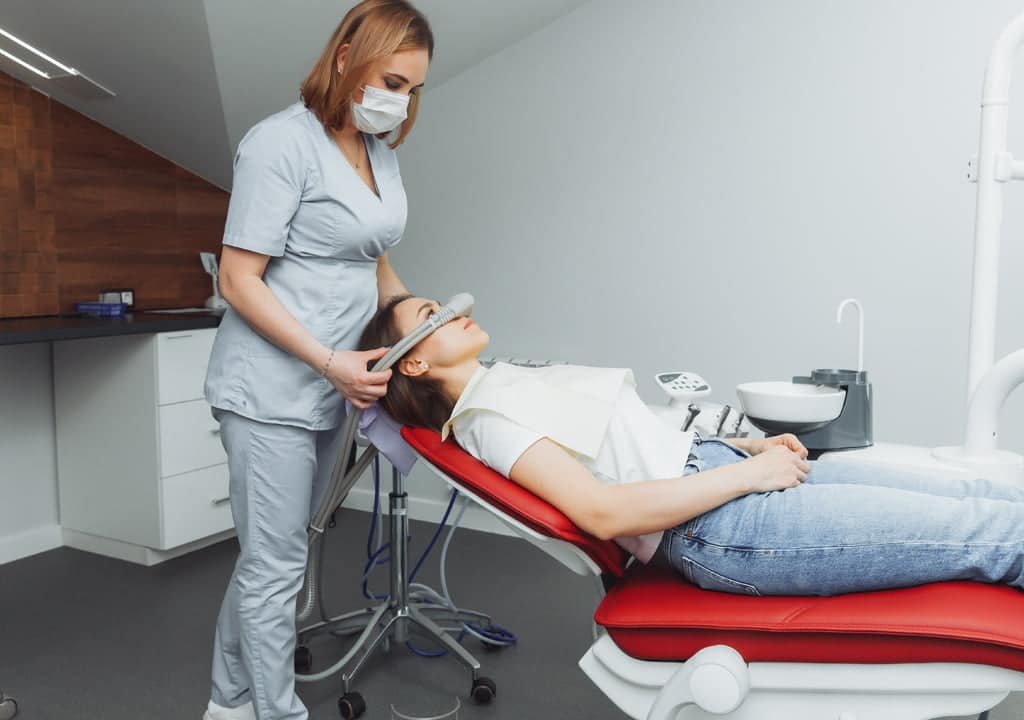
You breathe nitrous oxide — otherwise known as “laughing gas” — combined with oxygen through a mask that’s placed over your nose. The gas helps you relax. Your dentist can control the amount of sedation you receive, and the gas tends to wear off quickly. This is the only form of sedation where you may be able to drive yourself home after the procedure.

Oral Sedation

Depending on the total dose given, oral sedation can range from minimal to moderate. For minimal sedation, you take a pill. Typically, the pill is Halcion, which is a member of the same drug family as Valium, and it’s usually taken about an hour before the procedure. The pill will make you drowsy, although you’ll still be awake. A larger dose may be given to produce moderate sedation. This is the type of anesthesia most commonly associated with sedation dentistry. Some people become groggy enough from moderate oral sedation to actually fall asleep during the procedure. They usually can, though, be awakened with a gentle shake.

IV Moderate Sedation

You receive the sedative drug through a vein, so it goes to work more quickly. This method allows the dentist to continually adjust the level of sedation.

Deep Sedation And General Anesthesia

You will get medications that will make you either almost unconscious or totally unconscious — deeply asleep — during the procedure. While you are under general anesthesia, you cannot easily be awakened until the effects of the anesthesia wear off or are reversed with medication.

Regardless of which type of sedation you receive, you’ll also typically need a local anesthetic — numbing medication at the site where the dentist is working in the mouth — to relieve pain if the procedure causes any discomfort.

Who Can Have Sedation At The Dentists?

Sedation is most appropriate for people with a real fear or anxiety that is preventing them from going to the dentist.

Sedation dentistry may also be appropriate for people who:

  • have a low pain threshold
  • can’t sit still in the dentist’s chair
  • have very sensitive teeth
  • have a bad gag reflex
  • need a large amount of dental work completed

Sometimes, children are given sedation if they are terrified of going to the dentist or refuse to cooperate during the visit. Nitrous oxide tends to be safe in children, and just about any dentist can administer it. A smaller percentage of pediatric dentists are trained to give children oral sedation. Oral sedation can be safe when kept within the recommended dose for the child’s age and weight.

Can Any Dentist Perform Sedation?

Most dentists can administer minimal sedation (such as nitrous oxide or pills). An increasing number of dentists can give moderate sedation. However, only a small percentage of dentists who have completed the Commission on Dental Accreditation (CODA) program in deep sedation and general anesthesia can use these more complex techniques. These dentists are typically oral and maxillofacial surgeons and dentist anesthesiologists. Some dentists use a dentist anesthesiologist, who is specially trained to give all levels of sedation and anesthesia to both children and adults.

Conclusion:

Thank you for reading this article, and check back frequently for other dental health articles. Should you have any questions, please contact Apple Tree Dental today!

Article compiled by Apple Tree Dental

Article reference links

  1. https://en.wikipedia.org/wiki/Oral_sedation_dentistry

  2. https://www.webmd.com/oral-health/sedation-dentistry-can-you-really-relax-in-the-dentists-chair